
靶向急性髓系白血病线粒体功能和代谢的可行性与安全性
Feasibility and Safety of Targeting Mitochondria Function and Metabolism in Acute Myeloid Leukemia.
作者信息
Firmanty Patryk, Chomczyk Monika, Dash Shubhankar, Konopleva Marina, Baran Natalia
机构信息
Department of Experimental Hematology, Institute of Hematology and Transfusion Medicine, Warsaw, Poland.
Department of Oncology, Albert Einstein College of Medicine, Bronx, NY, USA.
出版信息
Curr Pharmacol Rep. 2024 Dec;10(6):388-404. doi: 10.1007/s40495-024-00378-8. Epub 2024 Oct 4.
PURPOSE OF REVIEW
Acute myeloid leukemia (AML) is a clonal blood neoplasm with dismal prognosis. Despite the introduction of many novel targeted agents, cytotoxic chemotherapy has remained the standard of care for AML. Differences in mitochondrial metabolism between normal and leukemic cells can be targeted by novel AML therapies, but these agents require a comprehensive efficacy and cytotoxicity evaluation.
RECENT FINDINGS
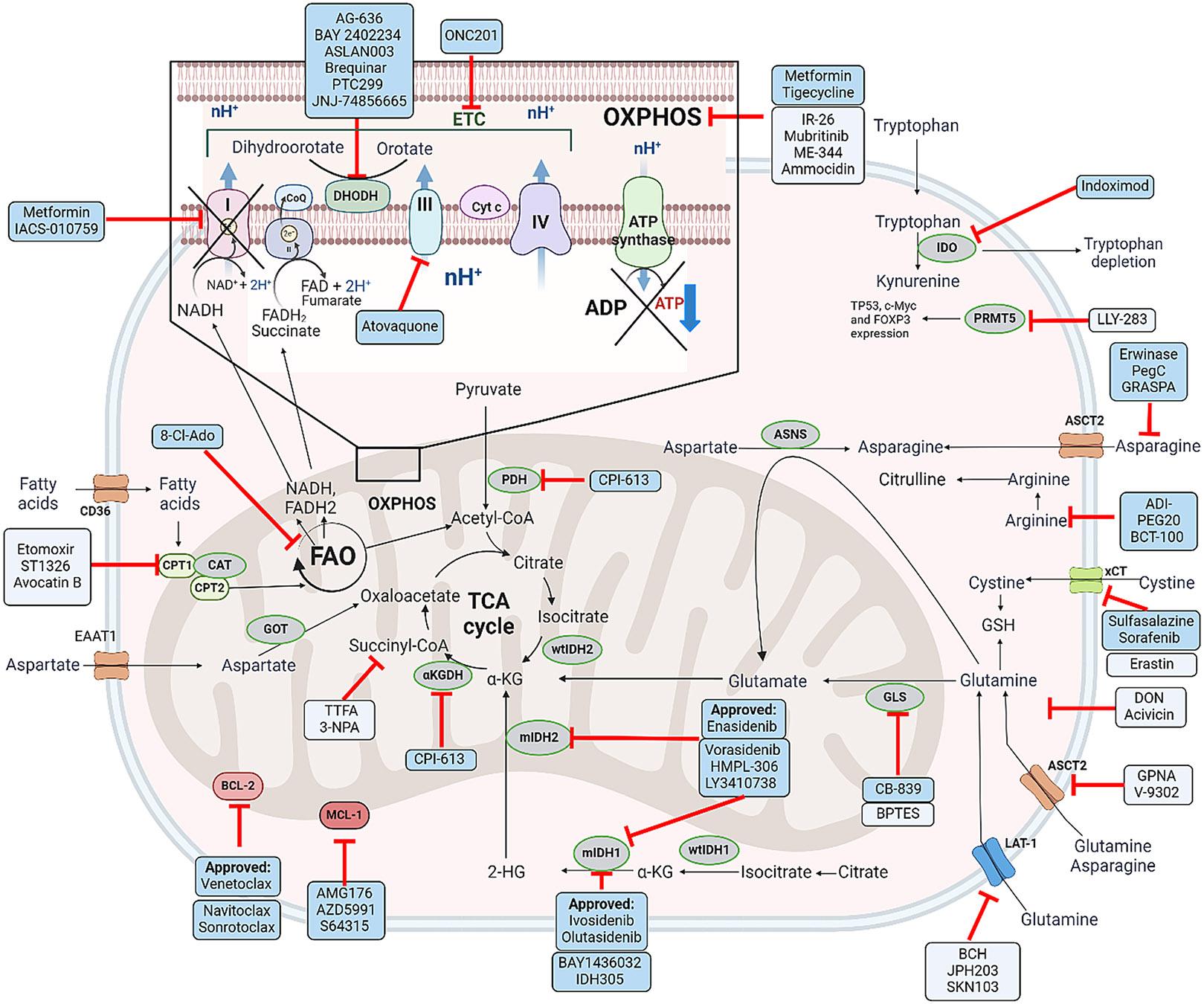
Metabolic alterations in AML blasts increase their sensitivity to therapies targeting mitochondrial metabolism. Targeting altered mitochondrial metabolism, that is crucial for leukemia cell growth and survival, could be a breakthrough in AML treatment. Therefore, BH3 family proteins, mitochondrial complexes, the tricarboxylic acid cycle, and amino acid (AA) and fatty acid metabolism are common treatment targets in AML. Although many drugs targeting these vulnerabilities showed acceptable safety profiles and promising efficacy in preclinical studies, clinical trials often do not confirm these results limited by narrow therapeutic window. The most effective regimens are based on drug combinations with synergistic or additive activity.
SUMMARY
In this review, we present an overview of the most recent studies targeting mitochondrial metabolism in AML. We highlight that targeting of the specific energy metabolism dependencies of AML blasts provides an opportunity to achieve long-term responses with a reasonable safety profile. We emphasize that currently used drugs and their combinations display dose-limiting toxicities or are not efficient enough to completely eradicate leukemic stem cells. Thus, further studies of complex metabolic rewiring of leukemia cells before and after combinatorial therapies are warranted.
综述目的
急性髓系白血病(AML)是一种预后不佳的克隆性血液肿瘤。尽管引入了许多新型靶向药物,但细胞毒性化疗仍是AML的标准治疗方法。正常细胞与白血病细胞之间线粒体代谢的差异可成为新型AML治疗的靶点,但这些药物需要进行全面的疗效和细胞毒性评估。
最新发现
AML原始细胞中的代谢改变增加了它们对靶向线粒体代谢疗法的敏感性。靶向改变的线粒体代谢,这对白血病细胞的生长和存活至关重要,可能是AML治疗的一个突破。因此,BH3家族蛋白、线粒体复合物、三羧酸循环以及氨基酸(AA)和脂肪酸代谢是AML常见的治疗靶点。尽管许多针对这些弱点的药物在临床前研究中显示出可接受的安全性和有前景的疗效,但临床试验往往无法证实这些结果,受狭窄治疗窗口的限制。最有效的方案是基于具有协同或相加活性的药物组合。
总结
在本综述中,我们概述了最近针对AML线粒体代谢的研究。我们强调,靶向AML原始细胞特定的能量代谢依赖性提供了一个机会,以合理的安全性实现长期缓解。我们强调,目前使用的药物及其组合显示出剂量限制性毒性,或者不足以完全根除白血病干细胞。因此,有必要进一步研究联合治疗前后白血病细胞复杂的代谢重编程。

 Zotero 插件