
在肌萎缩侧索硬化症的超氧化物歧化酶1模型中,gasdermin D被激活,但并不驱动神经退行性变:对靶向细胞焦亡的启示。
Gasdermin D is activated but does not drive neurodegeneration in SOD1 model of ALS: Implications for targeting pyroptosis.
作者信息
Gunner Georgia, Basu Himanish, Lu Yueting, Bergstresser Matthew, Sun Liwei, Neel Dylan, Choi So Yoen, Chiu Isaac M
机构信息
Harvard Medical School, Department of Immunology, Blavatnik Institute Boston, MA 02115, USA.
Harvard Medical School, Department of Immunology, Blavatnik Institute Boston, MA 02115, USA.
出版信息
Neurobiol Dis. 2025 Oct 1;214:107048. doi: 10.1016/j.nbd.2025.107048. Epub 2025 Aug 6.
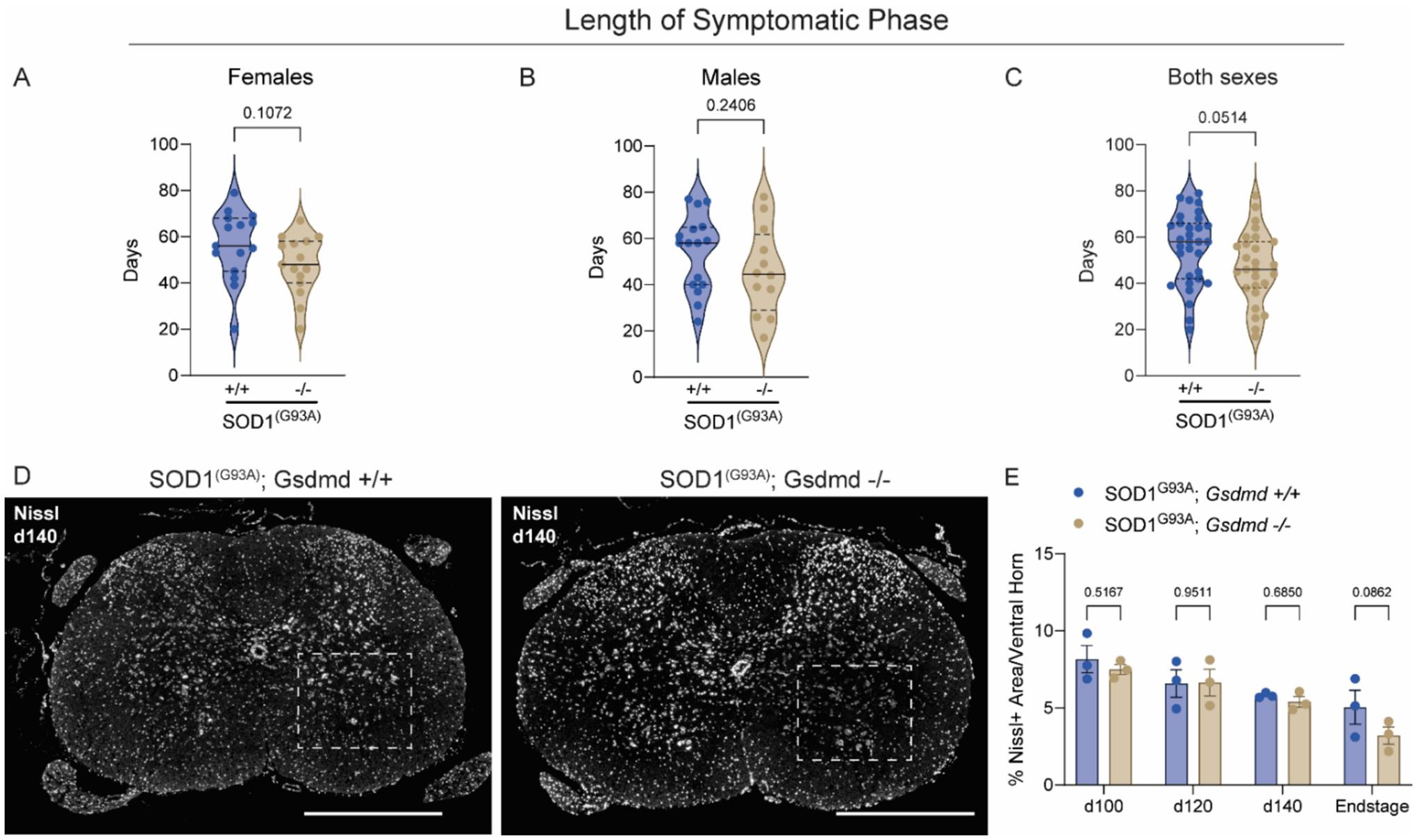
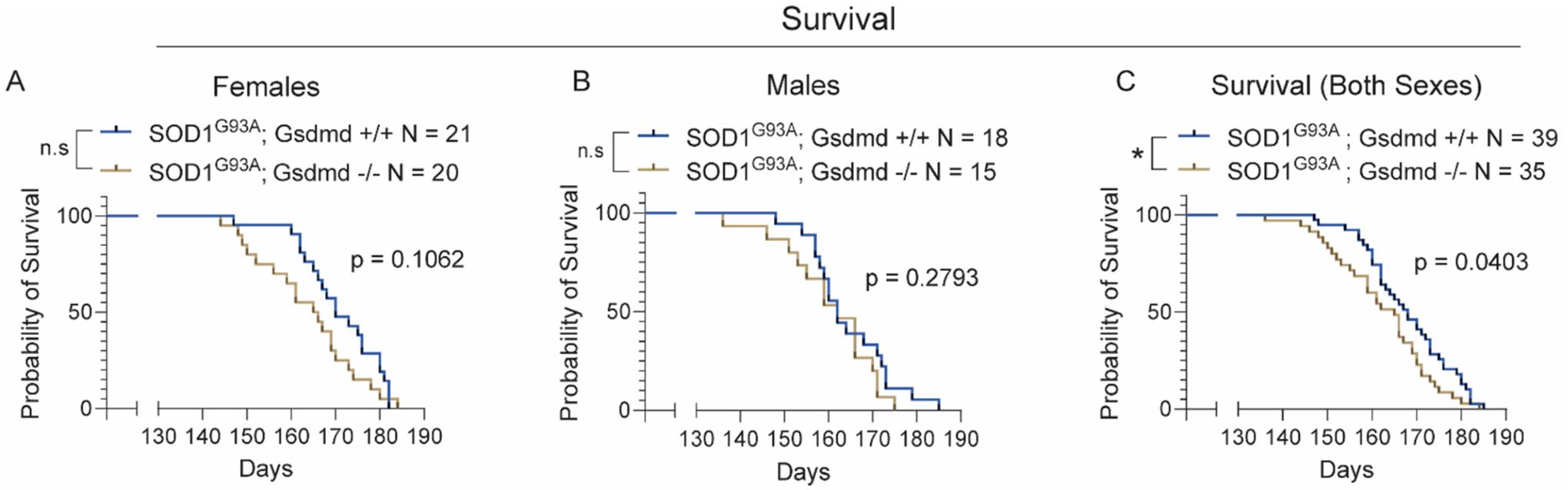
Amyotrophic Lateral Sclerosis (ALS) is a fatal neurodegenerative disease characterized by progressive motor neuron loss, microgliosis, and neuroinflammation. While pyroptosis, an inflammatory form of programmed cell death, has been implicated in ALS, the specific role of Gasdermin D (GSDMD) - the primary executioner of pyroptosis - remains unexplored. In this study, we examined the function of GSDMD in the well-established SOD1 mouse model of ALS. Our results showed robust GSDMD activation in the spinal cords of SOD1 animals with elevated expression in Iba1+ microglia. To explore its role in disease progression, we bred C57Bl/6 J.SOD1 mice onto a C57Bl/6NJ.GSDMD-deficient background. In comparing SOD1; Gsdmd+/+ and SOD1; Gsdmd-/- mice, we found that Gsdmd loss did not affect disease onset, weight loss, or grip strength decline in either male or female animals. Notably, GSDMD deficiency resulted in a modest but statistically significant increase in mortality in SOD1 mice. Moreover, GSDMD absence had minimal impact on astrogliosis, microgliosis and motor neuron loss. These findings show that while GSDMD is activated in the ALS mouse model, its loss does not mitigate key ALS behavioral phenotypes, gliosis or motor neuron loss. This study provides insights into the potential therapeutic relevance of targeting pyroptosis and inflammatory pathways in ALS.
肌萎缩侧索硬化症(ALS)是一种致命的神经退行性疾病,其特征为运动神经元进行性丧失、小胶质细胞增生和神经炎症。虽然细胞焦亡(一种程序性细胞死亡的炎症形式)与ALS有关,但细胞焦亡的主要执行者Gasdermin D(GSDMD)的具体作用仍未得到探索。在本研究中,我们在成熟的ALS超氧化物歧化酶1(SOD1)小鼠模型中研究了GSDMD的功能。我们的结果显示,SOD1动物脊髓中GSDMD被强烈激活,在Iba1+小胶质细胞中表达升高。为了探究其在疾病进展中的作用,我们将C57Bl/6 J.SOD1小鼠与C57Bl/6NJ.GSDMD基因缺陷型小鼠进行杂交。在比较SOD1; Gsdmd+/+和SOD1; Gsdmd-/-小鼠时,我们发现Gsdmd基因缺失对雄性或雌性动物的疾病发作、体重减轻或握力下降均无影响。值得注意的是,GSDMD缺陷导致SOD1小鼠的死亡率有适度但具有统计学意义的增加。此外,GSDMD缺失对星形胶质细胞增生、小胶质细胞增生和运动神经元丧失的影响极小。这些发现表明,虽然在ALS小鼠模型中GSDMD被激活,但其缺失并不能减轻ALS的关键行为表型、胶质细胞增生或运动神经元丧失。本研究为靶向ALS中的细胞焦亡和炎症途径的潜在治疗相关性提供了见解。


 Zotero 插件