
细菌嘌呤代谢对抗生素疗效的影响。
The impact of bacterial purine metabolism on antibiotic efficacy.
作者信息
Stevens Claire E, Deventer Ashley T, Hobbs Joanne K
机构信息
Biomedical Sciences Research Complex, School of Biology, University of St Andrews, St Andrews, UK.
出版信息
NPJ Antimicrob Resist. 2025 Aug 4;3(1):69. doi: 10.1038/s44259-025-00139-7.
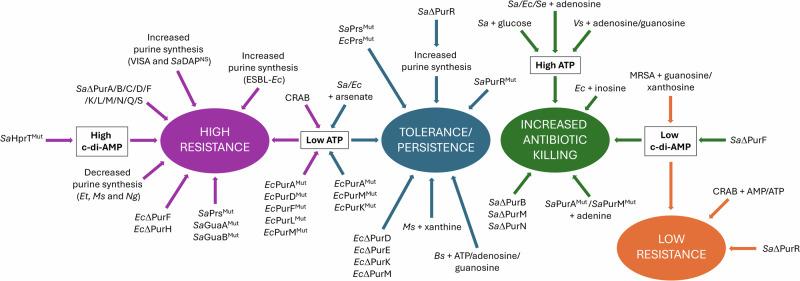
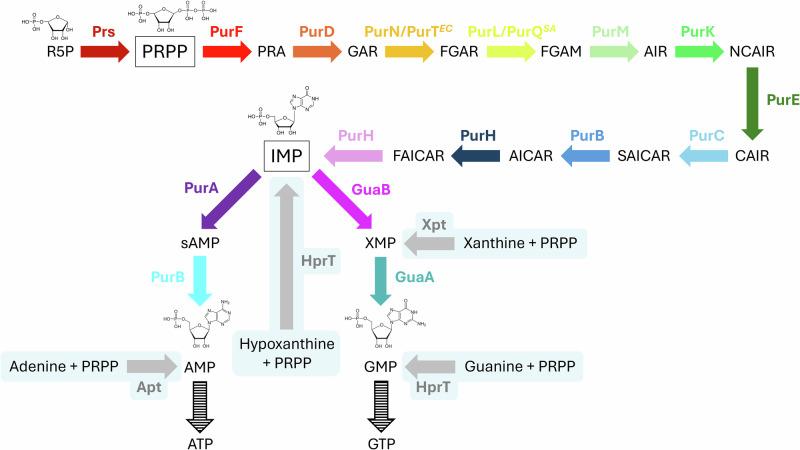
Metabolism plays a key role in the three antibiotic evasion strategies used by bacteria: tolerance, persistence and resistance. Modulation of purine metabolism is emerging as a common, and clinically relevant, contributor to tolerant and resistant phenotypes. However, whether high or low purine levels promote reduced antibiotic efficacy is unclear. Here, we review and explore the evidence for a relationship between cellular purine levels and antibiotic efficacy.
代谢在细菌采用的三种抗生素逃避策略(耐受、持留和抗性)中起着关键作用。嘌呤代谢的调节正成为导致耐受和抗性表型的一个常见且与临床相关的因素。然而,嘌呤水平的高低是否会导致抗生素疗效降低尚不清楚。在此,我们回顾并探究细胞嘌呤水平与抗生素疗效之间关系的证据。
 Zotero 插件