
热休克蛋白相关特征表征胶质瘤的免疫状态并预测其预后。
Heat shock proteins related signature characterizes immune status and predicts prognosis of gliomas.
作者信息
Sun Zhiyan, Wan Haibin, Du Minghui, Guo Yiding, Tao Rui, Zhao Xuzhe, Zhang Yutao, Yang Pei, Zhou Dabiao
机构信息
Department of Neurosurgery, Beijing Tiantan Hospital, Capital Medical University, Beijing, China.
Beijing Neurosurgical Institute, Capital Medical University, Beijing, China.
出版信息
Sci Rep. 2025 Aug 5;15(1):28652. doi: 10.1038/s41598-025-12509-2.
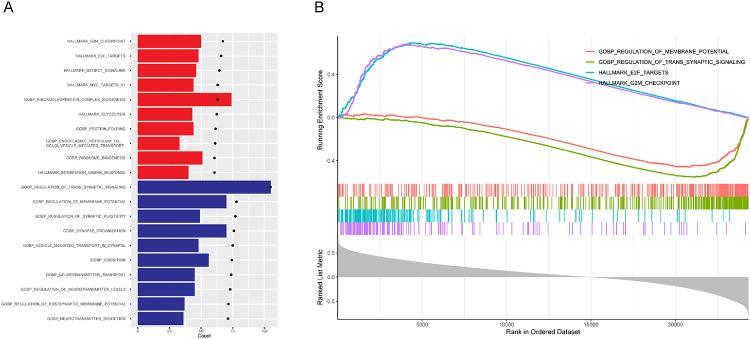
Glioma classification is crucial for effective diagnosis and treatment. Heat Shock Proteins (HSPs) have been associated with tumor development and progression. In this study, we established a prognostic model for glioma based on Heat Shock Proteins-associated genes (HSPGs). Using the Cancer Genome Atlas (TCGA) cohorts and the Chinese Glioma Genome Atlas (CGGA), we identified a signature of 4 HSPGs as an independent prognostic factor for glioma. The risk model demonstrated excellent performance in both training and validation sets. Additionally, we developed a nomogram incorporating clinical parameters and the HSPGs signature to enhance prognostic prediction. Immunoenrichment analysis revealed a correlation between the risk score and the immunosuppressive status of glioma. In the functional assays, HSPA5 was identified as a key participant in several critical biological processes associated with glioma. Silencing HSPA5 expression may lead to the inhibition of glioma cell proliferation, migration, invasion and resistance to apoptosis. These findings present a novel classification for glioma prognosis with enhanced accuracy and offer valuable insights into the potential use of HSPGs as prognostic indicators for gliomas.
胶质瘤分类对于有效诊断和治疗至关重要。热休克蛋白(HSPs)与肿瘤的发生和发展相关。在本研究中,我们基于热休克蛋白相关基因(HSPGs)建立了一种胶质瘤预后模型。利用癌症基因组图谱(TCGA)队列和中国胶质瘤基因组图谱(CGGA),我们确定了一个由4个HSPGs组成的特征作为胶质瘤的独立预后因素。该风险模型在训练集和验证集上均表现出色。此外,我们开发了一种结合临床参数和HSPGs特征的列线图,以增强预后预测。免疫富集分析揭示了风险评分与胶质瘤免疫抑制状态之间的相关性。在功能试验中,HSPA5被确定为与胶质瘤相关的几个关键生物学过程的关键参与者。沉默HSPA5表达可能导致胶质瘤细胞增殖、迁移、侵袭和抗凋亡能力的抑制。这些发现为胶质瘤预后提供了一种新的分类方法,提高了准确性,并为HSPGs作为胶质瘤预后指标的潜在应用提供了有价值的见解。




 Zotero 插件