
精神疾病中自愿运动动机减弱与代谢功能障碍:自闭症谱系障碍和抑郁症的行为学视角
Diminished Motivation for Voluntary Exercise and Metabolic Dysfunction in Psychiatric Disorders: A Behavioral Perspective on Autism Spectrum Disorder and Depression.
作者信息
Hwang Dong-Joo, Kim Kyeong-Ri, Kim Tae-Kyung
机构信息
Exercise Biochemistry Laboratory, Korea National Sport University, Seoul, Korea.
Sport Science Institute, Korea National Sport University, Seoul, Korea.
出版信息
Int Neurourol J. 2025 Jul;29(Suppl 1):S3-S12. doi: 10.5213/inj.2550134.067. Epub 2025 Jul 31.
PURPOSE
This study investigated spontaneous locomotor activity and metabolic phenotype in animal models of autism spectrum disorder (ASD) and major depressive disorder (MDD), with a focus on motivation to engage in voluntary exercise.
METHODS
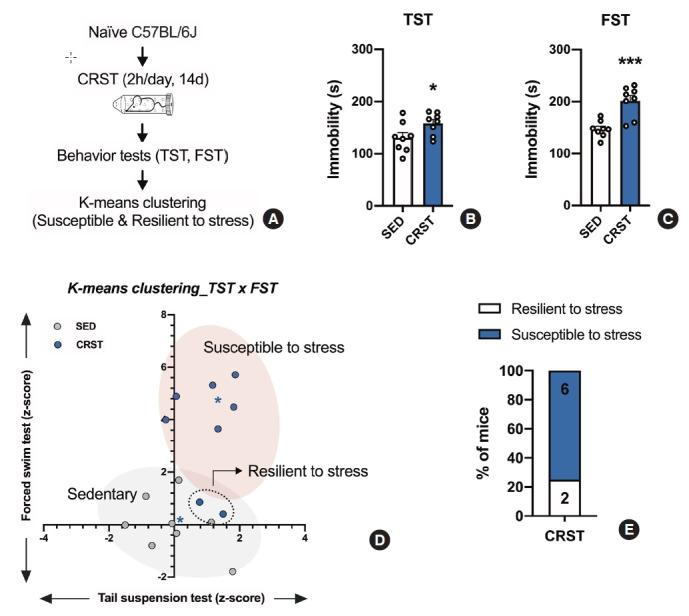
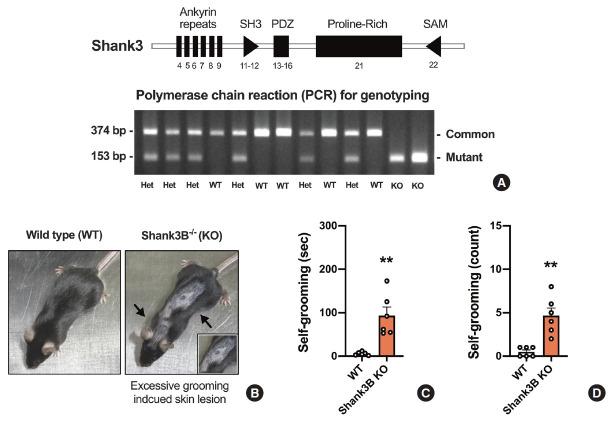
Spontaneous locomotion, voluntary wheel running, and metabolic phenotypes were assessed in Shank3B-knockout mice (ASD model) and stress-susceptible mice exposed to chronic restraint stress (CRSTSUS, MDD model) using indirect calorimetry and behavioral tests.
RESULTS
Shank3B-knockout mice exhibited self-injurious repetitive behaviors resulting in skin lesions, while CRSTSUS mice showed behavioral despair indicative of stress vulnerability, along with a marked reduction in spontaneous locomotor activity and decreased motivation for voluntary exercise. Metabolic dysregulation was evident, including alterations in oxygen consumption, carbon dioxide production, respiratory exchange ratio, and energy expenditure.
CONCLUSION
Behavioral and metabolic alterations in psychiatric disorders are closely linked, with reduced motivation for exercise emerging as a salient phenotypic signature. These findings highlight the need for targeted interventions that restore intrinsic motivation and energy balance. Future research should focus on elucidating the underlying mechanisms and developing therapies to enhance physical activity engagement in psychiatric conditions.
目的
本研究调查了自闭症谱系障碍(ASD)和重度抑郁症(MDD)动物模型中的自发运动活动和代谢表型,重点关注参与自愿运动的动机。
方法
使用间接测热法和行为测试,对Shank3B基因敲除小鼠(ASD模型)和暴露于慢性束缚应激的应激易感小鼠(CRSTSUS,MDD模型)的自发运动、自愿轮转跑步和代谢表型进行评估。
结果
Shank3B基因敲除小鼠表现出导致皮肤损伤的自我伤害性重复行为,而CRSTSUS小鼠表现出表明应激易感性的行为绝望,同时自发运动活动显著减少,自愿运动的动机降低。代谢失调明显,包括氧气消耗、二氧化碳产生、呼吸交换率和能量消耗的改变。
结论
精神疾病中的行为和代谢改变密切相关,运动动机降低成为一个显著的表型特征。这些发现凸显了采取有针对性干预措施以恢复内在动机和能量平衡的必要性。未来的研究应专注于阐明潜在机制,并开发疗法以增强精神疾病患者的身体活动参与度。


 Zotero 插件