
脓毒症电子提示以促进及时干预和护理的实用、多中心、析因、随机对照试验(SEPTIC试验):一项方案
Pragmatic, multicentre, factorial, randomised controlled trial of sepsis electronic prompting for timely intervention and care (SEPTIC trial): a protocol.
作者信息
Ranard Benjamin L, Qian Min, Cummings Matthew J, Zhang David Y, Lee Shing M, Beitler Jeremy R, Applebaum Jo R, Schenck Edward J, Mohamed Hassan, Trepp Richard, Hsu Hanson, Scofi Jean, Southern William N, Rossetti Sarah C, Yip Natalie H, Brodie Daniel, Sharma Manish, Fertel Baruch S, Adelman Jason S
机构信息
Division of Pulmonary, Allergy, and Critical Care Medicine, Department of Medicine, Columbia University Vagelos College of Physicians and Surgeons, New York, New York, USA
Center for Patient Safety Science, Columbia University Vagelos College of Physicians and Surgeons, New York, New York, USA.
出版信息
BMJ Open. 2025 Aug 11;15(8):e088792. doi: 10.1136/bmjopen-2024-088792.
INTRODUCTION
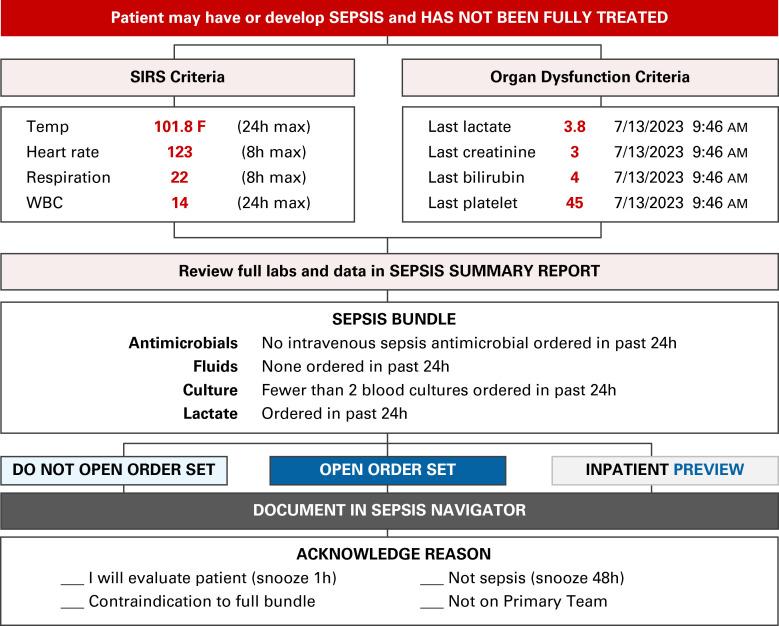
Sepsis is a major cause of death both globally and in the United States. Early identification and treatment of sepsis are crucial for improving patient outcomes. International guidelines recommend hospital sepsis screening programmes, which are commonly implemented in the electronic health record (EHR) as an interruptive sepsis screening alert based on systemic inflammatory response syndrome (SIRS) criteria. Despite widespread use, it is unknown whether these sepsis screening and alert tools improve the delivery of high-quality sepsis care.
METHODS AND ANALYSIS
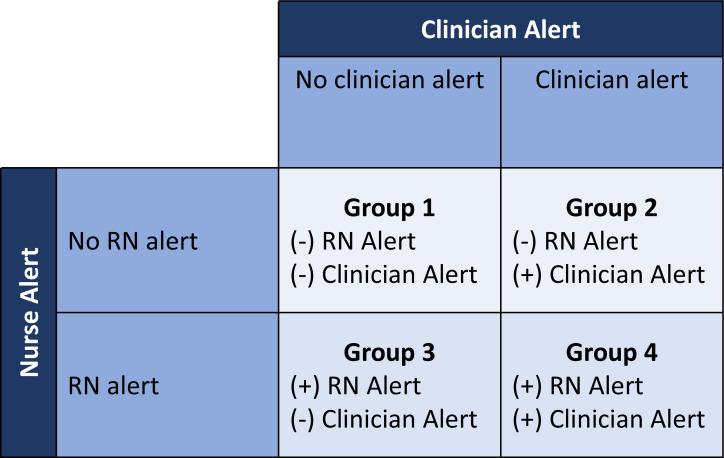
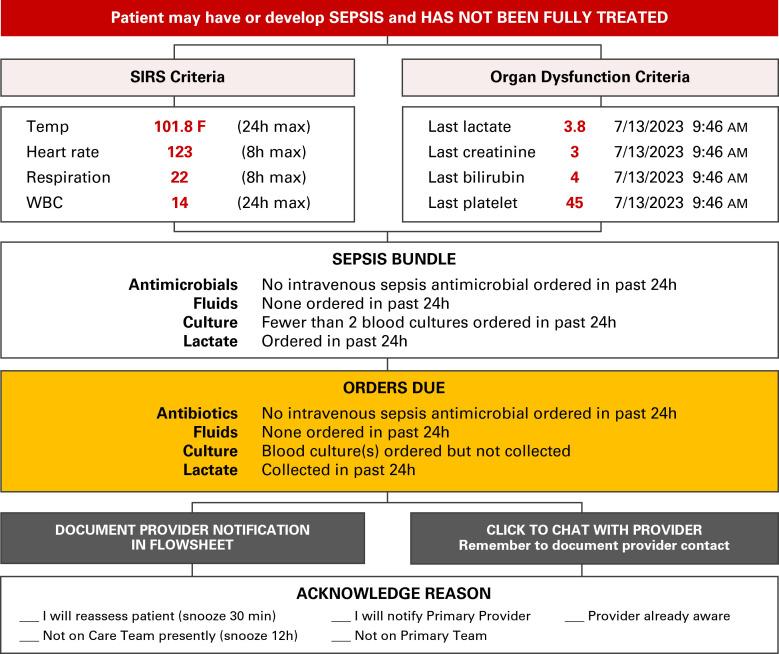
The Sepsis Electronic Prompting for Timely Intervention and Care (SEPTIC) master protocol will study two distinct populations in separate trials: emergency department (ED) patients (SEPTIC-ED) and inpatients (SEPTIC-IP). The SEPTIC trials are pragmatic, multicentre, blinded, randomised controlled trials, with equal allocation to compare four SIRS-based sepsis screening alert groups: no alerts (control), nurse alerts only, prescribing clinician alerts only, or nurse and prescribing clinician alerts. Randomisation will be at the patient level. SEPTIC will be performed at eight acute-care hospitals in the greater New York City area and enrol patients at least 18 years old. The primary outcome is the percentage of patients with completion of a modified Surviving Sepsis Campaign (SSC) hour-1 bundle within 3 hours of the first SIRS alert. Secondary outcomes include time from first alert to completion of a modified SSC hour-1 bundle, time from first alert to individual bundle component order and completion, intensive care unit (ICU) transfer, hospital discharge disposition, inpatient mortality at 90 days, positive blood cultures (bacteraemia), adverse antibiotic events, sepsis diagnoses and septic shock diagnoses.
ETHICS AND DISSEMINATION
Ethics approval was obtained from the Columbia University Institutional Review Board (IRB) serving as a single IRB. Results will be disseminated in peer-reviewed journal(s), scientific meeting(s) and via social media.
TRIAL REGISTRATION NUMBER
ClinicalTrials.gov: NCT06117605 and NCT06117618.
引言
脓毒症是全球和美国主要的死亡原因。早期识别和治疗脓毒症对于改善患者预后至关重要。国际指南推荐开展医院脓毒症筛查项目,该项目通常在电子健康记录(EHR)中作为基于全身炎症反应综合征(SIRS)标准的中断性脓毒症筛查警报来实施。尽管广泛使用,但这些脓毒症筛查和警报工具是否能改善高质量脓毒症护理的提供尚不清楚。
方法与分析
脓毒症及时干预与护理电子提示(SEPTIC)主方案将在单独的试验中研究两个不同的人群:急诊科(ED)患者(SEPTIC-ED)和住院患者(SEPTIC-IP)。SEPTIC试验是务实的、多中心的、盲法的、随机对照试验,采用均等分配以比较四个基于SIRS的脓毒症筛查警报组:无警报(对照组)、仅护士警报、仅开处方临床医生警报或护士和开处方临床医生警报。随机分组将在患者层面进行。SEPTIC将在大纽约市地区的八家急症护理医院进行,招募至少18岁的患者。主要结局是在首次SIRS警报后3小时内完成改良版脓毒症存活行动(SSC)1小时集束治疗的患者百分比。次要结局包括从首次警报到完成改良版SSC 1小时集束治疗的时间、从首次警报到各个集束治疗组件下单和完成的时间、重症监护病房(ICU)转诊、医院出院处置、90天内住院死亡率、血培养阳性(菌血症)、不良抗生素事件、脓毒症诊断和感染性休克诊断。
伦理与传播
已获得哥伦比亚大学机构审查委员会(IRB)作为单一IRB的伦理批准。结果将在同行评审期刊、科学会议上以及通过社交媒体进行传播。
试验注册号
ClinicalTrials.gov:NCT06117605和NCT06117618。

 Zotero 插件