
芯片上的类器官(OrgOC):推动囊性纤维化研究。
Organoid-on-a-chip (OrgOC): Advancing cystic fibrosis research.
作者信息
Zheng Minjie, Erice Elisa, Wang Huiyi, Zhang Lei, Lawrie Charles H
机构信息
School of Microelectronics, Shanghai University, Shanghai, 201800, China.
Sino-Swiss Institute of Advanced Technology (SSIAT), Shanghai University, Shanghai, 201800, China.
出版信息
Mater Today Bio. 2025 Jul 28;34:102148. doi: 10.1016/j.mtbio.2025.102148. eCollection 2025 Oct.
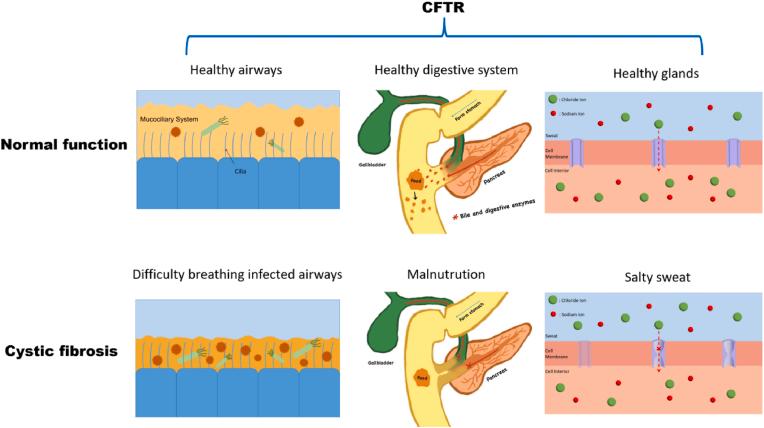
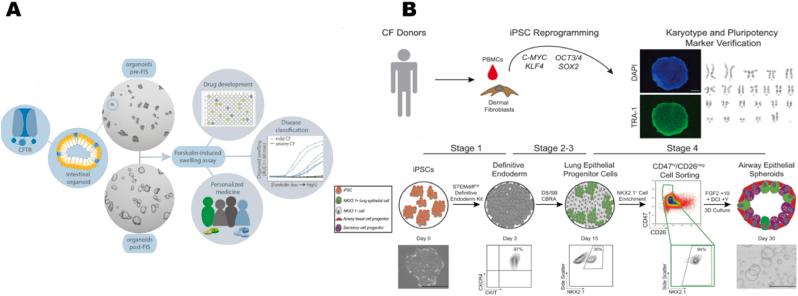
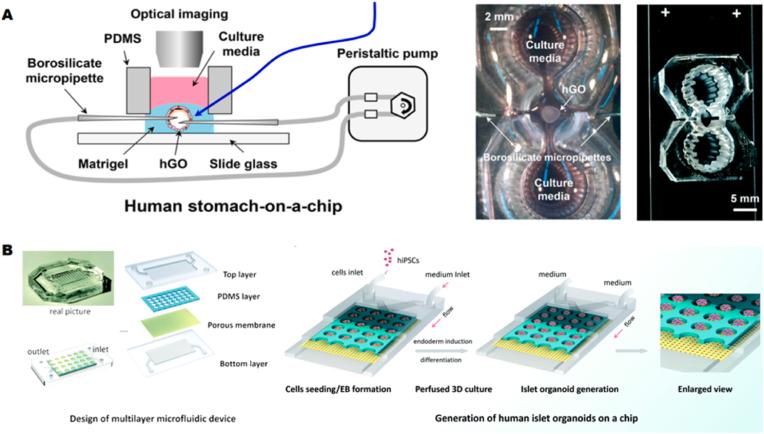
Cystic fibrosis (CF) is an autosomal recessive disorder resulting from impaired anion transport in the epithelium of multiple organs, thereby affecting various physiological functions throughout the body. The heterogeneity of CF complicates drug development, highlighting the growing importance of individualized therapies. CF patient-derived organoid models and organ-on-a-chip (OOC) platforms are promising in vitro models for recapitulating CF pathology, owing to their high simulation fidelity, individualized therapeutic capabilities, cost-effectiveness, and high-throughput screening potential. This review systematically summarizes the technological development pathways of patient-derived organoids and OOC platforms for CF, along with recent advances in their applications to CF-related basic research, and particularly focuses on exploratory studies using organoid-on-a-chip (OrgOC) systems to elucidate CF pathogenesis and assess therapeutic approaches.
囊性纤维化(CF)是一种常染色体隐性疾病,由多个器官上皮细胞中的阴离子转运受损引起,从而影响全身的各种生理功能。CF的异质性使药物开发变得复杂,凸显了个性化治疗日益增长的重要性。源自CF患者的类器官模型和芯片器官(OOC)平台是用于重现CF病理学的有前景的体外模型,这得益于它们高仿真度、个性化治疗能力、成本效益和高通量筛选潜力。本综述系统总结了用于CF的患者来源类器官和OOC平台的技术发展路径,以及它们在CF相关基础研究中的应用的最新进展,尤其关注使用芯片类器官(OrgOC)系统阐明CF发病机制和评估治疗方法的探索性研究。




 Zotero 插件