
老年人群中与长期新冠相关的血脑屏障破坏和微观结构因性别和阿尔茨海默病遗传风险而有所不同。
Long COVID-related blood-brain barrier breakdown and microstructure in older adults are modified by sex and Alzheimer's disease genetic risk.
作者信息
Reas Emilie T, Alderson-Myers Austin, Solders Seraphina K, Shen Qian, Rivera Charlotte S, Wang Xin, Stiver Jordan, Banks Sarah J, Graves Jennifer S
机构信息
Department of Neurosciences, University of California, San Diego, La Jolla, CA, United States.
出版信息
Imaging Neurosci (Camb). 2025 May 28;3. doi: 10.1162/IMAG.a.23. eCollection 2025.
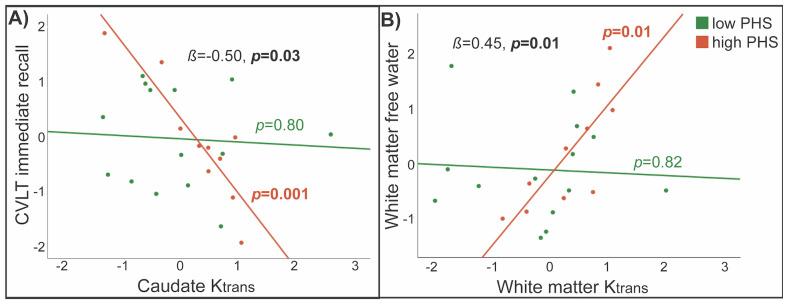
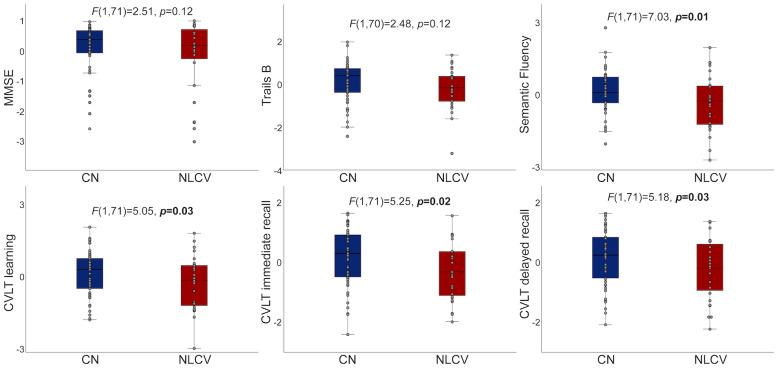
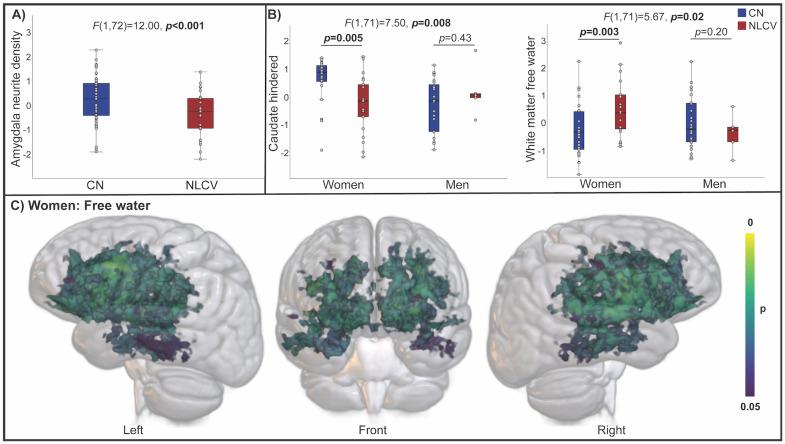
Long COVID is characterized by lingering symptoms following SARS-CoV-2 infection, which may include neurological and cognitive complaints. Hypothesized mechanisms, including blood-brain barrier (BBB) dysfunction and neuroinflammation, are shared with Alzheimer's disease (AD) and related dementias. To address concern that long COVID may accelerate cognitive decline and neurodegeneration, this study examined neuroimaging-based markers of BBB breakdown and brain microstructure among older adults with long COVID, and modification by AD risk factors. Individuals with persistent cognitive complaints following SARS-CoV-2 infection (neurological long COVID, NLCV) and cognitively normal controls (50-90 years, 61% women) underwent neuropsychological evaluation, genotyping, dynamic contrast-enhanced MRI to measure BBB permeability, and multi-compartment diffusion MRI to measure brain microstructure. Cognitive and brain measures were compared between NLCV and controls using analysis of covariance, and associations among measures were assessed using linear regression. Interaction models probed modification by sex and AD genetic risk, quantified with a polygenic hazard score. Compared to controls, NLCV exhibited cognitive impairment, BBB breakdown, and subcortical microstructural abnormalities. NLCV-related BBB leakage was widespread across the brain and more pronounced among men, whereas white matter and subcortical microstructural differences were stronger among women. AD polygenic hazard score modified associations of BBB permeability with memory and microstructure, such that higher caudate BBB permeability correlated with worse immediate recall, and higher white matter permeability correlated with higher free water only for those with elevated genetic risk. BBB dysfunction and microstructural compromise may contribute to cognitive symptoms of long COVID in older adults. Sex-specific patterns, and more deleterious associations between brain and memory abnormalities among individuals with elevated AD genetic risk, highlight the need for precision medicine diagnostic and therapeutic approaches for long COVID.
长期新冠的特征是感染新冠病毒后症状持续存在,可能包括神经和认知方面的不适。其假设机制,包括血脑屏障(BBB)功能障碍和神经炎症,与阿尔茨海默病(AD)及相关痴呆症相同。为解决长期新冠可能加速认知衰退和神经退行性变的担忧,本研究检查了患有长期新冠的老年人基于神经影像学的血脑屏障破坏和脑微结构标志物,以及AD风险因素对其的影响。感染新冠病毒后有持续认知不适的个体(神经型长期新冠,NLCV)和认知正常的对照组(50 - 90岁,61%为女性)接受了神经心理学评估、基因分型、动态对比增强MRI以测量血脑屏障通透性,以及多室扩散MRI以测量脑微结构。使用协方差分析比较了NLCV和对照组之间的认知和脑测量指标,并使用线性回归评估了各指标之间的关联。交互模型探讨了性别和AD遗传风险的影响,用多基因风险评分进行量化。与对照组相比,NLCV表现出认知障碍、血脑屏障破坏和皮质下微结构异常。与NLCV相关的血脑屏障渗漏在全脑广泛存在,在男性中更明显,而白质和皮质下微结构差异在女性中更强。AD多基因风险评分改变了血脑屏障通透性与记忆和微结构之间的关联,以至于仅对于遗传风险升高的个体,尾状核血脑屏障通透性越高与即时回忆越差相关,白质通透性越高与游离水含量越高相关。血脑屏障功能障碍和微结构损害可能导致老年人长期新冠的认知症状。性别特异性模式,以及AD遗传风险升高个体中脑与记忆异常之间更有害的关联,凸显了对长期新冠采用精准医学诊断和治疗方法的必要性。

 Zotero 插件