Li Jian, Ji Xiang, Li Kangxia, Cao Min, Sun Yuxin, Cao Chengbing, Yin Zifei, Wang Xin, Fang Fanfu, Chen Cai-Tao, Gu Wei
Faculty of Traditional Chinese Medicine, Naval Medical University (Second Military Medical University), Shanghai, China.
Department of Sports Rehabilitation, Shanghai University of Sport, Shanghai, China.
Immun Inflamm Dis. 2025 Aug;13(8):e70233. doi: 10.1002/iid3.70233.
Liuzijue is an essential nonpharmacological intervention within the comprehensive management strategies for chronic obstructive pulmonary disease (COPD) patients. However, the absence of an animal model for Liuzijue presents methodological limitations in its basic research. This study aimed to apply interventions with kinematic characteristics of Liuzijue to COPD mice, with the objective to explore an animal model of Liuzijue suitable for experimental studies.
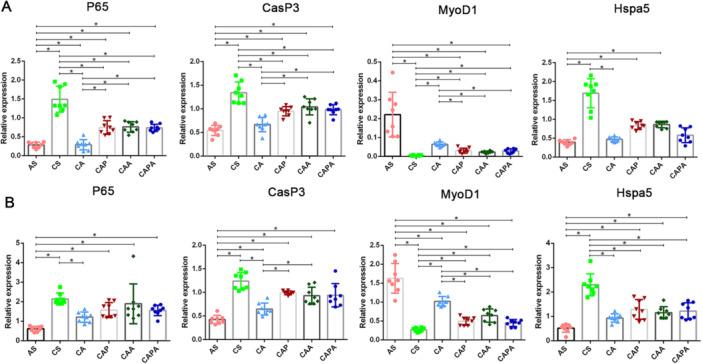
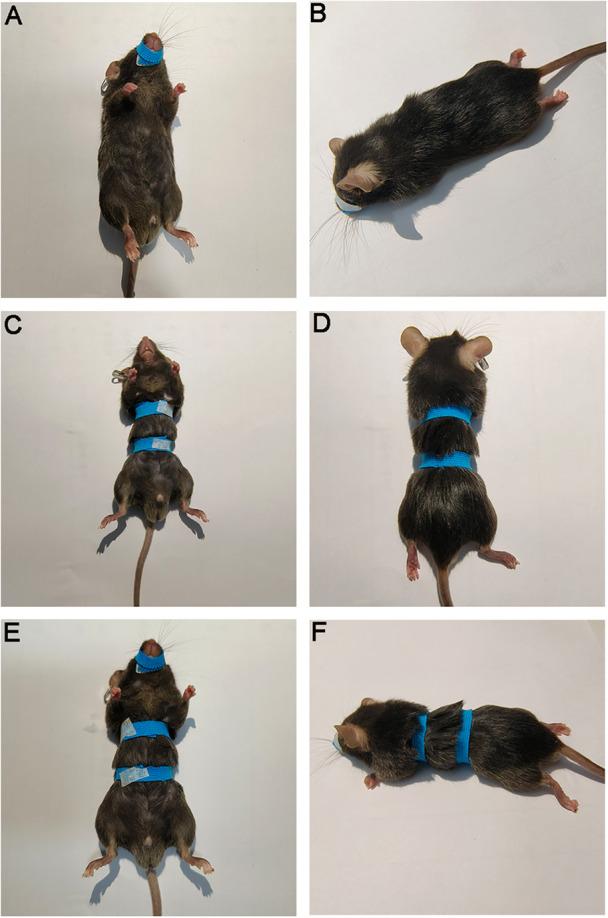
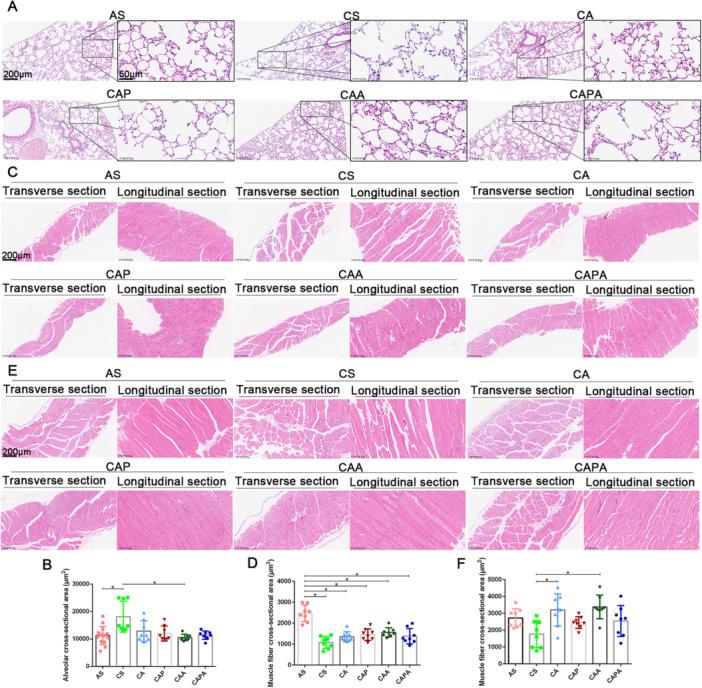
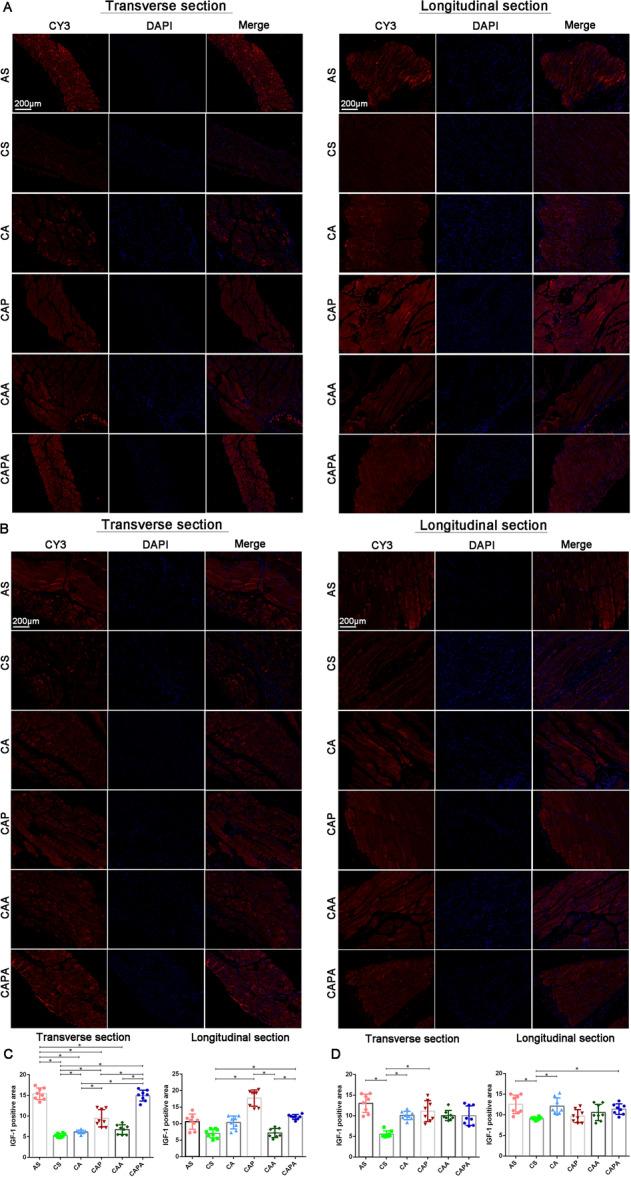
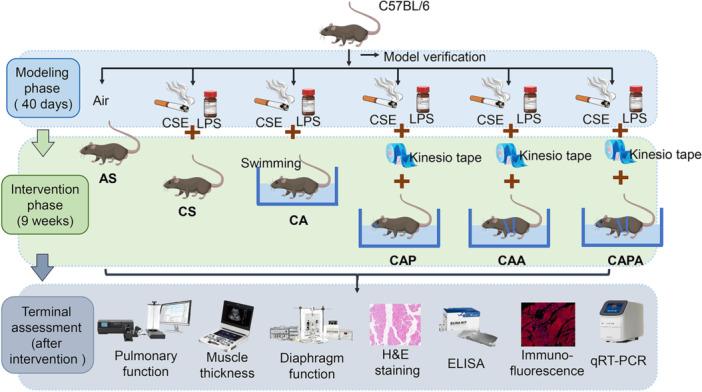
Forty-eight C57BL/6 mice randomly assigned into six groups to receive interventions mimicking Liuzijue's kinematic features, namely aerobic exercise, pursed-lip breathing and abdominal breathing. Post-intervention, respiratory function, diaphragmatic contractility, and rectus abdominis thickness were assessed. Histological structures of lung tissue, diaphragm, and rectus abdominis were observed using H&E staining. Expression levels of IL-10, INF-γ, and TNF-α in bronchoalveolar lavage fluid, and p65, CasP3, MuRF1, MyoD1, IGF-1, and Hspa5 in the diaphragm and rectus abdominis were measured.
The modeling process impaired respiratory function and diaphragmatic contractility in mice. All four stimulation forms effectively improved pulmonary and diaphragmatic function in COPD mice. The thickness of the rectus abdominis was increased by three specified exercise forms. Despite minimal lung tissue structural changes, swimming and abdominal stimulation improved the structure of the rectus abdominis in COPD mice and airway inflammation levels were inhibited. Lastly, the four stimulations regulated the balance of myoprotein synthesis and degradation in the diaphragm and rectus abdominis, although the intervention effects of the four stimulations did not escalate with the complexity of the methods.
The exercise stimulation paradigms established by simulating the kinematic characteristics of Liuzijue possess the therapeutic effects of Liuzijue in improving respiratory function, demonstrating first evidence that kinematic-based animal models can bridge traditional Qigong and modern mechanism research. However, the development of an animal model for the application of Liuzijue in basic research still warrants further exploration.
六字诀是慢性阻塞性肺疾病(COPD)患者综合管理策略中的一项重要非药物干预措施。然而,缺乏六字诀的动物模型给其基础研究带来了方法学上的局限性。本研究旨在将具有六字诀运动学特征的干预措施应用于COPD小鼠,以探索适合实验研究的六字诀动物模型。
将48只C57BL/6小鼠随机分为六组,接受模拟六字诀运动学特征的干预措施,即有氧运动、缩唇呼吸和腹式呼吸。干预后,评估呼吸功能、膈肌收缩力和腹直肌厚度。使用苏木精-伊红染色观察肺组织、膈肌和腹直肌的组织结构。测量支气管肺泡灌洗液中IL-10、INF-γ和TNF-α的表达水平,以及膈肌和腹直肌中p65、CasP3、MuRF1、MyoD1、IGF-1和Hspa5的表达水平。
建模过程损害了小鼠的呼吸功能和膈肌收缩力。所有四种刺激形式均有效改善了COPD小鼠的肺和膈肌功能。三种特定的运动形式增加了腹直肌的厚度。尽管肺组织结构变化最小,但游泳和腹部刺激改善了COPD小鼠腹直肌的结构,并抑制了气道炎症水平。最后,四种刺激调节了膈肌和腹直肌中肌蛋白合成与降解的平衡,尽管四种刺激的干预效果并未随着方法的复杂性而增强。
通过模拟六字诀运动学特征建立的运动刺激范式具有六字诀改善呼吸功能的治疗效果,首次证明基于运动学的动物模型可以架起传统气功与现代机制研究之间的桥梁。然而,在基础研究中应用六字诀的动物模型的开发仍有待进一步探索。

 Zotero 插件