
脂质与长链非编码RNA的交叉点:脂质与长链非编码RNA相互作用概述
Lipid-lncRNA Crossroads: An Overview of Interactions Between Lipids and lncRNA.
作者信息
Bayona-Hernandez Andrea, Miladinović Ana, Antiga Ludovica, Hozak Pavel, Sztacho Martin, Castano Enrique
机构信息
Unidad de Biologia Integrativa, Centro de Investigación Científica de Yucatán, A.C., Mérida 97205, Yucatan, Mexico.
Department of Biology of the Cell Nucleus, Institute of Molecular Genetics of the Czech Academy of Sciences, 142 20 Prague, Czech Republic.
出版信息
Cells. 2025 Aug 2;14(15):1193. doi: 10.3390/cells14151193.
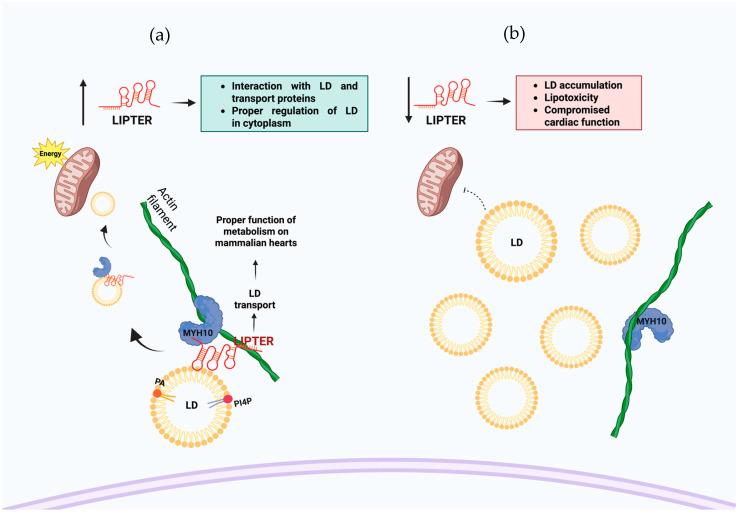
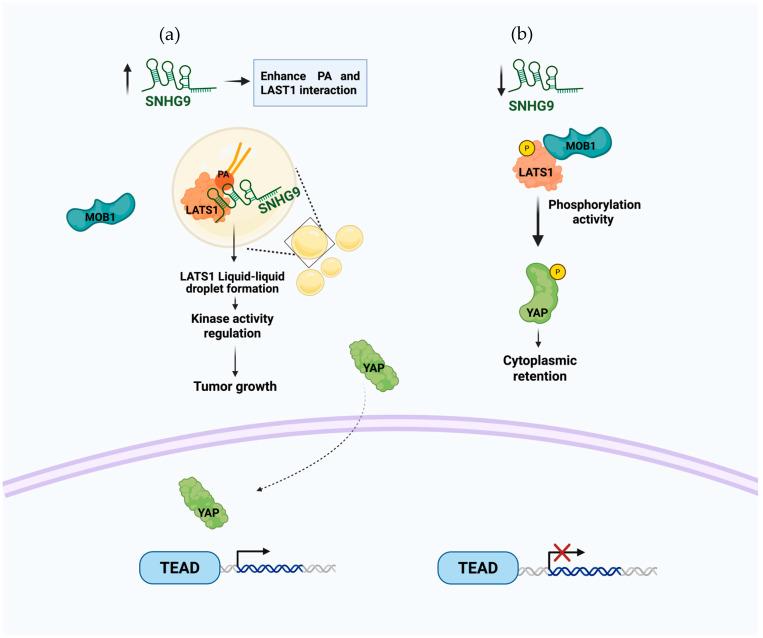
Long non-coding RNAs (lncRNAs) interact with a variety of biomolecules, including DNA, mRNAs, microRNA, and proteins, to regulate various cellular processes. Recently, their interactions with lipids have gained increasing attention as an emerging research area. Both lipids and lncRNAs play central roles in cellular regulation, and growing evidence reveals a complex interplay between these molecules. These interactions contribute to key biological functions, such as cancer progression, lipid droplet transport, autophagy, liquid-liquid phase separation, and the formation of organelles without membranes. Understanding the lipid-lncRNA interface opens new avenues for unraveling cellular regulation and disease mechanisms, holding great potential not only for elucidating the fundamental aspects of cellular biology but also for identifying innovative therapeutic targets for metabolic disorders and cancer. This review highlights the biological relevance of lipid-lncRNA interactions by exploring their roles in cellular organization, regulation, and diseases, including metabolic and cancer-related disorders.
长链非编码RNA(lncRNAs)与多种生物分子相互作用,包括DNA、mRNA、微小RNA和蛋白质,以调节各种细胞过程。最近,它们与脂质的相互作用作为一个新兴研究领域受到越来越多的关注。脂质和lncRNAs在细胞调节中都起着核心作用,越来越多的证据揭示了这些分子之间复杂的相互作用。这些相互作用有助于关键的生物学功能,如癌症进展、脂滴运输、自噬、液-液相分离以及无膜细胞器的形成。了解脂质-lncRNA界面为揭示细胞调节和疾病机制开辟了新途径,不仅在阐明细胞生物学的基本方面具有巨大潜力,而且在识别代谢紊乱和癌症的创新治疗靶点方面也具有巨大潜力。本综述通过探讨脂质-lncRNA相互作用在细胞组织、调节和疾病(包括代谢和癌症相关疾病)中的作用,突出了其生物学相关性。



 Zotero 插件