
前列腺癌中的循环肿瘤DNA:早期检测与晚期疾病管理的双重视角
Circulating Tumor DNA in Prostate Cancer: A Dual Perspective on Early Detection and Advanced Disease Management.
作者信息
Kopytov Stepan A, Sagitova Guzel R, Guschin Dmitry Y, Egorova Vera S, Zvyagin Andrei V, Rzhevskiy Alexey S
机构信息
Scientific Center for Translation Medicine, Sirius University of Science and Technology, 354340 Sirius, Russia.
Institute of Molecular Theranostics, Sechenov University, 119991 Moscow, Russia.
出版信息
Cancers (Basel). 2025 Aug 6;17(15):2589. doi: 10.3390/cancers17152589.
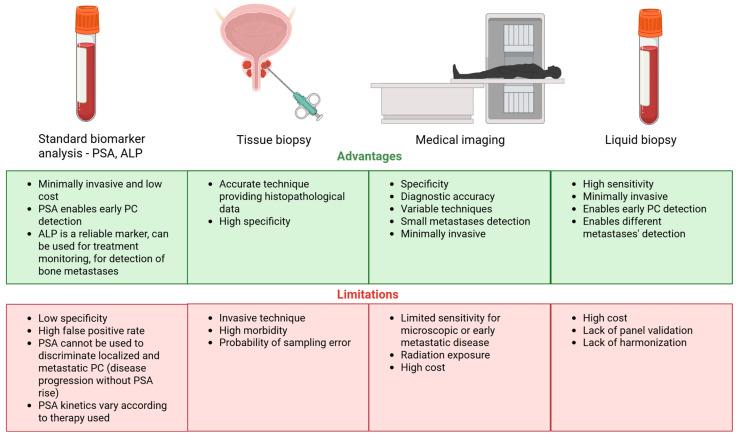
Prostate cancer (PC) remains a leading cause of malignancy in men worldwide, with current diagnostic methods such as prostate-specific antigen (PSA) testing and tissue biopsies facing limitations in specificity, invasiveness, and ability to capture tumor heterogeneity. Liquid biopsy, especially analysis of circulating tumor DNA (ctDNA), has emerged as a transformative tool for non-invasive detection, real-time monitoring, and treatment selection for PC. This review examines the role of ctDNA in both localized and metastatic PCs, focusing on its utility in early detection, risk stratification, therapy selection, and post-treatment monitoring. In localized PC, ctDNA-based biomarkers, including ctDNA fraction, methylation patterns, fragmentation profiles, and mutations, demonstrate promise in improving diagnostic accuracy and predicting disease recurrence. For metastatic PC, ctDNA analysis provides insights into tumor burden, genomic alterations, and resistance mechanisms, enabling immediate assessment of treatment response and guiding therapeutic decisions. Despite challenges such as the low ctDNA abundance in early-stage disease and the need for standardized protocols, advances in sequencing technologies and multimodal approaches enhance the clinical applicability of ctDNA. Integrating ctDNA with imaging and traditional biomarkers offers a pathway to precision oncology, ultimately improving outcomes. This review underscores the potential of ctDNA to redefine PC management while addressing current limitations and future directions for research and clinical implementation.
前列腺癌(PC)仍是全球男性恶性肿瘤的主要病因,目前的诊断方法,如前列腺特异性抗原(PSA)检测和组织活检,在特异性、侵入性以及捕捉肿瘤异质性的能力方面存在局限性。液体活检,尤其是循环肿瘤DNA(ctDNA)分析,已成为一种变革性工具,用于前列腺癌的无创检测、实时监测和治疗选择。本综述探讨了ctDNA在局限性和转移性前列腺癌中的作用,重点关注其在早期检测、风险分层、治疗选择和治疗后监测中的效用。在局限性前列腺癌中,基于ctDNA的生物标志物,包括ctDNA分数、甲基化模式、片段化谱和突变,在提高诊断准确性和预测疾病复发方面显示出前景。对于转移性前列腺癌,ctDNA分析可深入了解肿瘤负荷、基因组改变和耐药机制,从而能够立即评估治疗反应并指导治疗决策。尽管存在诸如早期疾病中ctDNA丰度低以及需要标准化方案等挑战,但测序技术和多模态方法的进展增强了ctDNA的临床适用性。将ctDNA与影像学和传统生物标志物相结合为精准肿瘤学提供了一条途径,最终改善治疗结果。本综述强调了ctDNA在重新定义前列腺癌管理方面的潜力,同时探讨了当前的局限性以及研究和临床应用的未来方向。
 Zotero 插件