
癌症的三维语言:通过肿瘤球体和类器官的细胞外囊泡进行通信
The 3D Language of Cancer: Communication via Extracellular Vesicles from Tumor Spheroids and Organoids.
作者信息
Campora Simona, Lo Cicero Alessandra
机构信息
Department of Biological, Chemical and Pharmaceutical Sciences and Technologies (STEBICEF), University of Palermo, 90128 Palermo, Italy.
出版信息
Int J Mol Sci. 2025 Jul 23;26(15):7104. doi: 10.3390/ijms26157104.
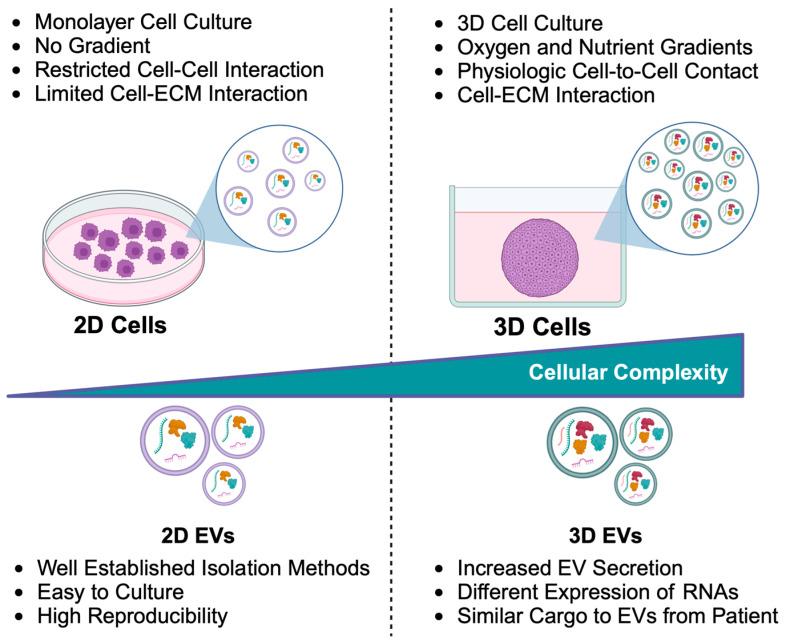
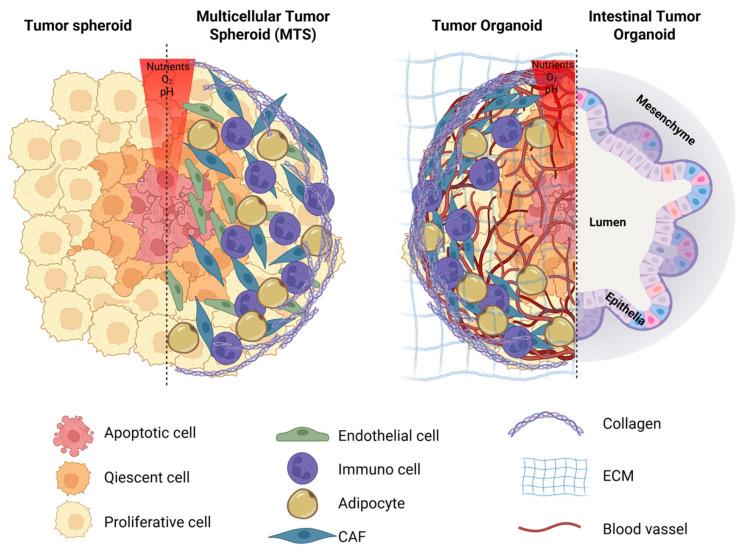
Extracellular vesicles (EVs) have emerged as key mediators of intercellular communication, gaining recognition as tumor biomarkers and promising therapeutic targets. As the study of EVs advances, it has become increasingly clear that the cellular context in which they are produced significantly influences their composition and function. Traditional two-dimensional in vitro models are being progressively replaced by more advanced three-dimensional systems, such as tumor spheroids and organoids. These 3D models are particularly valuable in cancer research, providing a more accurate representation of the complex cellular and molecular heterogeneity that characterizes tumors, better mimicking the in vivo microenvironment compared to standard monolayer cultures. This review explores the role of EVs derived from tumor spheroids and organoids in key oncogenic processes, including tumor growth, metastasis, and interactions within the tumor microenvironment. We highlight how EVs contribute to the spread of cancer cells, affecting surrounding tissues, and promote immune evasion, which poses significant challenges in cancer therapy.
细胞外囊泡(EVs)已成为细胞间通讯的关键介质,作为肿瘤生物标志物和有前景的治疗靶点而受到认可。随着对EVs研究的进展,越来越清楚的是,它们产生的细胞背景会显著影响其组成和功能。传统的二维体外模型正逐渐被更先进的三维系统所取代,如肿瘤球体和类器官。这些三维模型在癌症研究中特别有价值,能更准确地呈现表征肿瘤的复杂细胞和分子异质性,与标准单层培养相比,能更好地模拟体内微环境。本综述探讨了源自肿瘤球体和类器官的EVs在关键致癌过程中的作用,包括肿瘤生长、转移以及肿瘤微环境中的相互作用。我们强调了EVs如何促进癌细胞扩散、影响周围组织并促进免疫逃逸,这给癌症治疗带来了重大挑战。


 Zotero 插件