
结直肠癌的性别差异:流行病学、危险因素及临床结局
Sex Differences in Colorectal Cancer: Epidemiology, Risk Factors, and Clinical Outcomes.
作者信息
Tsokkou Sophia, Konstantinidis Ioannis, Papakonstantinou Menelaos, Chatzikomnitsa Paraskevi, Liampou Eftychia, Toutziari Evdokia, Giakoustidis Dimitrios, Bangeas Petros, Papadopoulos Vasileios, Giakoustidis Alexandros
机构信息
First Department of Surgery, General Hospital Papageorgiou, Aristotle University of Thessaloniki, 56429 Thessaloniki, Greece.
Laboratory of Histology-Embryology, Department of Medicine, Faculty of Health Sciences, Aristotle University of Thessaloniki, 54124 Thessaloniki, Greece.
出版信息
J Clin Med. 2025 Aug 6;14(15):5539. doi: 10.3390/jcm14155539.
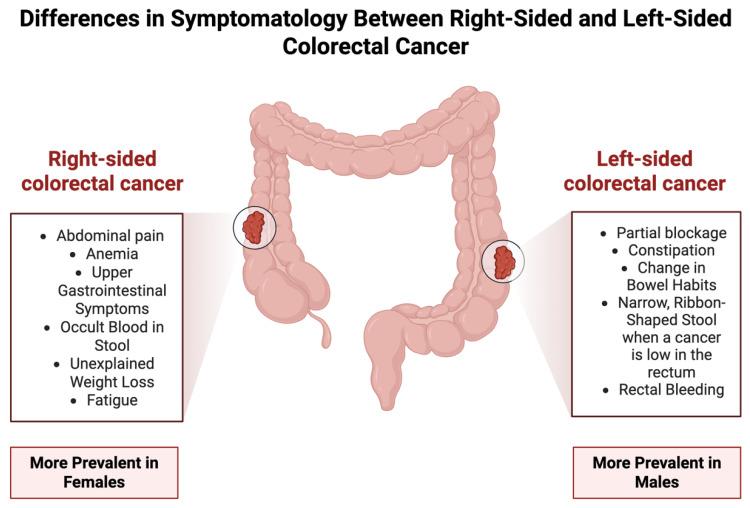
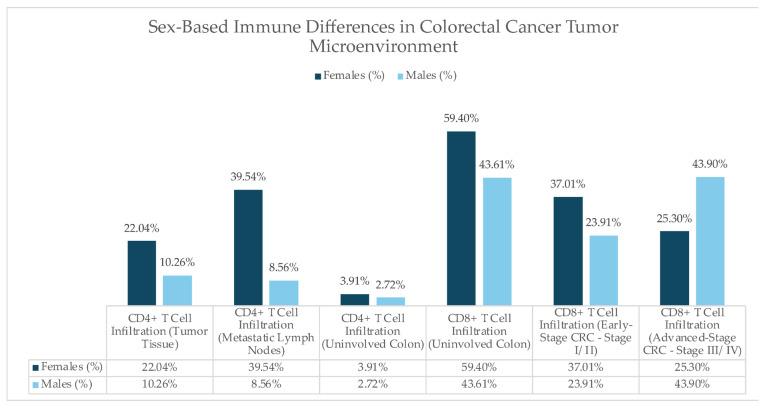
Colorectal cancer (CRC) constitutes a major global health concern, ranking as the third most common cancer and the second leading cause of cancer-related mortality. The current review explores sex-based differences in CRC epidemiology, risk factors, tumor biology, and clinical outcomes. Males exhibit a higher incidence and mortality rate, with left-sided (distal) CRC predominating, while females are more frequently diagnosed with right-sided (proximal) tumors, which tend to be more aggressive and less responsive to conventional chemotherapy. Genetic disparities, including microsatellite instability and X-chromosome tumor suppressor genes, contribute to sex-specific differences in tumor progression and treatment response. Immune variations also influence disease outcomes, with females exhibiting stronger immune surveillance but higher exhaustion markers. Lifestyle factors such as body mass index (BMI), smoking, and hormonal influences further modulate CRC risk. While males are more vulnerable to obesity-related CRC, central obesity (waist-to-hip ratio) emerges as a stronger predictor in females. Additionally, smoking increases CRC risk differentially by tumor location. These findings underscore the importance of sex-specific approaches in CRC prevention, screening, and treatment, advocating for personalized medicine strategies tailored to gender-based biological and clinical distinctions.
结直肠癌(CRC)是全球主要的健康问题,是第三大常见癌症,也是癌症相关死亡的第二大主要原因。本综述探讨了结直肠癌在流行病学、危险因素、肿瘤生物学和临床结局方面的性别差异。男性的发病率和死亡率较高,以左侧(远端)结直肠癌为主,而女性更常被诊断为右侧(近端)肿瘤,这些肿瘤往往更具侵袭性,对传统化疗的反应较差。包括微卫星不稳定性和X染色体肿瘤抑制基因在内的遗传差异导致了肿瘤进展和治疗反应的性别特异性差异。免疫差异也会影响疾病结局,女性表现出更强的免疫监视,但耗竭标志物水平更高。体重指数(BMI)、吸烟和激素影响等生活方式因素进一步调节结直肠癌风险。虽然男性更容易患与肥胖相关的结直肠癌,但中心性肥胖(腰臀比)在女性中是更强的预测指标。此外,吸烟对不同肿瘤部位的结直肠癌风险增加有差异。这些发现强调了在结直肠癌预防、筛查和治疗中采取针对性别的方法的重要性,提倡根据基于性别的生物学和临床差异制定个性化医疗策略。

 Zotero 插件