
一种理解TCF3突变在儿童B细胞前体急性淋巴细胞白血病中作用的新方法
"A novel approach to understanding the role of TCF3 mutations in childhood B-cell precursor acute lymphoblastic leukemia".
作者信息
Lejman Monika, Ozygała Aleksandra, Wróblewska Kinga, Zegardło Weronika, Widz Paulina, Żyła Martyna
机构信息
Independent Laboratory of Genetic Diagnostics, Medical University of Lublin, 20-093 Lublin, Poland.
Independent Laboratory of Genetic Diagnostics, Medical University of Lublin, 20-093 Lublin, Poland.
出版信息
Transl Oncol. 2025 Aug 13;61:102505. doi: 10.1016/j.tranon.2025.102505.
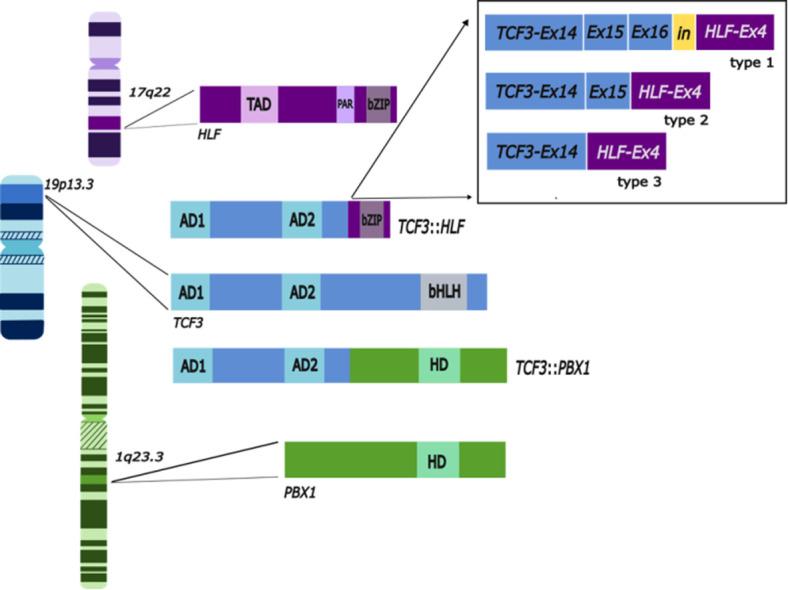
The TCF3 (also known as E2A) gene is responsible for encoding a critical transcriptional factor that plays a pivotal role in the differentiation of lymphoid progenitor cells. The TCF3 has been implicated in chromosomal translocations involving various genes, including PBX1, HLF, and ZNF384, as evidenced by recent clinical case studies (rare occuring). These include TLX1, FLI1, and TEF. These rearrangements have been observed to result in uncontrollable proliferation and development of B-cell progenitor acute lymphoblastic leukemia (BCP-ALL). The 5th edition of the World Health Organization (WHO) Classification of Haematolymphoid Tumors distinguishes B-cell lymphoblastic leukemia/lymphoma with TCF3 rearrangement into two types: with TCF3::PBX1 fusion and TCF3::HLF fusion. TCF3-positive pediatric BCP-ALL accounts for 5-11% of patients, making TCF3 an essential component of diagnostic panels for this leukemia. The objective of this manuscript is to provide a comprehensive description of the known TCF3 rearrangements and their associated gene partners. The review will also address the impact of TCF3 fusion genes in pediatric ALL according to the latest data and modern treatments, including the latest research results of Children's Oncology Group from the 66th American Society of Hematology (ASH) and promising biomarker in B-ALL - circular RNA with regard to TCF3 rearrangements. Additional genetic alterations, termed "secondary hits" are involved in lymphoid development and pathogenesis of ALL. The most frequently observed rearrangements in TCF3 are: PAX5, IKZF1, SETDB2, EBF1, as well as CDKN2A/B.
TCF3(也称为E2A)基因负责编码一种关键的转录因子,该因子在淋巴样祖细胞的分化中起关键作用。近期临床病例研究(罕见)表明,TCF3与涉及多种基因(包括PBX1、HLF和ZNF384)的染色体易位有关。这些基因包括TLX1、FLI1和TEF。已观察到这些重排会导致B细胞祖细胞急性淋巴细胞白血病(BCP-ALL)的失控增殖和发展。世界卫生组织(WHO)《血液淋巴系统肿瘤分类》第5版将伴有TCF3重排的B细胞淋巴细胞白血病/淋巴瘤分为两种类型:伴有TCF3::PBX1融合和TCF3::HLF融合。TCF3阳性的儿童BCP-ALL占患者的5%-11%,使TCF3成为该白血病诊断指标的重要组成部分。本文的目的是全面描述已知的TCF3重排及其相关的基因伙伴。该综述还将根据最新数据和现代治疗方法,探讨TCF3融合基因对儿童急性淋巴细胞白血病的影响,包括第66届美国血液学会(ASH)儿童肿瘤学组的最新研究结果,以及B-ALL中有前景的生物标志物——与TCF3重排相关的环状RNA。其他被称为“二次打击”的基因改变参与了急性淋巴细胞白血病的淋巴样发育和发病机制。在TCF3中最常观察到的重排是:PAX5、IKZF1、SETDB2、EBF1以及CDKN2A/B。

 Zotero 插件