
1990 - 2021年环境风险因素所致全球缺血性心脏病负担:年龄-时期-队列分析
Global ischemic heart disease burden attributable to environmental risk factors, 1990-2021: an Age-Period-Cohort analysis.
作者信息
Su Rui, Ze Wangchu, Huang Ruiyu, Guo Yanxia, Liu Gang, Zhang Baolu
机构信息
Department of Nursing, The Affiliated Hospital, Southwest Medical University, Luzhou, China.
School of Nursing, Southwest Medical University, Luzhou, China.
出版信息
Front Public Health. 2025 Aug 1;13:1622108. doi: 10.3389/fpubh.2025.1622108. eCollection 2025.
BACKGROUND
Ischemic heart disease (IHD) is the leading cause of global deaths. Environmental exposures contribute substantially to IHD burden, yet their combined effects across socio-demographic strata remain poorly characterized.
OBJECTIVE
This study aimed to systematically evaluate the global burden of IHD attributable to environmental factors, analyzing its temporal trends, geographical patterns, and Age-Period-Cohort (APC) effects across different socio-demographic index regions from 1990 to 2021.
METHODS
Data for this study were obtained from the Global Burden of Disease 2021 (GBD 2021) public dataset to investigate age-standardized deaths rates and disability-adjusted life years (DALYs) rates of IHD attributable to environmental factors from 1990 to 2021. Environmental factors included particulate matter pollution, non-optimal temperature, and lead exposure. Countries were categorized into five socio-demographic index (SDI) levels. The APC analysis model was employed to disentangle age, period, and cohort effects. Data processing and visualization were conducted using R version 4.4.3.
RESULTS
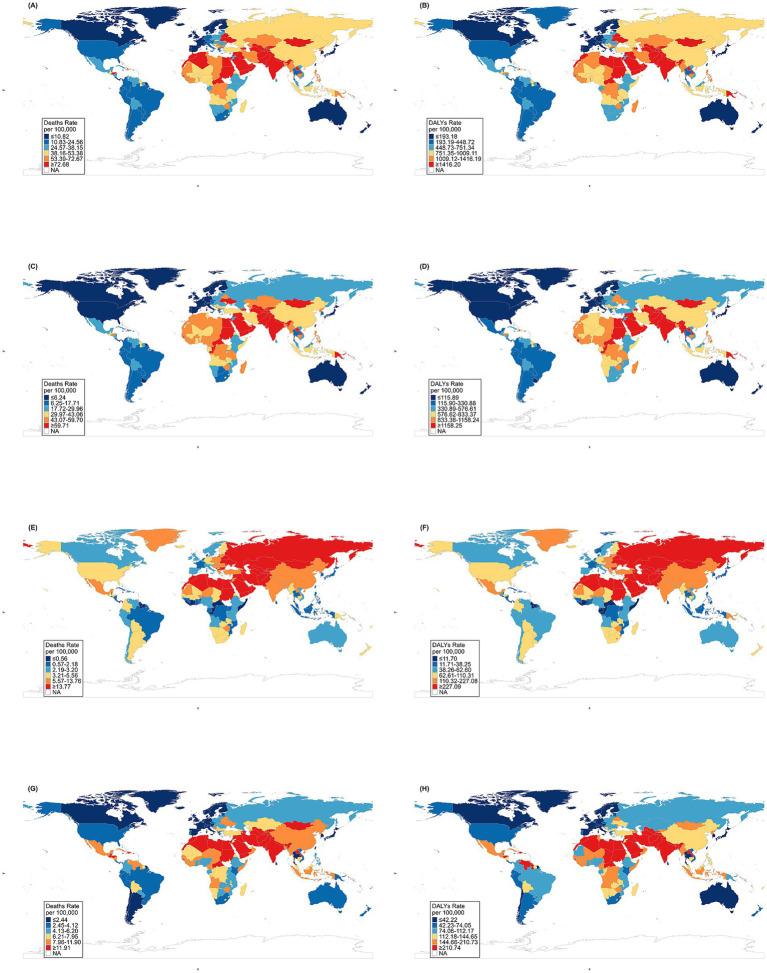
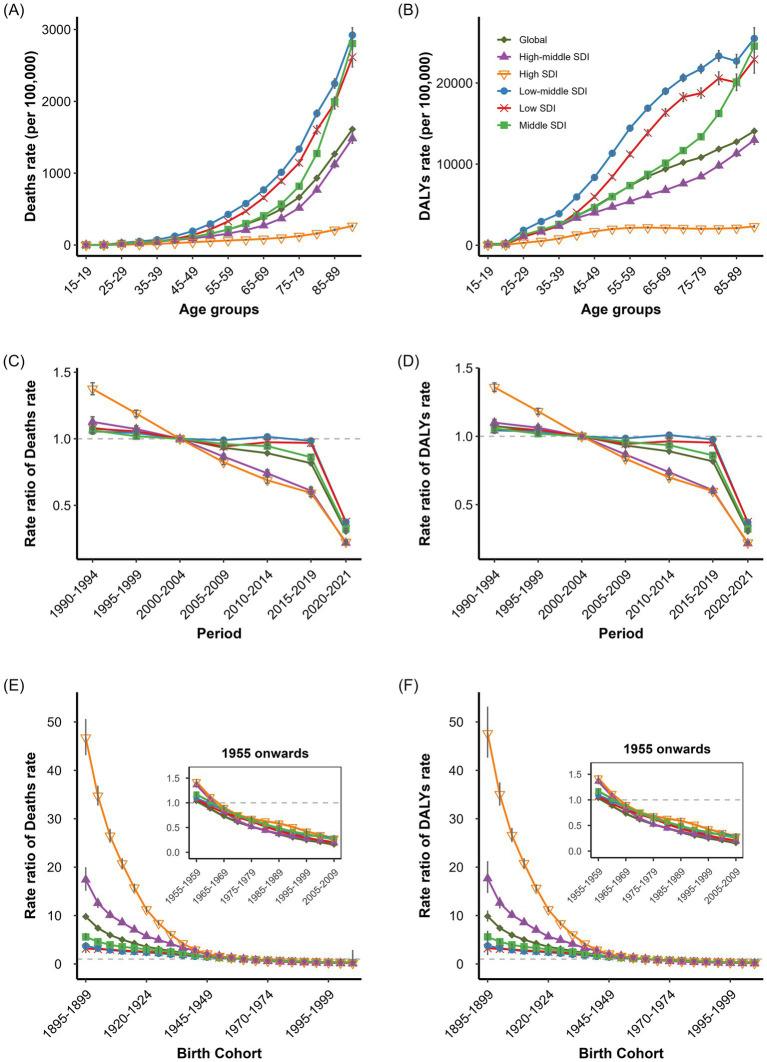
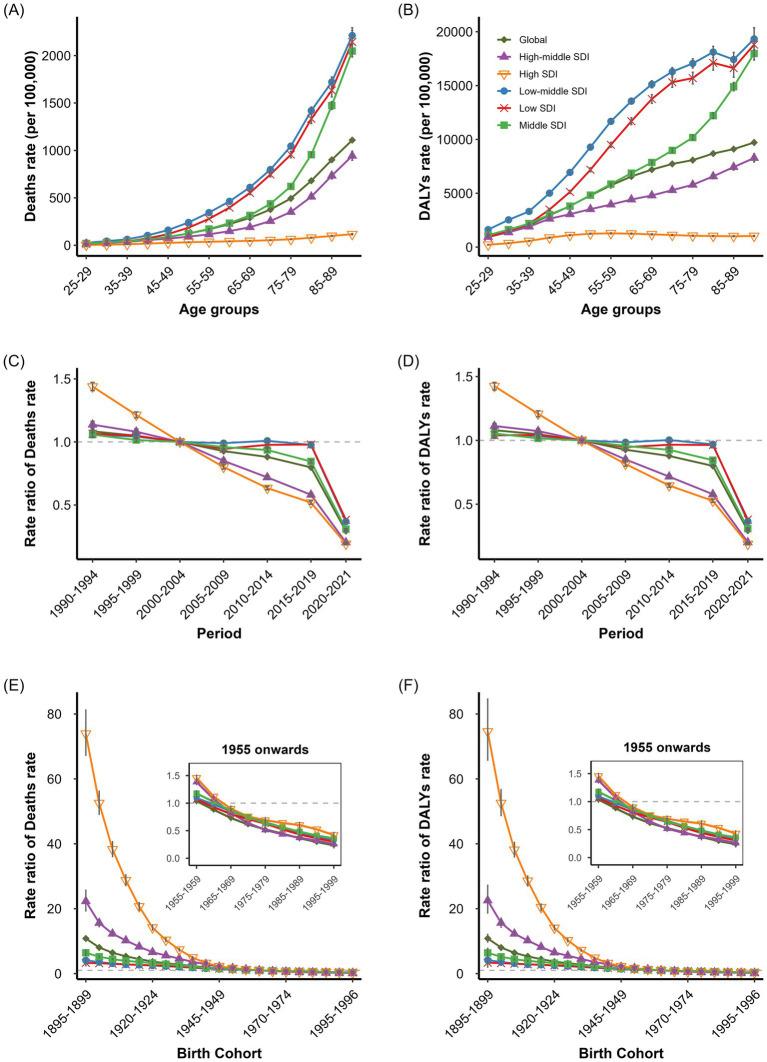
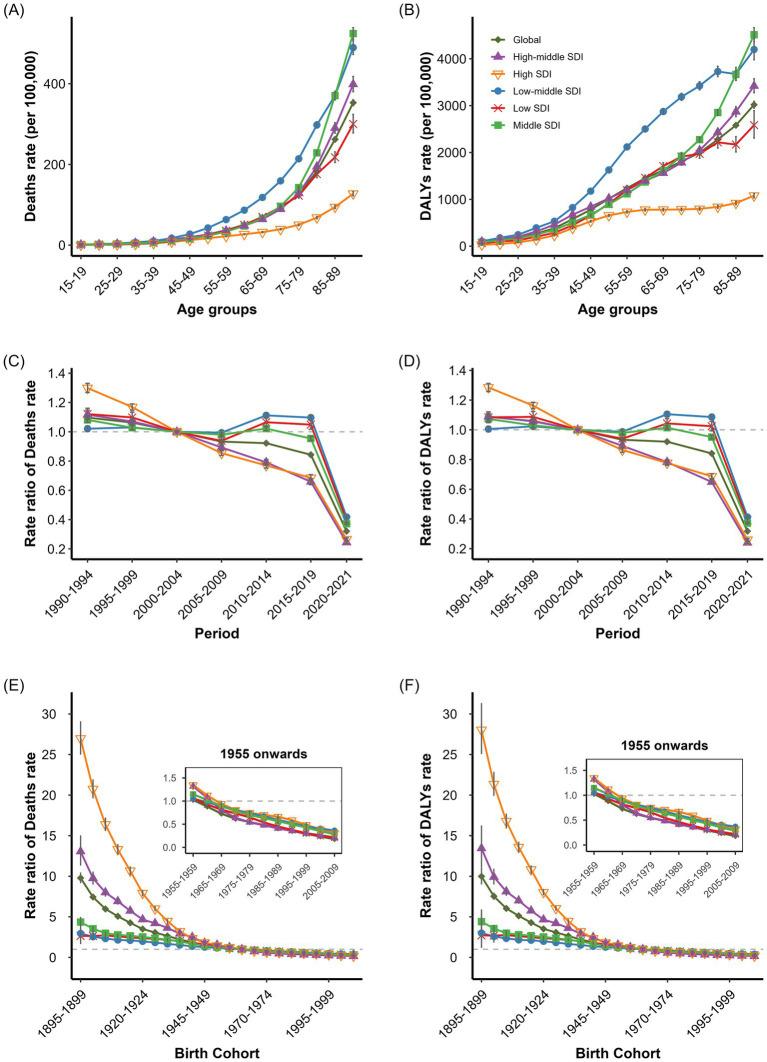
Between 1990 and 2021, global environmental IHD deaths rates decreased by 31.13% and DALYs rates by 29.85%. High SDI regions achieved 70.39% reduction in deaths rates, while low SDI regions showed only 3.13% decrease. Particulate matter pollution remained the predominant environmental contributor with the highest burdens in South Asia, the Middle East, and North Africa. APC analysis revealed that environmental-related IHD burden increased exponentially with age, with earlier birth cohorts showing substantially higher Risk Ratios (RR). Males consistently demonstrated higher burden than females across all environmental factors.
CONCLUSION
IHD burden attributable to environmental factors shows a declining trend globally but with notable regional and gender disparities. Policymakers in low SDI regions should integrate environmental health into development strategies, high-pollution burden regions should strengthen air quality monitoring and emission control, climate-sensitive regions need to implement temperature adaptation planning, and historically industrialized regions should enhance lead exposure monitoring while ensuring occupational protection for males and environmental health safeguards for the older adults.
背景
缺血性心脏病(IHD)是全球死亡的主要原因。环境暴露在很大程度上导致了缺血性心脏病的负担,但其在不同社会人口阶层中的综合影响仍未得到充分描述。
目的
本研究旨在系统评估环境因素导致的缺血性心脏病的全球负担,分析其1990年至2021年期间的时间趋势、地理模式以及不同社会人口指数区域的年龄-时期-队列(APC)效应。
方法
本研究的数据来自《2021年全球疾病负担》(GBD 2021)公共数据集,以调查1990年至2021年期间环境因素导致的缺血性心脏病的年龄标准化死亡率和伤残调整生命年(DALYs)率。环境因素包括颗粒物污染、非适宜温度和铅暴露。国家被分为五个社会人口指数(SDI)水平。采用APC分析模型来区分年龄、时期和队列效应。使用R版本4.4.3进行数据处理和可视化。
结果
1990年至2021年期间,全球环境性缺血性心脏病死亡率下降了31.13%,DALYs率下降了29.85%。高SDI地区死亡率下降了70.39%,而低SDI地区仅下降了3.13%。颗粒物污染仍然是主要的环境因素,在南亚、中东和北非负担最重。APC分析显示,与环境相关的缺血性心脏病负担随年龄呈指数增长,较早出生队列的风险比(RR)显著更高。在所有环境因素中,男性的负担始终高于女性。
结论
环境因素导致的缺血性心脏病负担在全球呈下降趋势,但存在显著的区域和性别差异。低SDI地区的政策制定者应将环境健康纳入发展战略,高污染负担地区应加强空气质量监测和排放控制,气候敏感地区需要实施温度适应规划,历史工业化地区应加强铅暴露监测,同时确保男性的职业保护和老年人的环境健康保障。

 Zotero 插件