
通过锌指蛋白18(ZNF18)的五个锌指结构域控制基因表达。
Controlling gene expression through five zinc finger domains of ZNF18.
作者信息
Park Soyeon, Hwang Yunha, Eom Ki Seong, Cheong Jin Sung, Lee Seung Jae
机构信息
Department of Chemistry, Jeonbuk National University, Jeonju, Republic of Korea.
Department of Neurosurgery, Wonkwang University Hospital, Iksan, Republic of Korea.
出版信息
Protein Sci. 2025 Sep;34(9):e70278. doi: 10.1002/pro.70278.
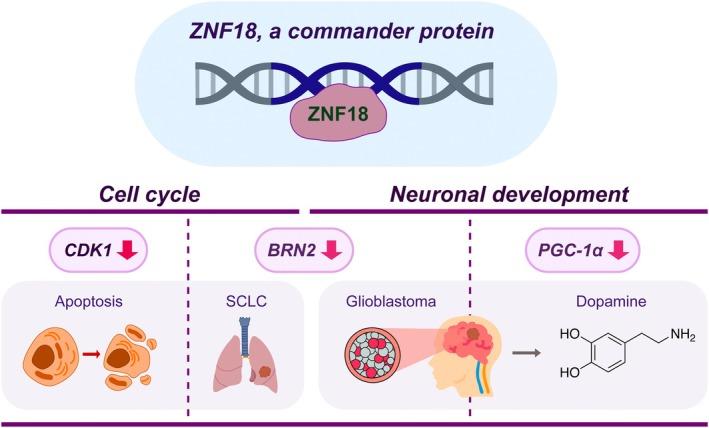
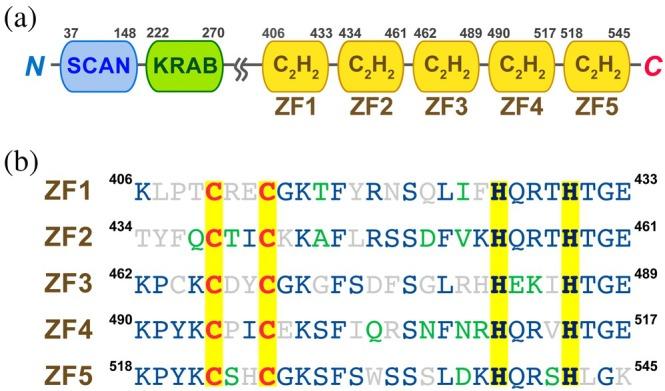
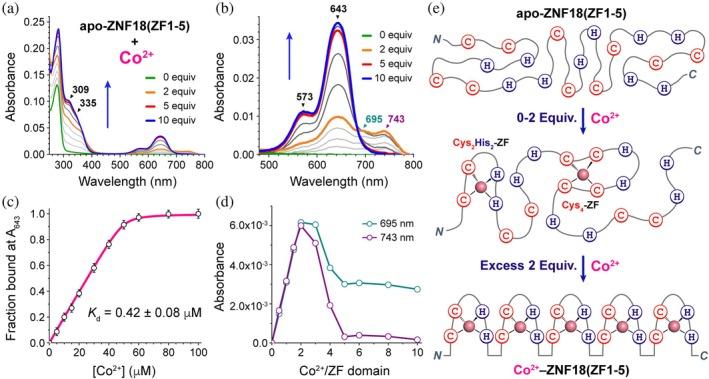
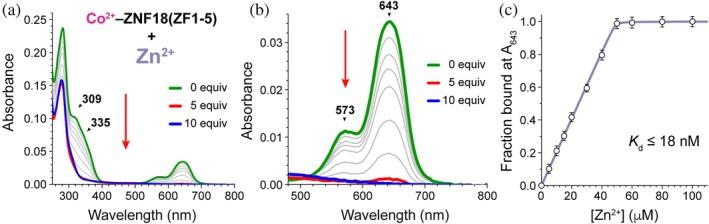
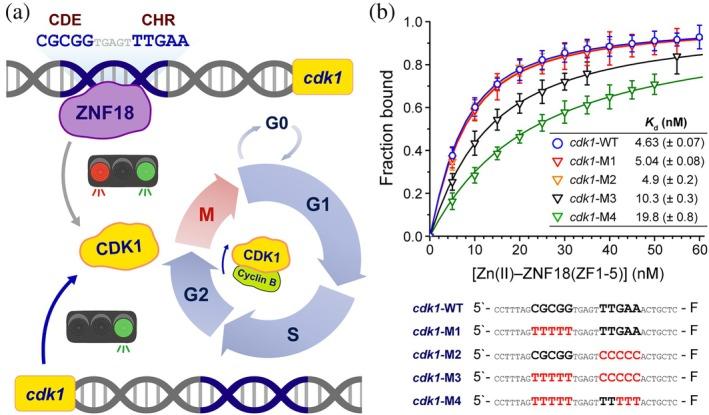
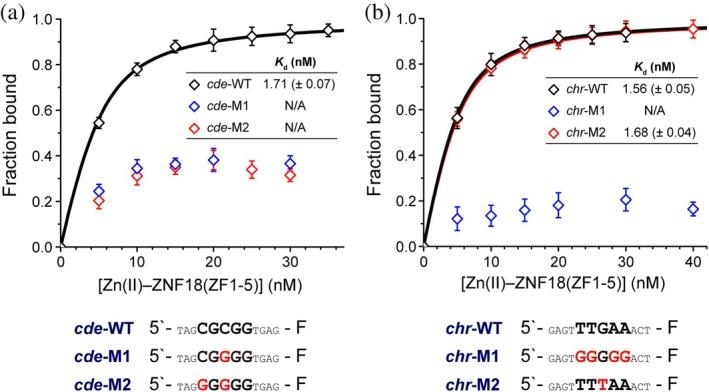
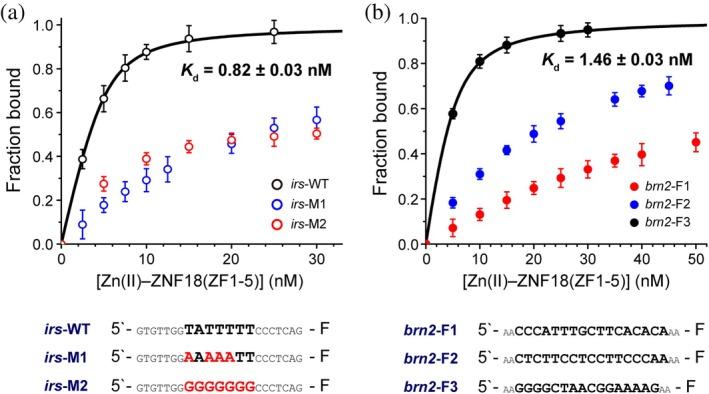
Zinc finger (ZF) proteins are the most abundant transcription factors in vertebrates, and they regulate gene expression through interactions with cis-acting elements. ZF domains selectively recognize specific sequences to accelerate or repress target genes. Zinc finger protein 18 (ZNF18) contains five CXCXHXH-type ZFs at the C-terminus, which are expressed in the brain and other organs of the biological system. Bioinformatic study proposed that cyclin-dependent kinase 1 (CDK1) is in the signaling cascade of ZNF18; although experimental evidence has not yet been reported. In this study, we expressed and purified ZNF18(ZF1-5), five ZF domains from ZNF18, and investigated metal binding specificity and promoter interactions. ZNF18(ZF1-5) has specific coordination to Zn (K ≤ 18 nM) compared with other xenobiotic metal ions, including Co, Fe, and Fe, with 98.5% of reduced ZF domains after purification. This significantly active ZF can be one of the major reasons for tight coordination affinity. CDK1 rescued the arrested cell cycle induced by DNA damage, resulting in tumorigenesis. Zn-ZNF18(ZF1-5) specifically binds to cis-acting elements of cdk1 (K = 4.63 ± 0.07 nM), mediated by a cell cycle-dependent element (cde, 5'-CGCGG) and a cell cycle gene homology region (chr, 5'-TTGAA). The ZNF18 superfamily was expressed in the brain for the regulation of neuronal development and cell differentiation. Zn-ZNF18(ZF1-5) interacted with promoters in the insulin response sequence (IRS) for inhibition of dopamine secretion and cis-acting element of brain-2 (BRN2), which controlled astrocyte and cancer development. These results provide the first evidence that ZNF18(ZF1-5) regulates the cell cycle and neuronal development through transcriptional regulation.
锌指(ZF)蛋白是脊椎动物中最丰富的转录因子,它们通过与顺式作用元件相互作用来调节基因表达。ZF结构域选择性识别特定序列以加速或抑制靶基因。锌指蛋白18(ZNF18)在C末端包含五个CXCXHXH型锌指,在生物系统的大脑和其他器官中表达。生物信息学研究表明,细胞周期蛋白依赖性激酶1(CDK1)处于ZNF18的信号级联中;尽管尚未有实验证据报道。在本研究中,我们表达并纯化了ZNF18的五个锌指结构域ZNF18(ZF1-5),并研究了其金属结合特异性和启动子相互作用。与其他异源生物金属离子(包括钴、铁和镍)相比,ZNF18(ZF1-5)对锌具有特异性配位作用(K≤18 nM),纯化后98.5%的锌指结构域具有活性。这种活性显著的锌指可能是紧密配位亲和力的主要原因之一。CDK1挽救了由DNA损伤诱导的细胞周期停滞,从而导致肿瘤发生。锌-ZNF18(ZF1-5)特异性结合cdk1的顺式作用元件(K = 4.63±0.07 nM),由细胞周期依赖性元件(cde,5'-CGCGG)和细胞周期基因同源区域(chr,5'-TTGAA)介导。ZNF18超家族在大脑中表达,用于调节神经元发育和细胞分化。锌-ZNF18(ZF1-5)与胰岛素反应序列(IRS)中的启动子相互作用,以抑制多巴胺分泌,并与控制星形胶质细胞和癌症发展的脑-2(BRN2)的顺式作用元件相互作用。这些结果提供了首个证据,表明ZNF18(ZF1-5)通过转录调控来调节细胞周期和神经元发育。

 Zotero 插件