
揭示转化生长因子-β受体II(TGF-βRII)在骨质疏松症中的因果作用及其相关差异基因作为新靶点的潜力。
Unraveling the causal role of TGF-βRII in osteoporosis and the potential of its associated differential genes as novel targets.
作者信息
Zhu Xinyu, Fan Yueyang, Wang Wenyu, Wu Rui, Zhang Chen, Yang Ziquan
机构信息
Department of Orthopedics, First Hospital of Shanxi Medical University, Taiyuan, Shanxi, 030000, PR China.
Academy of Medical Sciences, Shanxi Medical University, Taiyuan, Shanxi, 030001, PR China.
出版信息
Eur J Med Res. 2025 Aug 18;30(1):756. doi: 10.1186/s40001-025-02971-z.
BACKGROUND
Osteoporosis (OP) is a common disorder associated with reduced density of the bones, increasing the likelihood of fractures and deformities. The global incidence of OP is rising rapidly due to aging populations and lifestyle changes, affecting not only older adults but, increasingly, younger and middle-aged individuals. The long-term care and rehabilitation required for OP-induced fractures and complications impose significant economic burdens on both individuals and society, as well as reducing their quality of life.
METHODS
Recent studies have demonstrated an association between transforming growth factor-beta type II receptor (TGF-βRII) and OP through analysis of gene expression data sets and Mendelian randomization, suggesting potential causal relationships. Differentially expressed genes (DEGs) were identified between mesenchymal stem cells (MSCs) from OP patients and healthy controls in the GEO database, and their functions were analyzed. The relationships between the identified genes and their effects on immune cells were examined in terms of ceRNAs and immune infiltration. Single-cell RNA-seq data of OP patients in GSE147287 was used to investigate effects on MSC differentiation from DEGs, and gene expression data were verified using RT-qPCR.
RESULTS
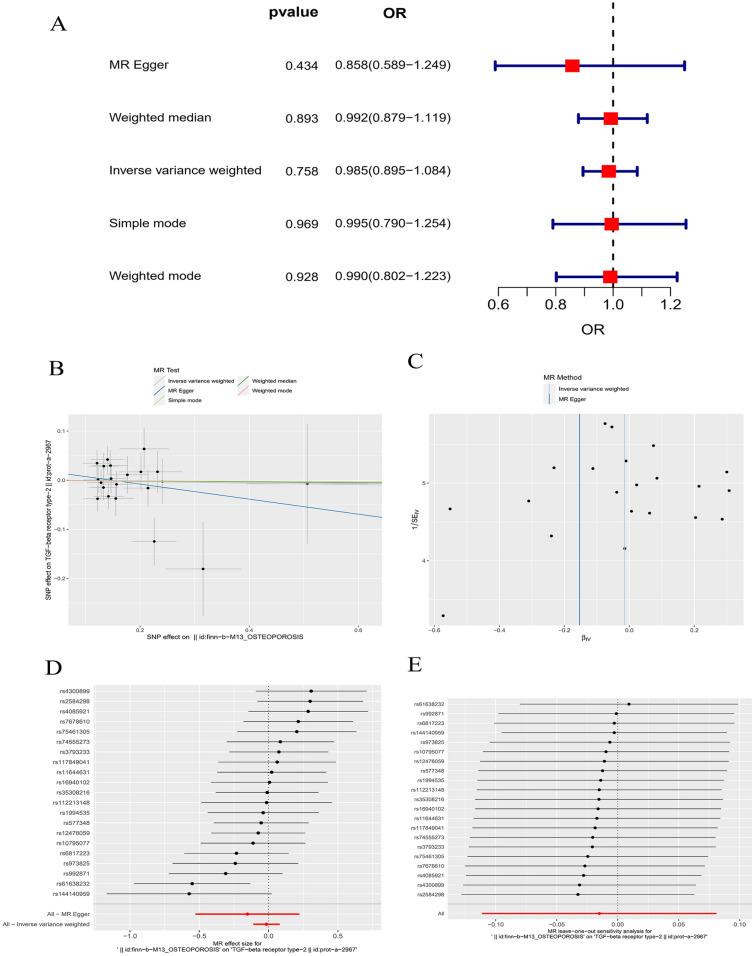
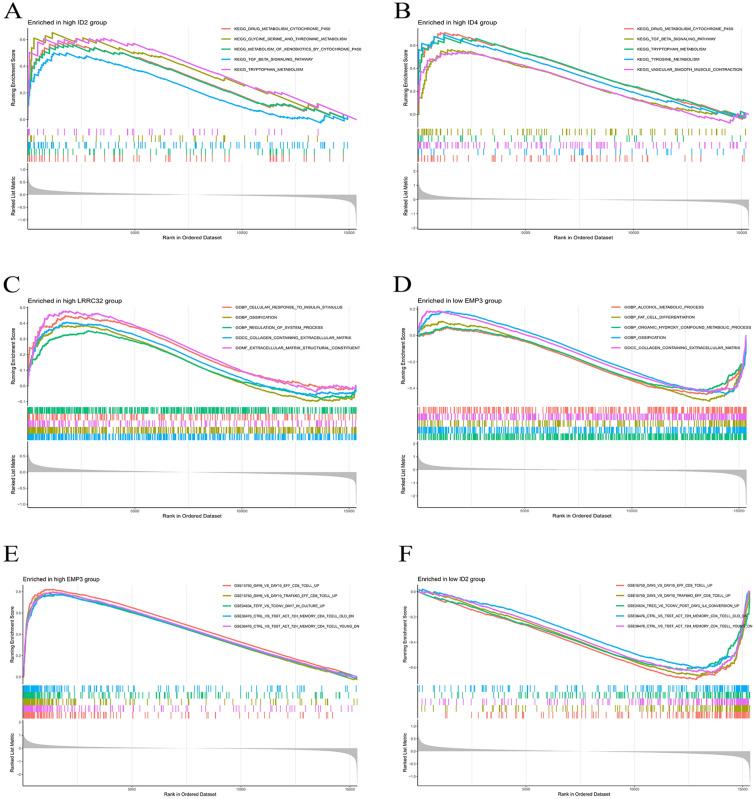
The molecular pathways underlying OP were explored by focusing on the role of MSCs and TGF-β signaling, identifying a significant causal link between TGFBRII and OP. DEGs associated with the TGF-β pathway included ID2, ID4, LRRC32, and EMP3, which are closely related to bone homeostasis and the differentiation of bone marrow MSCs. In addition, analysis of immune infiltration showed the involvement of these genes in various immune cells, and potential non-coding RNA targeting ID2, ID4, and LRRC32 were investigated using ceRNA networks. Single-cell sequencing demonstrated the expression of ID2, ID4, LRRC32, and EMP3 in bone marrow MSCs and their effects on MSC differentiation.
CONCLUSIONS
TGFBRII was found to be causally associated with OP. ID2, ID4, LRRC32, and EMP3 affect the differentiation and osteogenic function of bone marrow MSCs through the TGF-β pathway, suggesting the potential of ID2, ID4, LRRC32, and EMP3 as therapeutic targets for treating osteoporosis. In summary, targeting of ID2, ID4, LRRC32, and EMP3 holds significant promise for the treatment of OP, providing new targets and strategies, and precise treatment.
背景
骨质疏松症(OP)是一种常见疾病,与骨密度降低相关,增加了骨折和畸形的可能性。由于人口老龄化和生活方式的改变,全球OP发病率正在迅速上升,不仅影响老年人,而且越来越多地影响年轻人和中年人。OP引起的骨折和并发症所需的长期护理和康复给个人和社会都带来了巨大的经济负担,同时也降低了他们的生活质量。
方法
最近的研究通过分析基因表达数据集和孟德尔随机化,证明了转化生长因子β II型受体(TGF-βRII)与OP之间的关联,提示了潜在的因果关系。在GEO数据库中鉴定了OP患者间充质干细胞(MSCs)与健康对照之间的差异表达基因(DEGs),并分析了它们的功能。从ceRNA和免疫浸润方面研究了鉴定出的基因之间的关系及其对免疫细胞的影响。使用GSE147287中OP患者的单细胞RNA测序数据来研究DEGs对MSC分化的影响,并使用RT-qPCR验证基因表达数据。
结果
通过关注MSCs和TGF-β信号传导的作用,探索了OP的分子途径,确定了TGFBRII与OP之间存在显著的因果联系。与TGF-β途径相关的DEGs包括ID2、ID4、LRRC32和EMP3,它们与骨稳态和骨髓MSCs的分化密切相关。此外,免疫浸润分析表明这些基因参与了各种免疫细胞,并使用ceRNA网络研究了靶向ID2、ID4和LRRC32的潜在非编码RNA。单细胞测序证明了ID2、ID4、LRRC32和EMP3在骨髓MSCs中的表达及其对MSC分化的影响。
结论
发现TGFBRII与OP存在因果关系。ID2、ID4、LRRC32和EMP3通过TGF-β途径影响骨髓MSCs的分化和成骨功能,提示ID2、ID4、LRRC32和EMP3作为治疗骨质疏松症的治疗靶点的潜力。总之,靶向ID2、ID4、LRRC32和EMP3在OP治疗方面具有重大前景,提供了新的靶点和策略以及精准治疗。





 Zotero 插件