
1990年至2021年肝母细胞瘤的全球负担及到2030年的预测。
Global Burden of Hepatoblastoma From 1990 to 2021 and Projection to 2030.
作者信息
Huang Xiaoyu, Zhang Zhiqiang, Wu Qiong, Kang Shaoyang, Yang Xinyue, Wang Fengmei
机构信息
School of Medicine, Nankai University, Tianjin, China.
Department of Gastroenterology and Hepatology, Tianjin Key Laboratory of Molecular Diagnosis and Treatment of Liver Cancer, Tianjin First Central Hospital, Nankai University, Tianjin, China.
出版信息
Cancer Med. 2025 Aug;14(16):e71163. doi: 10.1002/cam4.71163.
BACKGROUND
Hepatoblastoma (HB) is the most common primary pediatric hepatocellular carcinoma, and the five-year survival rate for HB is the lowest among childhood cancers, as 20% of cases are chemotherapy resistant or unresectable. Understanding the global burden of HB and future trends in HB burden is urgently needed for gastroenterology and hepatology specialists and pediatricians. This study aims to provide a comprehensive assessment of the global burden of hepatoblastoma, predict future trends over the next decade, and offer insights into its management.
METHODS
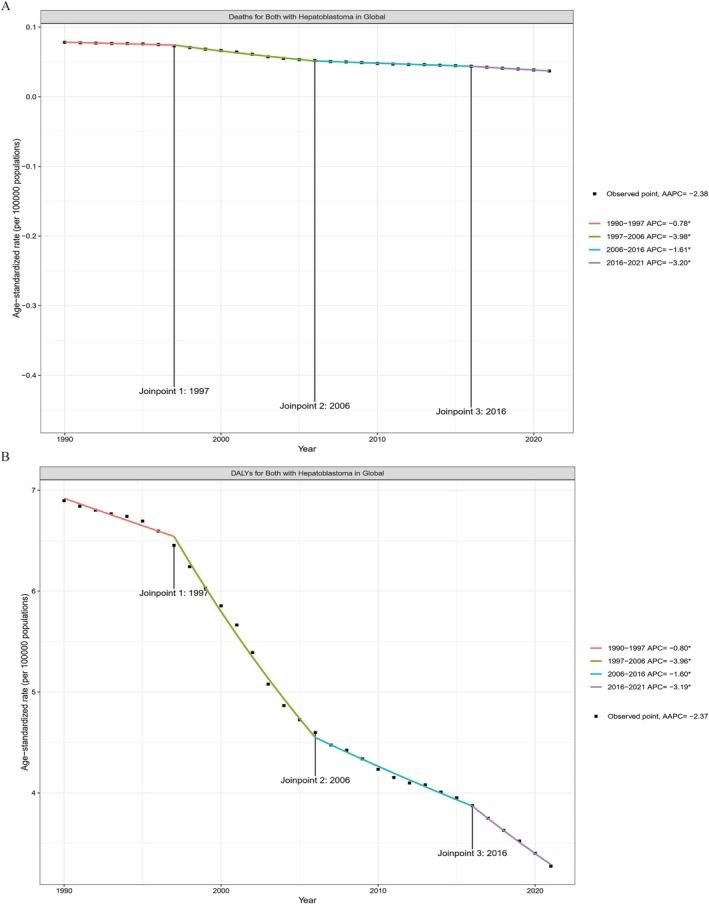
Using data from the Global Burden of Disease 2021, trends in HB-related mortality and disability-adjusted life years (DALYs) were analyzed. Age-standardized rates (ASR) and estimated annual percentage changes (EAPC) were employed to measure trends in these outcomes. Joinpoint regression identified trends, while Bayesian age-period-cohort (BAPC) modeling projected the future burden.
RESULTS
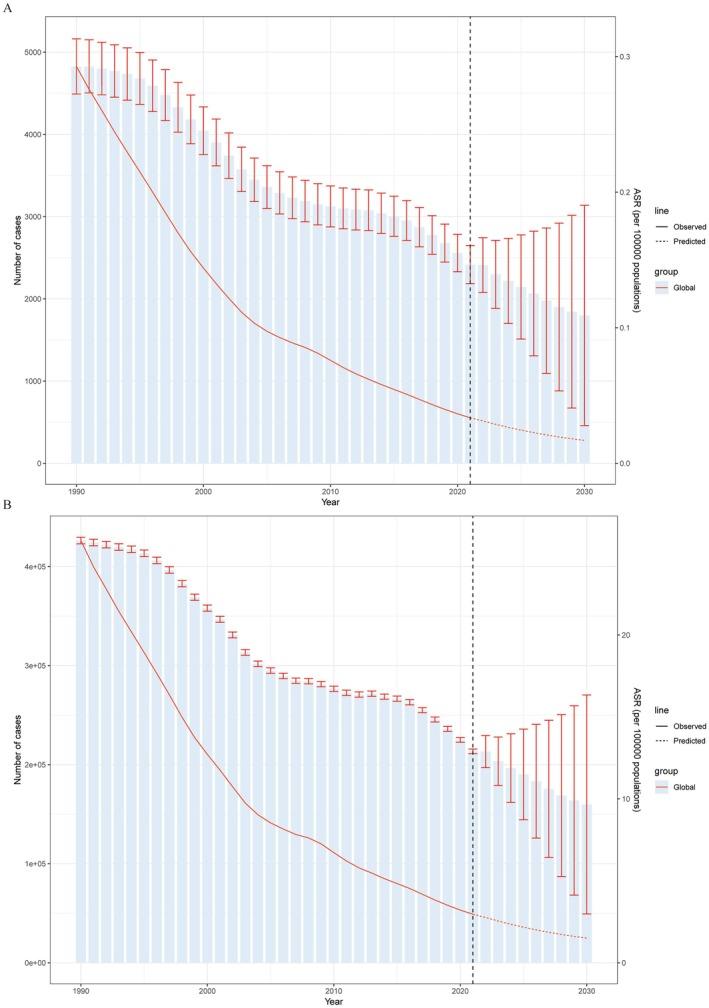
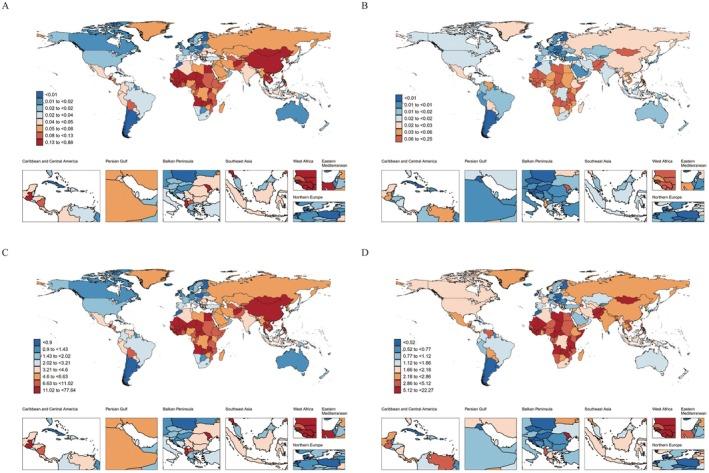
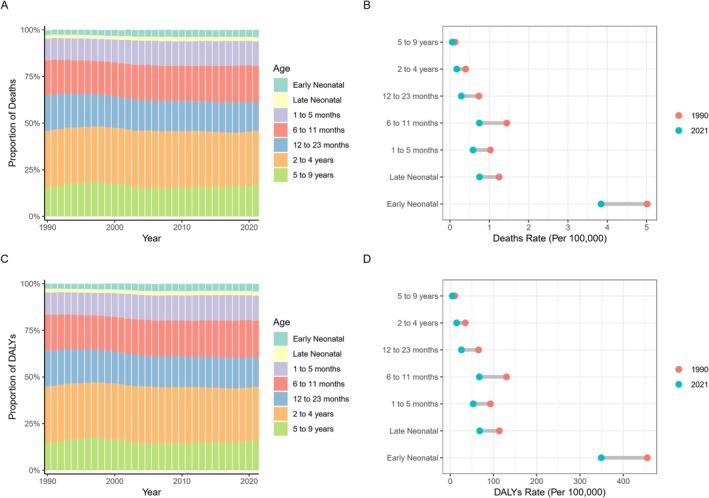
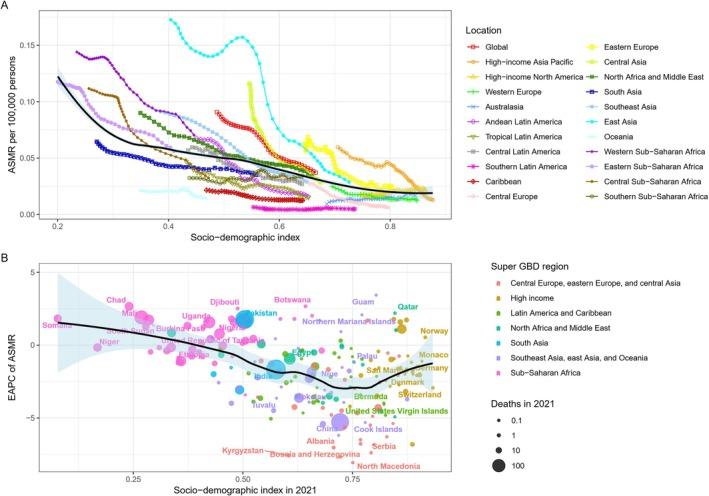
Although the global number of HB-related deaths decreased from 1990 to 2021, the number of deaths in 2021 in low socio-demographic index (SDI) regions remained comparable to 1990 levels, with a notable upward trend in 27 countries, particularly in West Africa. Mortality and DALYs rates were highest in the early neonatal period, with the 2-4 years age group also showing the greatest burden. Projections indicate a global decline in HB burden from 2021 to 2030, but regions such as West Africa are likely to face persistent challenges.
CONCLUSIONS
In light of rapid population growth and escalating poverty in Africa, early screening and intervention for hepatoblastoma, particularly among children under five in low SDI regions, are critical to reducing the disease burden. These findings have significant implications for liver health policy, emphasizing the need for targeted interventions based on age and region to mitigate the impact of hepatoblastoma.
背景
肝母细胞瘤(HB)是最常见的原发性儿童肝细胞癌,其五年生存率在儿童癌症中是最低的,因为20%的病例对化疗耐药或无法切除。胃肠病学和肝病学专家以及儿科医生迫切需要了解HB的全球负担以及HB负担的未来趋势。本研究旨在全面评估肝母细胞瘤的全球负担,预测未来十年的趋势,并提供其管理方面的见解。
方法
利用2021年全球疾病负担的数据,分析了与HB相关的死亡率和伤残调整生命年(DALYs)的趋势。采用年龄标准化率(ASR)和估计年百分比变化(EAPC)来衡量这些结果的趋势。连接点回归确定趋势,而贝叶斯年龄-时期-队列(BAPC)模型预测未来负担。
结果
尽管1990年至2021年全球HB相关死亡人数有所下降,但2021年社会人口指数(SDI)较低地区的死亡人数仍与1990年水平相当,27个国家有显著上升趋势,特别是在西非。死亡率和DALYs率在新生儿早期最高,2至4岁年龄组的负担也最大。预测表明,2021年至2030年全球HB负担将下降,但西非等地区可能面临持续挑战。
结论
鉴于非洲人口的快速增长和贫困加剧,对肝母细胞瘤进行早期筛查和干预,特别是在低SDI地区的五岁以下儿童中,对于减轻疾病负担至关重要。这些发现对肝脏健康政策具有重要意义,强调需要根据年龄和地区进行有针对性的干预,以减轻肝母细胞瘤的影响。

 Zotero 插件