
编码环子孢子蛋白的mRNA-LNP疫苗具有高度免疫原性,并能在小鼠中提供保护。
mRNA-LNP vaccine encoding the circumsporozoite protein is highly immunogenic and confers protection in mice.
作者信息
Limsalakpetch Amporn, Kum-Arb Utaiwan, Yongvanitchit Kosol, Im-Erbsin Rawiwan, Ubalee Ratawan, Waters Norman, Vesely Brian A, Muramatsu Hiromi, Weissman Drew, Tam Ying K, Yoshida Shigeto, Adams John, Yadava Anjali, Pardi Norbert, Pichyangkul Sathit
机构信息
Department of Bacterial and Parasitic Diseases, WRAIR-AFRIMS, Bangkok 10400, Thailand.
Department of Microbiology, Perelman School of Medicine, University of Pennsylvania, Philadelphia, PA 19104, USA.
出版信息
Mol Ther Nucleic Acids. 2025 Jul 30;36(3):102645. doi: 10.1016/j.omtn.2025.102645. eCollection 2025 Sep 9.
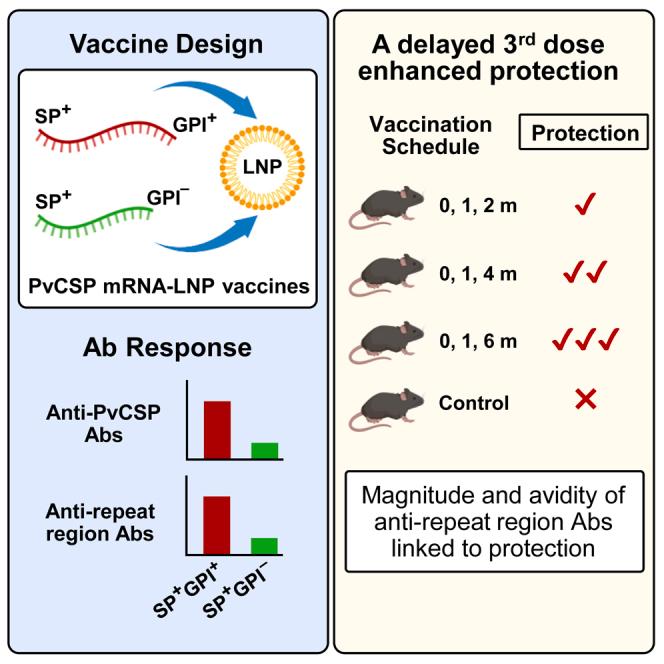
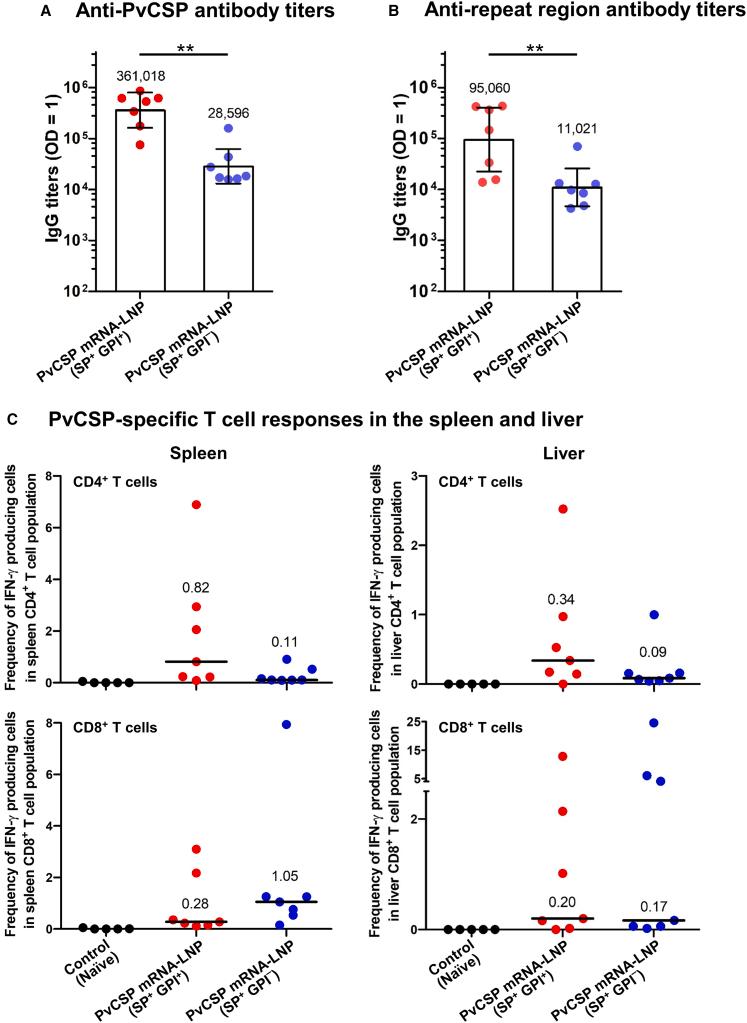
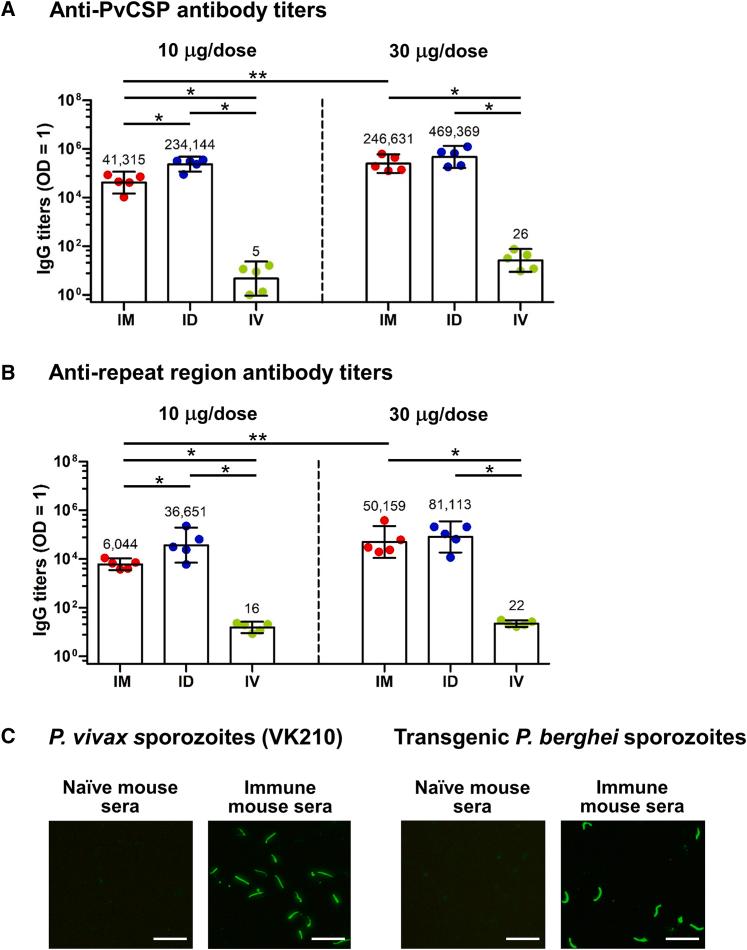
poses significant challenges to malaria control due to its relapsing nature. This study explores the immunogenicity and efficacy of nucleoside-modified mRNA-lipid nanoparticle (LNP) vaccines targeting the . circumsporozoite protein (PvCSP). Two mRNA constructs encoding PvCSP were designed and tested in mice. Despite lower protein expression, the vaccine encoding the wild-type signal peptide (SP) and glycosylphosphatidylinositol (GPI) anchor of PvCSP induced significantly higher antibody titers against the PvCSP and its repeat region compared with the mRNA construct with SP but without GPI. The immunogenicity of PvCSP mRNA-LNP vaccines was evaluated using various administration routes and immunization schedules. Both intradermal and intramuscular delivery generated dose-dependent antibody responses, but the former demonstrated superior responses at a lower dose. Conversely, intravenous administration resulted in very poor responses. Notably, administering a delayed third dose intramuscularly 5 months after the second dose resulted in significantly higher levels of anti-repeat region antibodies and enhanced T cell responses in both the spleen and liver. This delayed regimen provided strong protection against sporozoite challenge, with the magnitude and avidity of anti-repeat region antibodies linked to this protection. These findings highlight the potential of the nucleoside-modified mRNA-LNP vaccine platform in combating . pre-erythrocytic stage infection.
由于其复发特性,给疟疾控制带来了重大挑战。本研究探讨了靶向环子孢子蛋白(PvCSP)的核苷修饰的信使核糖核酸-脂质纳米颗粒(LNP)疫苗的免疫原性和效力。设计了两种编码PvCSP的信使核糖核酸构建体并在小鼠中进行测试。尽管蛋白质表达较低,但与具有信号肽(SP)但没有糖基磷脂酰肌醇(GPI)锚定的信使核糖核酸构建体相比,编码PvCSP野生型信号肽和GPI锚定的疫苗诱导出了针对PvCSP及其重复区域的显著更高的抗体滴度。使用各种给药途径和免疫程序评估了PvCSP信使核糖核酸-LNP疫苗的免疫原性。皮内和肌肉注射均产生了剂量依赖性抗体反应,但前者在较低剂量下表现出更好的反应。相反,静脉注射导致的反应非常差。值得注意的是,在第二剂后5个月肌肉注射延迟的第三剂导致抗重复区域抗体水平显著升高,并增强了脾脏和肝脏中的T细胞反应。这种延迟方案提供了强大的抗子孢子攻击保护,抗重复区域抗体的强度和亲和力与这种保护相关。这些发现突出了核苷修饰的信使核糖核酸-LNP疫苗平台在对抗疟原虫前体红细胞期感染方面的潜力。



 Zotero 插件