
一项针对老年人光暴露的时辰治疗移动健康行为改变干预措施开发的联合设计研究方案。
Protocol for a co-design study for the development of a chronotherapeutic mobile health behaviour change intervention targeting light exposure among older adults.
作者信息
Alkaff Zahrah Alwi, Murukesu Resshaya Roobini, Del Villar Denz, Woerle Julia, Spitschan Manuel
机构信息
TUMCREATE Limited, Singapore, Singapore.
TUM School of Medicine & Health, Department Health and Sport Sciences, Technical University of Munich, Munich, Bavaria, Germany.
出版信息
F1000Res. 2025 Jul 25;13:1356. doi: 10.12688/f1000research.157814.2. eCollection 2024.
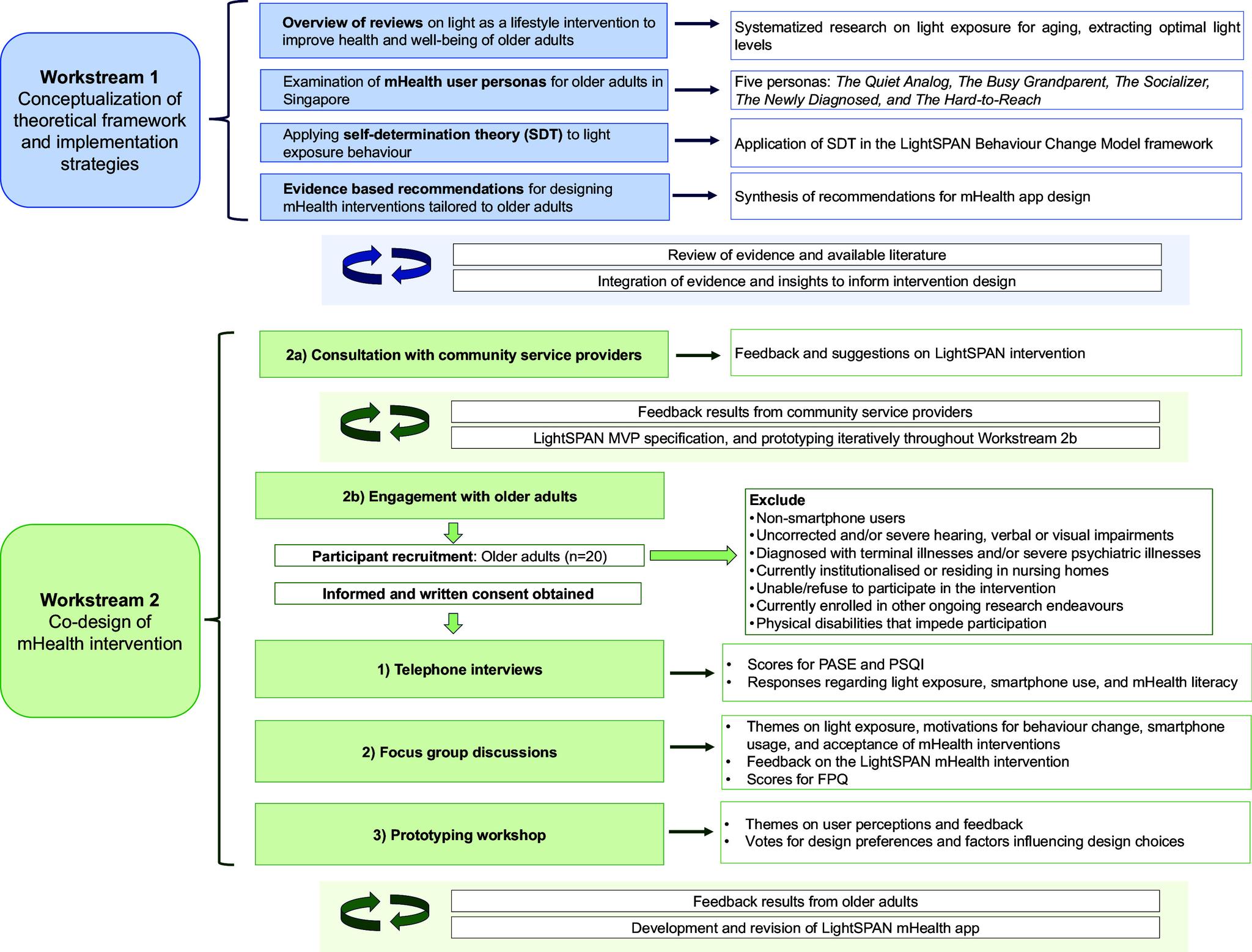
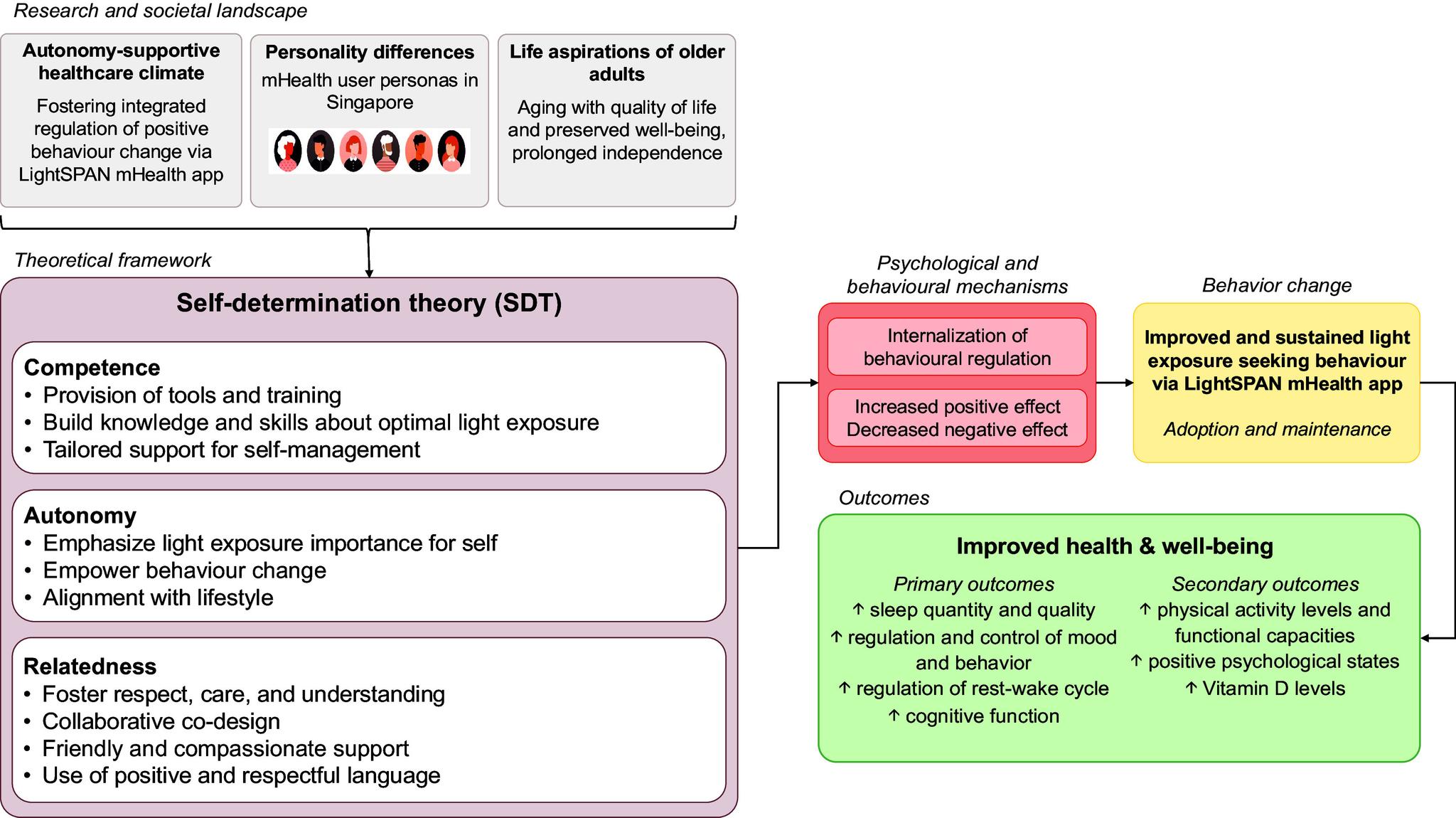
Through its wide-ranging effects on human physiology and behaviour, daily light exposure is an important environmental modulator of healthy ageing. Integrating mobile health (mHealth) technology with behaviour change strategies offers a promising approach to optimise light exposure and positively impact sleep, rest-wake cycles, cognitive function, and mood at scale. This study aims to develop the LightSPAN mHealth behaviour change intervention to optimise light exposure across the lifespan. Employing a co-design methodology, the study comprises two distinct workstreams. The first focuses on conceptualising the theoretical framework and implementation strategies through a comprehensive review of light exposure interventions, behaviour change theories, mHealth user personas, and recommendations for designing mHealth interventions for older adults. The second workstream centres on co-designing the intervention, involving consultation with community service providers and engagement with older adults at ageing community centres (≥60 years of age). Community service providers will be consulted through a focus group discussion (target n=5). Older adult participants (n=20) will engage in telephone interviews, focus group discussions and prototyping workshops to explore older adult participants' characteristics, needs, preferences, and mHealth intervention design elements and co-design the LightSPAN mHealth behaviour change intervention. The insights generated in these co-design components will facilitate future implementation of our intervention.
通过对人类生理和行为的广泛影响,日常光照暴露是健康老龄化的重要环境调节因素。将移动健康(mHealth)技术与行为改变策略相结合,为大规模优化光照暴露以及积极影响睡眠、休息-觉醒周期、认知功能和情绪提供了一种很有前景的方法。本研究旨在开发LightSPAN移动健康行为改变干预措施,以优化全生命周期的光照暴露。该研究采用协同设计方法,包括两个不同的工作流程。第一个流程侧重于通过全面回顾光照暴露干预措施、行为改变理论、移动健康用户角色以及为老年人设计移动健康干预措施的建议,来构建理论框架和实施策略。第二个工作流程以协同设计干预措施为核心,包括与社区服务提供商进行咨询以及在老年社区中心(年龄≥60岁)与老年人进行互动。将通过焦点小组讨论(目标人数n = 5)咨询社区服务提供商。老年参与者(n = 20)将参与电话访谈、焦点小组讨论和原型制作工作坊,以探索老年参与者的特征、需求、偏好以及移动健康干预设计要素,并协同设计LightSPAN移动健康行为改变干预措施。这些协同设计环节中产生的见解将有助于我们未来实施干预措施。
 Zotero 插件