
非小细胞肺癌中使用CTLA-4抑制剂引发肺炎的发生率:一项系统评价和荟萃分析
Incidence of pneumonitis with CTLA-4 inhibitors in non-small cell lung cancer: a systematic review and meta-analysis.
作者信息
Li Wei, Xiong Hao, Peng Haiying, Yang Ting, Fan Li, Zhang Yanlin
机构信息
Department of Pathology, Second People's Hospital of Yibin, Yibin, Sichuan, China.
Department of Respiratory and Critical Care Medicine, Second People's Hospital of Yibin, Yibin, Sichuan, China.
出版信息
Front Med (Lausanne). 2025 Aug 6;12:1614442. doi: 10.3389/fmed.2025.1614442. eCollection 2025.
BACKGROUND
CTLA-4 inhibitors, such as tremelimumab and ipilimumab, are increasingly used in the treatment of non-small cell lung cancer (NSCLC). This meta-analysis aims to evaluate the incidence of pneumonitis associated with these inhibitors and explore potential differences between individual agents.
METHODS
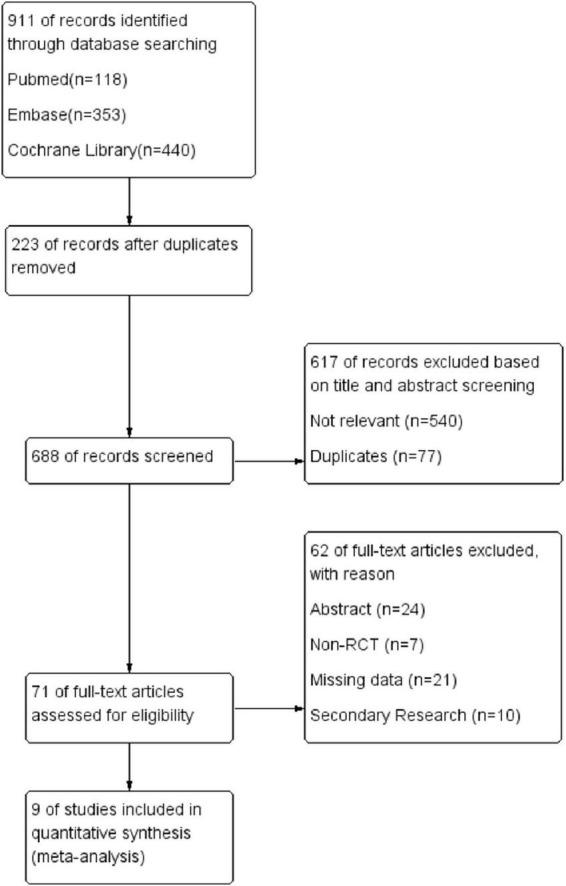
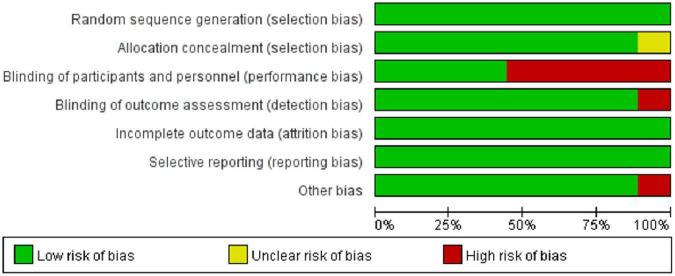
A systematic search across three online databases identified 911 records. After screening for duplicates and irrelevant articles, nine studies with a total of 4,164 patients were included. Risk of bias was assessed using the Cochrane "Risk of Bias" tool. Pneumonitis incidence was analyzed using a random-effects model.
RESULTS
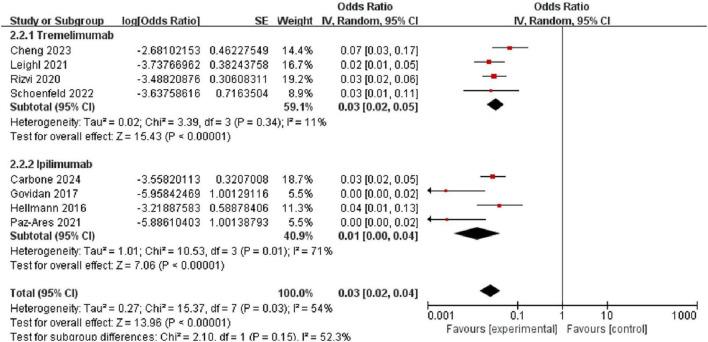
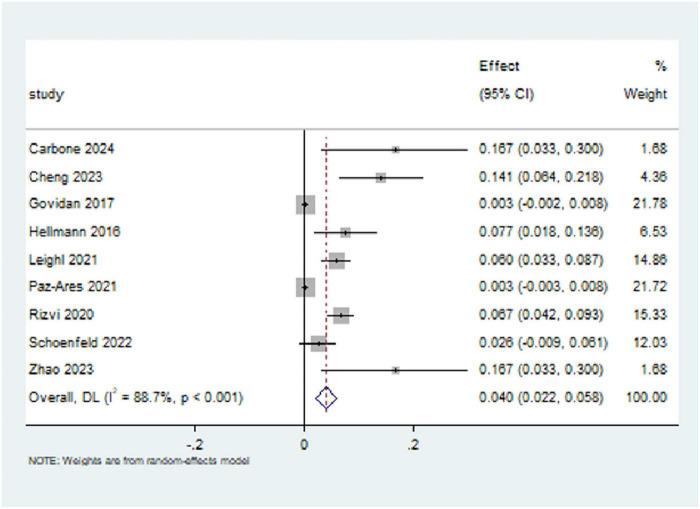
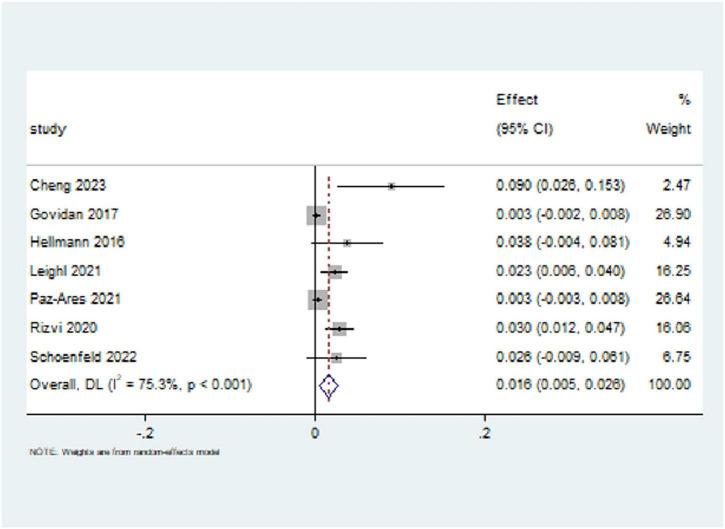
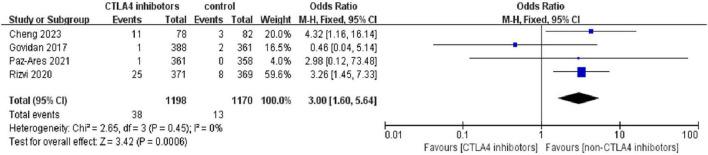
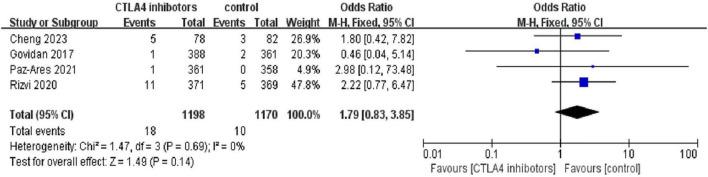
The overall incidence of any-grade pneumonitis was 4.0% [95% CI (2.2%, 5.8%)]. High-grade pneumonitis occurred in 1.6% [95% CI (0.5%, 2.6%)]. Subgroup analysis revealed that tremelimumab was associated with a higher incidence of both any-grade (8.0% vs. 2.0%) and high-grade (3.0% vs. 1.0%) pneumonitis compared to ipilimumab. In a comparison with a control group, patients receiving CTLA-4 inhibitors had a significantly higher incidence of any-grade pneumonitis [OR = 3.00, 95% CI (1.60, 5.64), < 0.01]. However, the difference in high-grade pneumonitis between the two groups was not statistically significant [RR = 1.79, 95% CI (0.83, 3.85), = 0.14].
CONCLUSION
This meta-analysis indicates that CTLA-4 inhibitors are associated with a higher incidence of pneumonitis in NSCLC patients, particularly with tremelimumab. These findings underline the importance of close monitoring for pneumonitis in patients receiving CTLA-4 inhibitors, especially tremelimumab, and suggest the need for further research into prevention and management strategies.
背景
CTLA-4抑制剂,如曲美木单抗和伊匹木单抗,在非小细胞肺癌(NSCLC)治疗中的应用越来越广泛。本荟萃分析旨在评估与这些抑制剂相关的肺炎发生率,并探讨各药物之间的潜在差异。
方法
通过对三个在线数据库进行系统检索,共识别出911条记录。在筛选重复记录和无关文章后,纳入了9项研究,共计4164例患者。使用Cochrane“偏倚风险”工具评估偏倚风险。采用随机效应模型分析肺炎发生率。
结果
任何级别的肺炎总体发生率为4.0%[95%置信区间(2.2%,5.8%)]。高级别肺炎的发生率为1.6%[95%置信区间(0.5%,2.6%)]。亚组分析显示,与伊匹木单抗相比,曲美木单抗与任何级别(8.0%对2.0%)和高级别(3.0%对1.0%)肺炎的发生率更高相关。与对照组相比,接受CTLA-4抑制剂的患者任何级别的肺炎发生率显著更高[比值比=3.00,95%置信区间(1.60,5.64),P<0.01]。然而,两组之间高级别肺炎的差异无统计学意义[相对危险度=1.79,95%置信区间(0.83,3.85),P=0.14]。
结论
本荟萃分析表明,CTLA-4抑制剂与NSCLC患者肺炎发生率较高相关,尤其是曲美木单抗。这些发现强调了对接受CTLA-4抑制剂治疗的患者,特别是曲美木单抗治疗的患者密切监测肺炎的重要性,并提示需要进一步研究预防和管理策略。


 Zotero 插件