
瘢痕愈合软膏治疗增生性瘢痕的分子靶点及机制的网络药理学与分子对接分析
Network pharmacology and molecular docking analysis on molecular targets and mechanisms of scar healing ointment in the treatment of hypertrophic scars.
作者信息
Jiang Lijuan, Zeng Xiandong, Li Hongjun, Wu Jingping
机构信息
Department of Medical College, Chengdu University of Traditional Chinese Medicine, Chengdu, Sichuan, China.
Department of Medical Cosmetology, Chengdu University of Traditional Chinese Medicine, Chengdu, Sichuan, China.
出版信息
Front Pharmacol. 2025 Aug 6;16:1511570. doi: 10.3389/fphar.2025.1511570. eCollection 2025.
INTRODUCTION
Hypertrophic scars (HSs) are characterized by complex mechanisms and impose substantial economic and psychological burdens on patients with wounds. Recent studies have reported that various extracts from traditional Chinese medicines can help prevent and treat HSs. Scar healing ointment (SHO), a modified traditional Chinese prescription applied externally, has demonstrated potential in the clinical treatment of HSs, though its underlying mechanisms remain unexplored.
METHODS
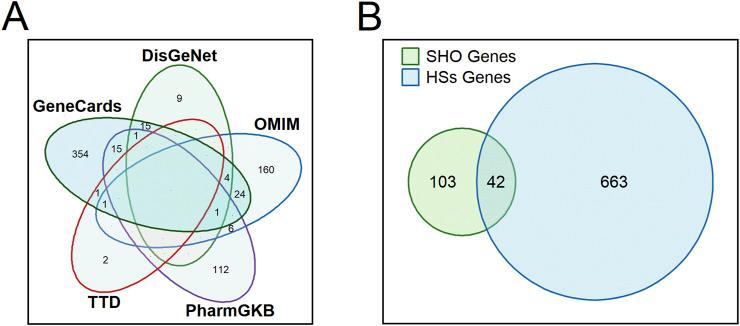
In this study, we systematically identified the active ingredients of the SHO formula and their potential targets using multiple databases (TCMSP, HERB, UniProt, GeneCards, DisGeNet, OMIM, PharmGKB, TTD) and explored the possible underlying mechanisms by which SHO treats HSs using bioinformatic analyses, including protein-protein interaction (PPI) network analysis, GO and KEGG enrichment analyses, and molecular docking.
RESULTS
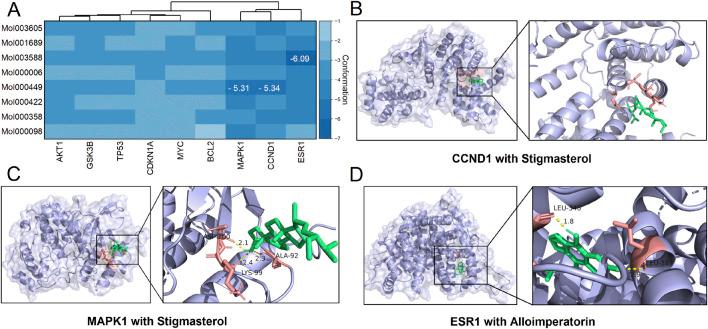
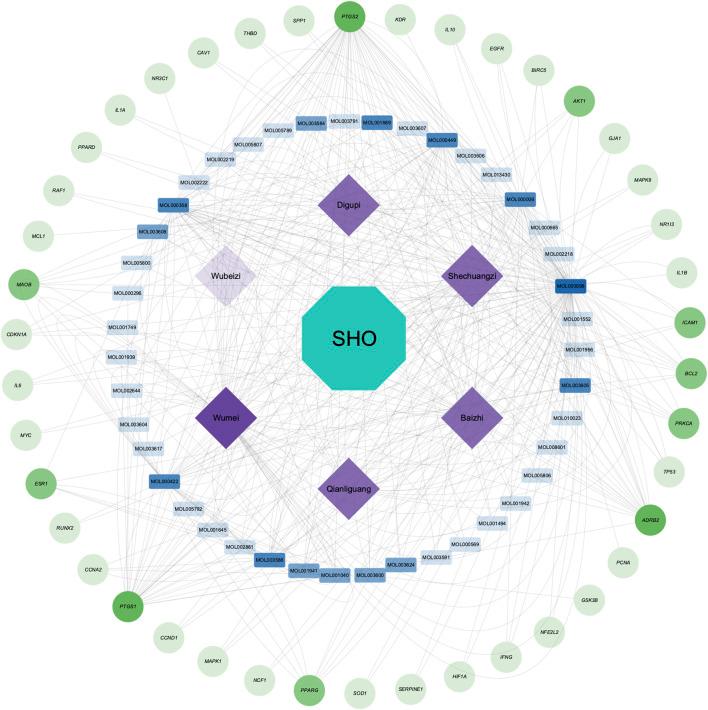
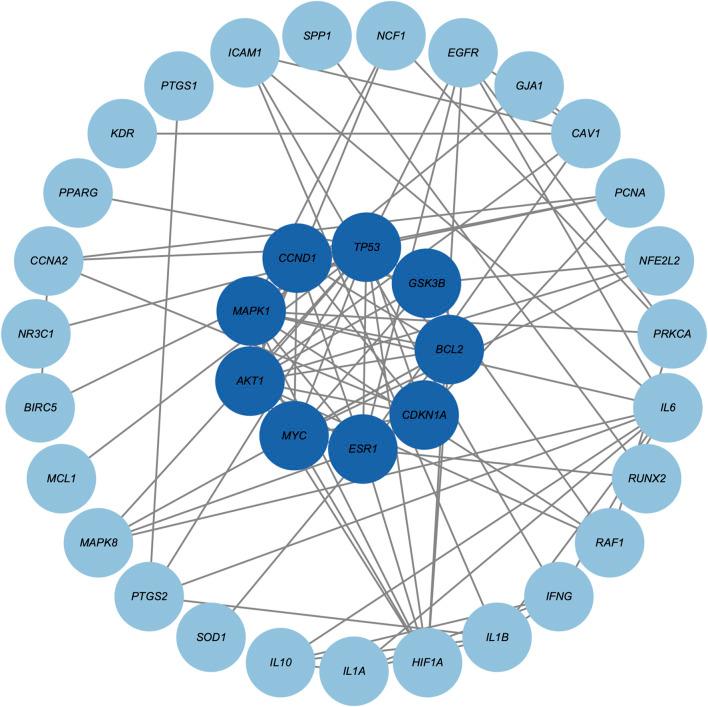
Our results indicated that the primary active ingredients in the SHO formula include quercetin, beta-sitosterol, kaempferol, stigmasterol, luteolin, alloimperatorin, acacetin, and (E)-2,3-bis(7-methoxy-2-oxochromen-8-yl)prop-2-enal. Protein-protein interaction network analysis revealed that the hub target proteins of the SHO formula are AKT1, MAPK1, CCND1, TP53, GSK3B, BCL2, CDKN1A, ESR1, and MYC. GO and KEGG enrichment analyses showed that these hub target genes are involved in processes and pathways related to apoptosis and responses to oxidants. Molecular docking analysis demonstrated that the MAPK1-stigmasterol and ESR1-alloimperatorin complexes exhibited strong binding affinities (-5.31 and -6.09) and formed multiple hydrogen bonds (3 and 2, respectively).
DISCUSSION
These findings suggest that SHO may exert its effects by modulating MAPK1 and ESR1 proteins, thereby contributing to the prevention and treatment of HSs. This study offers new drugs and target candidates for the prevention and treatment of HSs and provides theoretical support for further research and application of the SHO formula. Nevertheless, additional and studies are necessary to validate these mechanisms.
引言
肥厚性瘢痕(HSs)机制复杂,给伤口患者带来巨大的经济和心理负担。最近的研究报道,多种中药提取物有助于预防和治疗HSs。瘢痕愈合软膏(SHO)是一种改良的外用中药方剂,在HSs的临床治疗中已显示出潜力,但其潜在机制仍未得到探索。
方法
在本研究中,我们使用多个数据库(TCMSP、HERB、UniProt、GeneCards、DisGeNet、OMIM、PharmGKB、TTD)系统地鉴定了SHO配方的活性成分及其潜在靶点,并通过生物信息学分析探索SHO治疗HSs的可能潜在机制,包括蛋白质-蛋白质相互作用(PPI)网络分析、GO和KEGG富集分析以及分子对接。
结果
我们的结果表明,SHO配方中的主要活性成分包括槲皮素、β-谷甾醇、山奈酚、豆甾醇、木犀草素、别欧前胡素、刺槐素和(E)-2,3-双(7-甲氧基-2-氧代色原酮-8-基)丙-2-烯醛。蛋白质-蛋白质相互作用网络分析显示,SHO配方的核心靶蛋白是AKT1、MAPK1、CCND1、TP53、GSK3B、BCL2、CDKN1A、ESR1和MYC。GO和KEGG富集分析表明,这些核心靶基因参与了与凋亡和氧化应激反应相关的过程和途径。分子对接分析表明,MAPK1-豆甾醇和ESR1-别欧前胡素复合物表现出很强的结合亲和力(分别为-5.31和-6.09),并形成了多个氢键(分别为3个和2个)。
讨论
这些发现表明,SHO可能通过调节MAPK1和ESR1蛋白发挥作用,从而有助于预防和治疗HSs。本研究为HSs的预防和治疗提供了新的药物和候选靶点,并为SHO配方的进一步研究和应用提供了理论支持。然而,需要更多的研究来验证这些机制。

 Zotero 插件