
用于培养肉生产中细胞培养废弃培养基可持续循环利用的氨去除策略的开发与优化:从概念到实施
Development and optimization of an ammonia removal strategy for sustainable recycling of cell culture spent media in cultivated meat production: from concept to implementation.
作者信息
Pakbin Babak, Amanipour Armaghan, Amirvaresi Arian, Shahsavari Arash, Ovissipour Reza
机构信息
Department of Food Science and Technology, Texas A&M University, College Station, TX, United States.
出版信息
Front Bioeng Biotechnol. 2025 Aug 6;13:1617115. doi: 10.3389/fbioe.2025.1617115. eCollection 2025.
INTRODUCTION
Ammonia is a toxic metabolic waste produced during mammalian cell metabolism, with inhibitory effects against cell growth.
METHODS
This study focuses on developing and optimizing an ammonia removal approach to support spent media recycling throughout sustainable cultivated meat biomanufacturing.
RESULTS
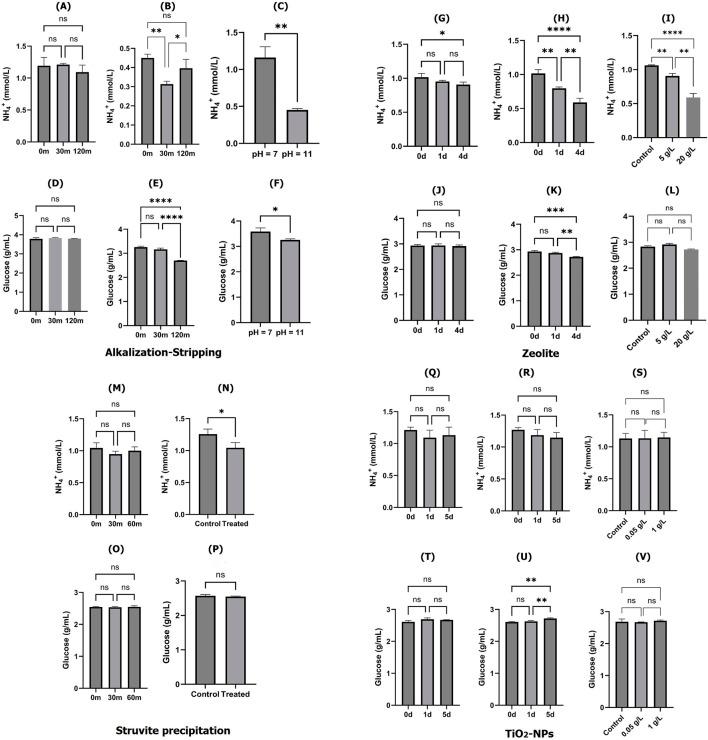
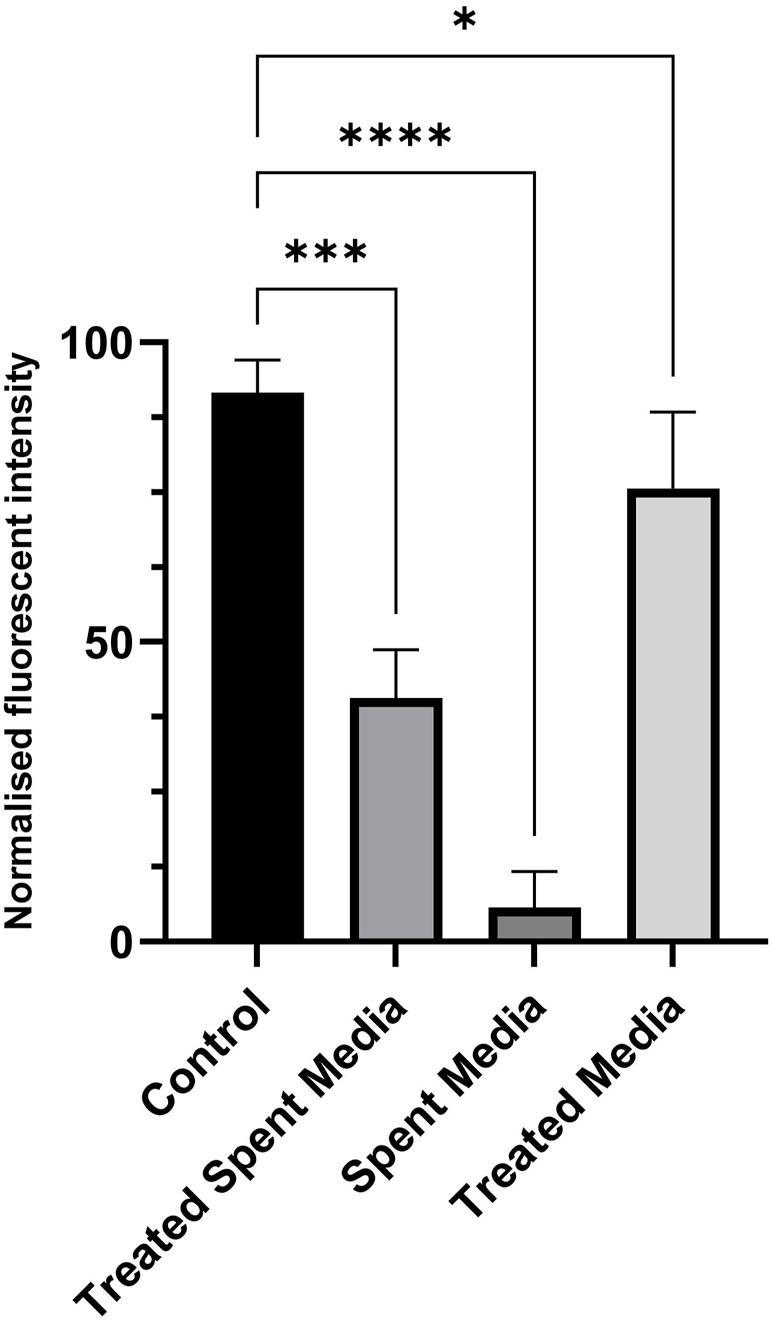
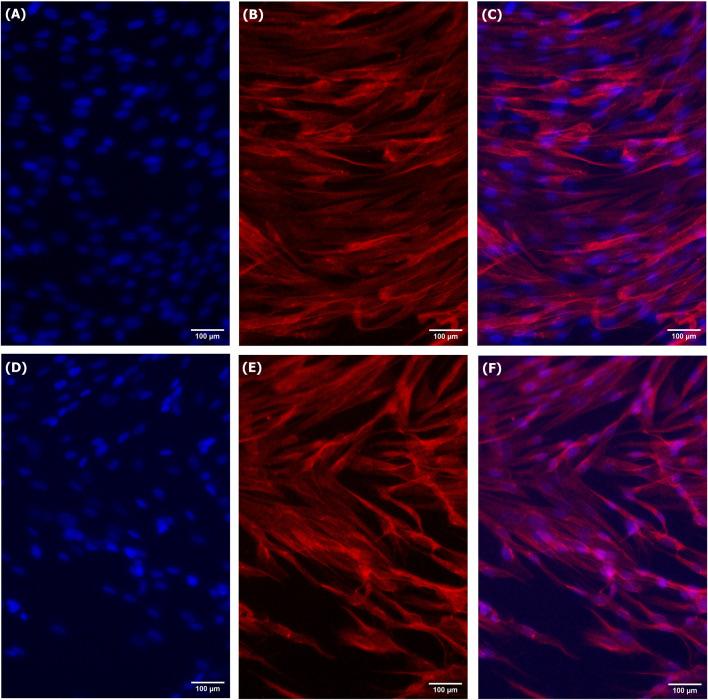
Among the various methods evaluated, the alkalization-stripping method was found to be significantly more efficient and rapid than other strategies to remove ammonia ions while preserving the remaining glucose contents. The optimized process parameters were determined to be a pH of 12 following a 15-minute stripping process, achieving more than 82% ammonia removal efficiency. When applied to lamb satellite cells, the treated spent media improved the cell growth rate without inducing any morphological changes.
DISCUSSION
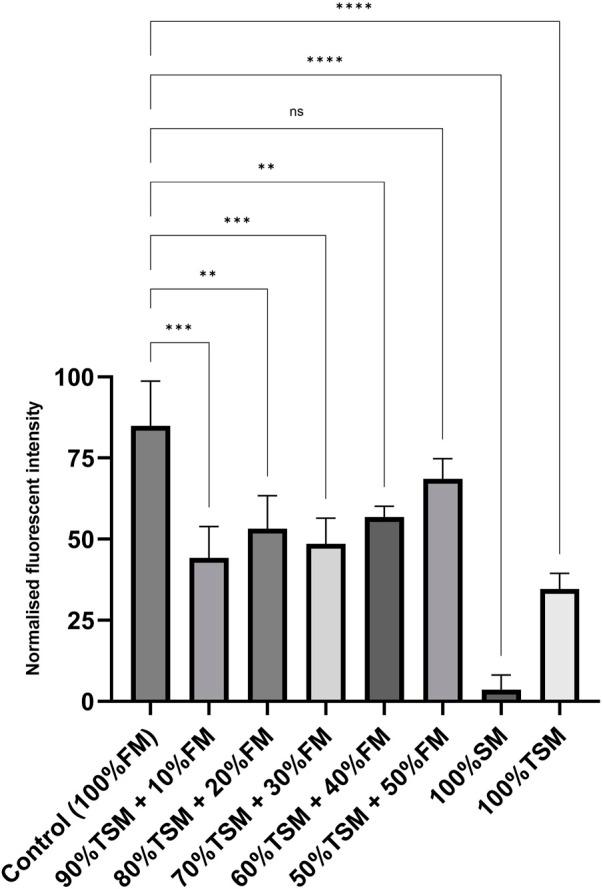
A 50:50 ratio formulation of treated spent media to fresh media demonstrated an efficient, cost-effective, and environmentally friendly solution for spent media recycling, providing a practical approach to implementing sustainable media recycling in cultivated meat production.
引言
氨是哺乳动物细胞代谢过程中产生的一种有毒代谢废物,对细胞生长具有抑制作用。
方法
本研究专注于开发和优化一种氨去除方法,以支持在可持续的培养肉生物制造过程中对用过的培养基进行回收利用。
结果
在评估的各种方法中,发现碱化汽提法在去除铵离子方面比其他策略显著更高效、快速,同时能保留剩余的葡萄糖含量。确定优化后的工艺参数为汽提15分钟后pH值为12,氨去除效率超过82%。当应用于羔羊卫星细胞时,处理后的用过培养基提高了细胞生长速率,且未引起任何形态变化。
讨论
处理后的用过培养基与新鲜培养基按50:50的比例配制,为用过的培养基回收利用提供了一种高效、经济且环保的解决方案,为在培养肉生产中实施可持续的培养基回收利用提供了一种实用方法。


 Zotero 插件