
一种使用K Y 401431制备的新型壳聚糖琼脂糖纳米铜复合膜(Cs/Agr/Cu-CuO NPs):其制备、表征及抗菌活性评估
A novel chitosan agarose nanocopper composite film (Cs/Agr/Cu-CuO NPs) using K Y 401431: preparation, characterization and evaluation of their antibacterial activity.
作者信息
El Rahman Heba A Abd, El-Sharif Amany A, Youssef Ahmed M, Gomaa Sanaa K, Mohamed Sayeda S, El Refai Heba A
机构信息
Chemistry of Natural and Microbial Products Department, Pharmaceutical and Drug Industries Institute, National Research Center, Dokki, Giza, Egypt.
Department of Microbiology and Immunology, Faculty of Pharmacy, Al-Azhar University, Cairo, Egypt.
出版信息
3 Biotech. 2025 Sep;15(9):306. doi: 10.1007/s13205-025-04471-7. Epub 2025 Aug 20.
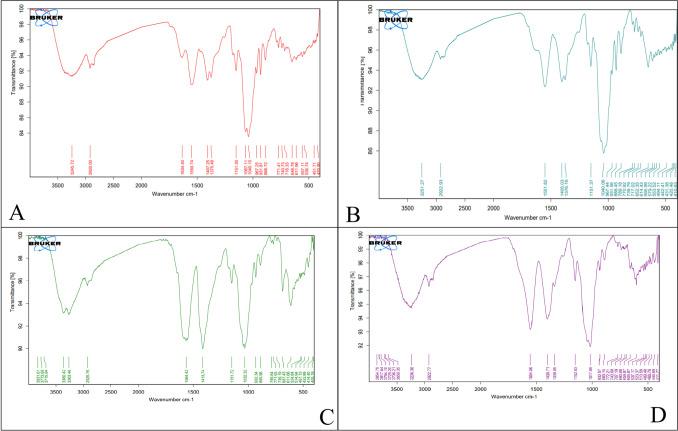
K Y 401431 was used in the present study for biosynthesis of copper/copper oxide nanoparticles. K Y 401431 was checked for the production of the carcinogenic mycotoxin 'ochratoxin A' to prove the safety of the strain and the culture filtrate was free from ochratoxin A. For the optimized production of Cu/CuO NPs, the influence of some parameters was investigated. 10 mM of CuSO was optimal for nanoparticle production, well-defined Cu/ CuO NPs formation occurred after 240 min of incubation using culture filtrate of K Y 401431developed under submerged culture conditions for 3 days culture age. The biosynthesized copper nanoparticles were characterized by UV-visible spectroscopy, transmission electron microscopy (TEM), energy dispersive X-ray (EDX), Fourier-transform infrared spectroscopy (FT-IR), dynamic light scattering (DLS), X-ray diffraction (XRD). The characterization of Cu/CuO NPs revealed the formation of crystalline spherical shaped (Cu/CuO NPs) with 4-10 nm size. The cytotoxic efficacy was investigated against three cancer cell lines MCF7 (Human Caucasian breast adenocarcinoma), HEPG2 (human hepatocellular carcinoma cell line) and A549 (Lung carcinoma cell line) using MTT (3-(4, 5-dimethylthiazol-2-yl)-2, 5-diphenyltetrazolium bromide) assay. The cytotoxic effect of the biosynthesized Cu/ CuO NPs on A549, HEPG-2, and MCF-7 showed IC of 20.3, 56.9, and 43.3 µg / ml, respectively. In this study, the biosynthesized Cu/ CuO NPs were used for the preparation of chitosan/agarose/copper bionanocomposite film by casting method. The Cs/Agr/ Cu-CuO bionanocomposite films were investigated using SEM, XRD, and FT-IR. The prepared bionanocomposite film displayed enhanced antibacterial activity against pathogenic bacteria.
在本研究中,使用KY 401431进行铜/氧化铜纳米颗粒的生物合成。检测KY 401431是否产生致癌霉菌毒素“赭曲霉毒素A”,以证明该菌株的安全性,且培养滤液不含赭曲霉毒素A。为了优化铜/氧化铜纳米颗粒的生产,研究了一些参数的影响。10 mM的硫酸铜对纳米颗粒生产是最佳的,使用在深层培养条件下培养3天的KY 401431培养滤液孵育240分钟后,形成了明确的铜/氧化铜纳米颗粒。通过紫外可见光谱、透射电子显微镜(TEM)、能量色散X射线(EDX)、傅里叶变换红外光谱(FT-IR)、动态光散射(DLS)、X射线衍射(XRD)对生物合成的铜纳米颗粒进行了表征。铜/氧化铜纳米颗粒的表征显示形成了尺寸为4 - 10纳米的结晶球形(铜/氧化铜纳米颗粒)。使用MTT(3-(4,5-二甲基噻唑-2-基)-2,5-二苯基四氮唑溴盐)分析法研究了对三种癌细胞系MCF7(人白种人乳腺腺癌)、HEPG2(人肝癌细胞系)和A549(肺癌细胞系)的细胞毒性功效。生物合成的铜/氧化铜纳米颗粒对A549、HEPG - 2和MCF - 7的细胞毒性作用分别显示IC50为20.3、56.9和43.3 μg / ml。在本研究中,生物合成的铜/氧化铜纳米颗粒通过流延法用于制备壳聚糖/琼脂糖/铜生物纳米复合膜。使用扫描电子显微镜、X射线衍射和傅里叶变换红外光谱对壳聚糖/琼脂糖/铜 - 氧化铜生物纳米复合膜进行了研究。制备的生物纳米复合膜对病原菌显示出增强的抗菌活性。


 Zotero 插件