
一种基于单体刺突蛋白的SARS-CoV-2二价疫苗对多种变体的广泛中和抗体反应。
Broad neutralizing antibody response of a monomeric spike-based SARS-CoV-2 bivalent vaccine against diverse variants.
作者信息
Wang Siling, Sun Hui, Wang Yizhen, Wang Zikang, Yuan Lunzhi, Guo Huilin, Gao Jiahua, Lan Miaolin, Wu Yangtao, Shang Huixian, Chen Xiuting, Chen Zheng, Hu Jiayi, Tang Zimin, Wen Guiping, Ying Dong, Liu Chang, Jiang Yanan, Su Jinfu, Lin Min, Wu Ting, Li Shaowei, Zhang Tianying, Zhang Jun, Guan Yi, Xia Ningshao, Yuan Quan, Zheng Qingbing, Zhang Yali, Zheng Zizheng
机构信息
State Key Laboratory of Vaccines for Infectious Diseases, Xiang An Biomedicine Laboratory, School of Life Sciences, School of Public Health, Xiamen University, Xiamen 361102, China.
National Institute of Diagnostics and Vaccine Development in Infectious Diseases, Collaborative Innovation Center of Biologic Products, National Innovation Platform for Industry-Education Integration in Vaccine Research, Xiamen University, Xiamen 361102, China.
出版信息
Proc Natl Acad Sci U S A. 2025 Sep 2;122(35):e2503254122. doi: 10.1073/pnas.2503254122. Epub 2025 Aug 25.
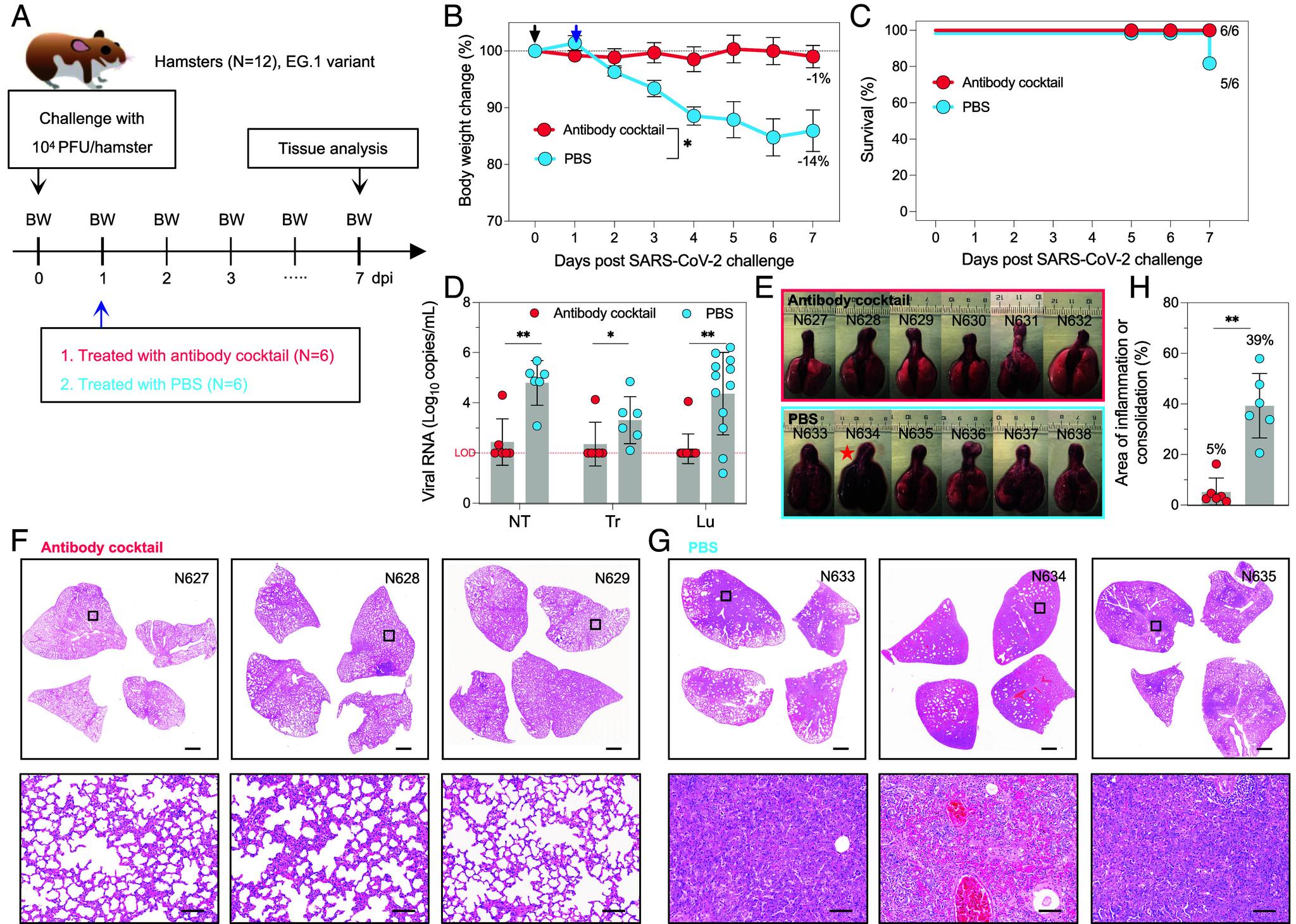
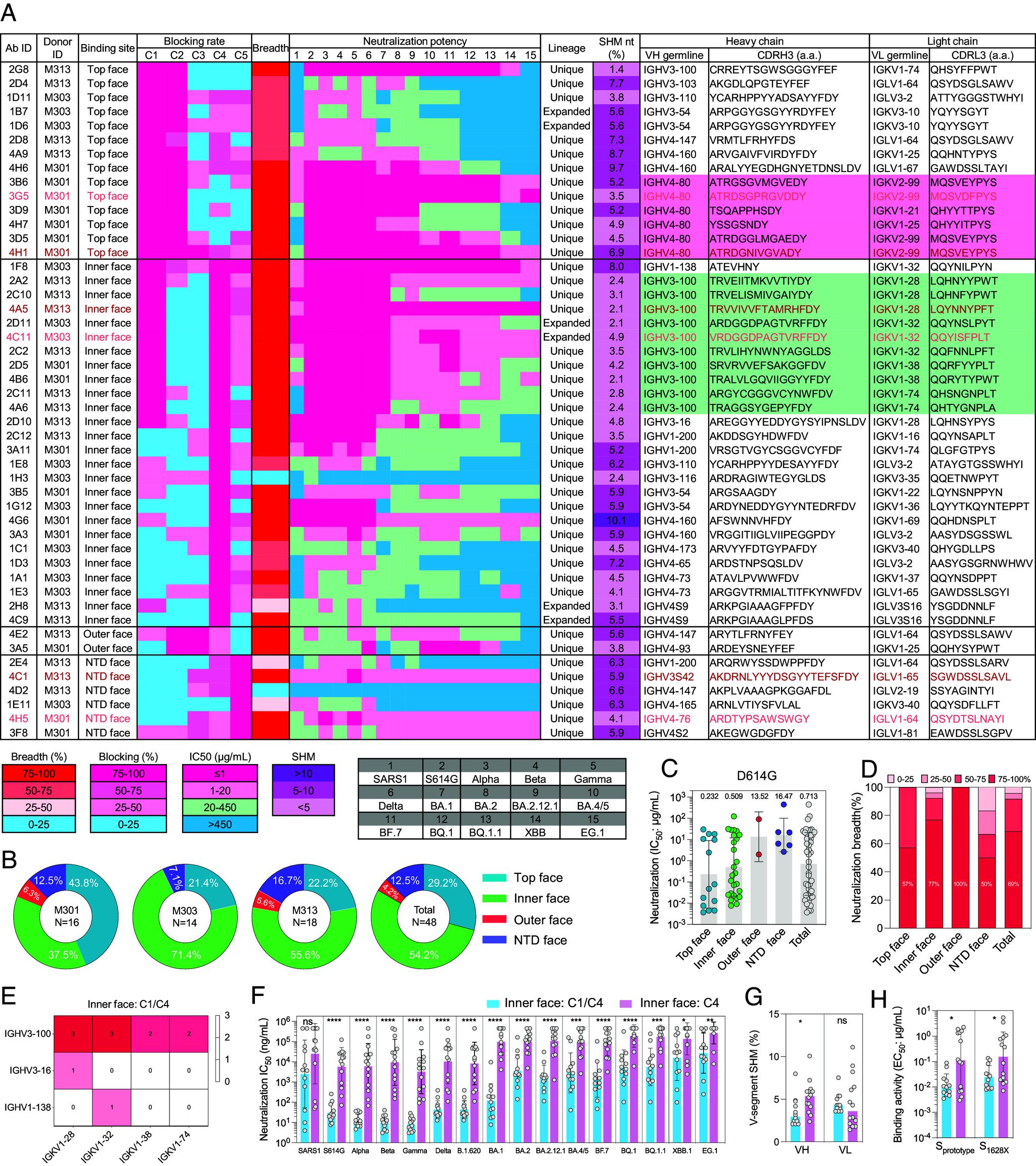
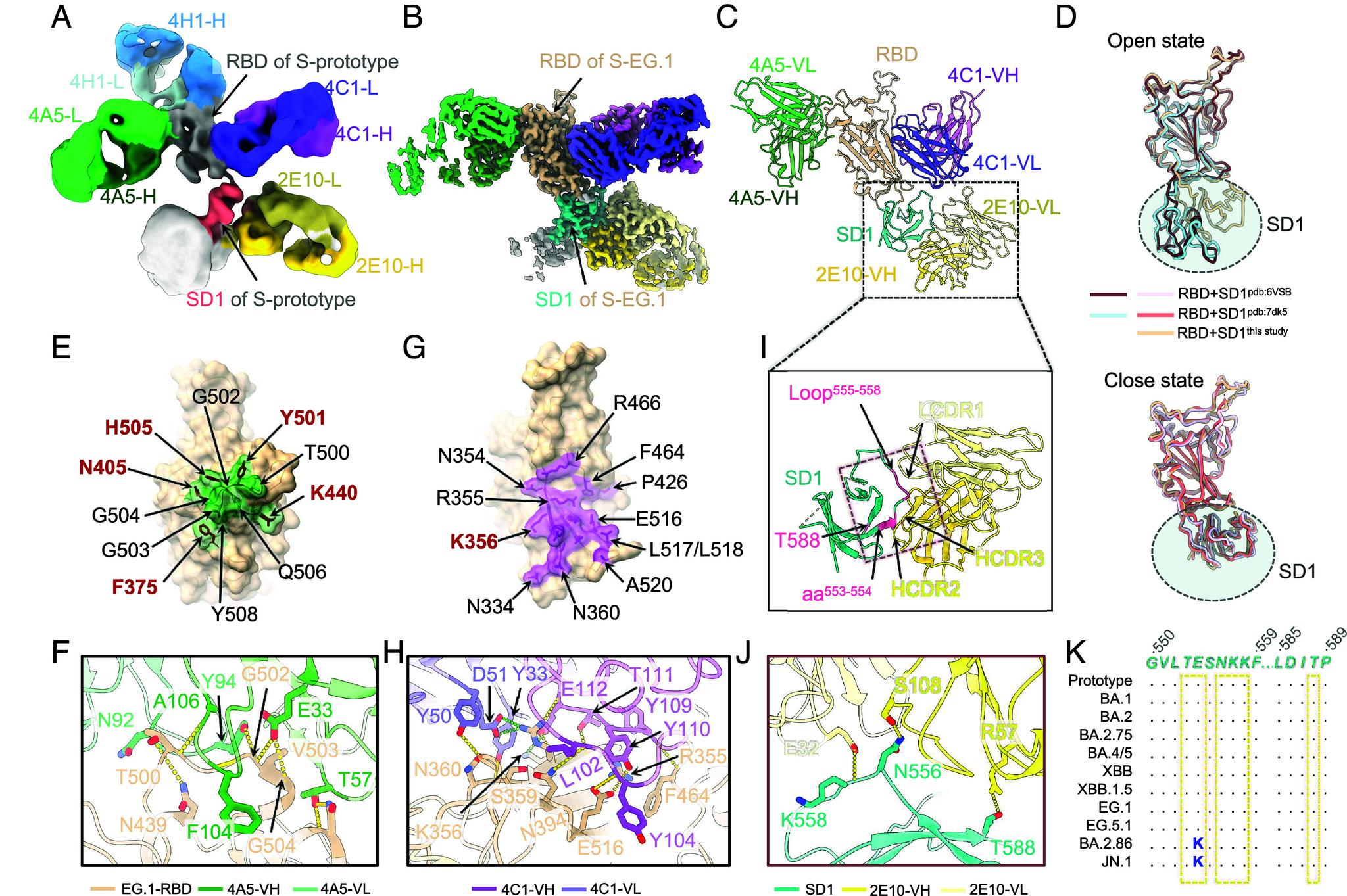
severeacute respiratory syndrome coronavirus 2 (SARS-CoV-2) bivalent vaccines show potential against variants but lack a full understanding of the immunological mechanisms that drive broadly neutralizing antibodies (bnAbs). This study explored the immunogenicity of a bivalent vaccine in rhesus macaques, containing spike (S) proteins from the prototype (S) and chimeric S protein (S). The vaccine induced bnAbs against multiple variants, including challenging subvariants like EG.1, BA.2.86, and JN.1. The monomeric S protein exposed less accessible regions within the receptor-binding domain (RBD) "inner face" and "NTD face" and subdomains 1, eliciting a diverse array of bnAbs against various Omicron subvariants. Notably, antibodies targeting the conserved RBD inner face, such as 4A5, showed potent neutralization across all tested variants. Structural analyses provide insights into the broad protectiveness of these vaccine-elicited nAbs. This study underscores the potential of bivalent vaccines with monomeric spike proteins to confer broad-spectrum immunity, offering a promising direction for future SARS-CoV-2 universal vaccine design.
严重急性呼吸综合征冠状病毒2(SARS-CoV-2)二价疫苗显示出对变异株的潜力,但对驱动广泛中和抗体(bnAbs)的免疫机制缺乏全面了解。本研究探讨了一种二价疫苗在恒河猴中的免疫原性,该疫苗包含原型刺突(S)蛋白和嵌合S蛋白的刺突(S)蛋白。该疫苗诱导产生了针对多种变异株的bnAbs,包括具有挑战性的亚变异株,如EG.1、BA.2.86和JN.1。单体S蛋白在受体结合域(RBD)的“内表面”和“NTD面”以及亚结构域1内暴露的可及区域较少,从而引发了针对各种奥密克戎亚变异株的多种bnAbs。值得注意的是,靶向保守RBD内表面的抗体,如4A5,在所有测试变异株中均显示出强大的中和作用。结构分析为这些疫苗诱导的中和抗体的广泛保护性提供了见解。本研究强调了含有单体刺突蛋白的二价疫苗赋予广谱免疫的潜力,为未来SARS-CoV-2通用疫苗设计提供了一个有前景的方向。


 Zotero 插件