
补体在新冠后综合征发病机制中的作用。
The role of complement in long COVID pathogenesis.
作者信息
Bayarri-Olmos Rafael, Bain William, Iwasaki Akiko
机构信息
Howard Hughes Medical Institute, Chevy Chase, Maryland, USA.
Department of Immunobiology and.
出版信息
JCI Insight. 2025 Aug 22;10(16). doi: 10.1172/jci.insight.194314.
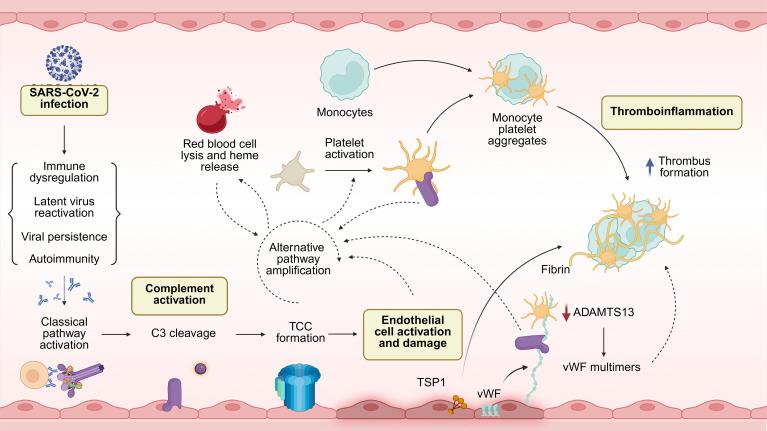
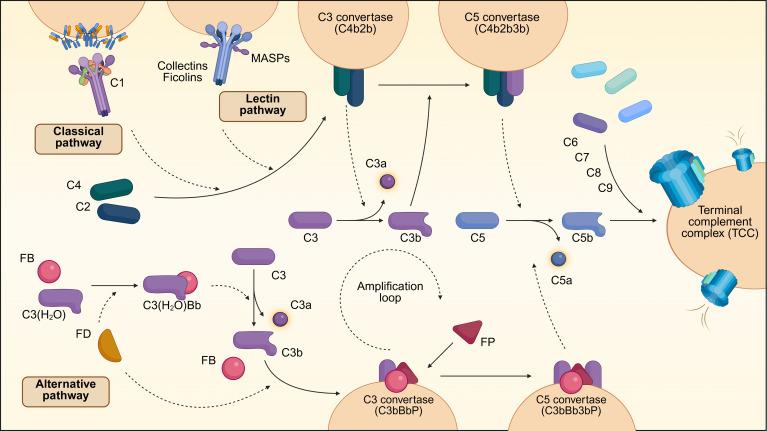
Long COVID is a debilitating condition that can develop after a SARS-CoV-2 infection and is characterized by a wide range of chronic symptoms, including weakness, neurocognitive impairment, malaise, fatigue, and many others, that affect multiple organ systems. At least 10% of individuals with a previous infection may develop long COVID, which affects their ability to perform daily functions and work. Despite its severity and widespread impact, this multisystemic condition remains poorly understood. Recent studies suggest that dysregulation of the complement system, a key component of the innate immune response, may contribute to the pathogenesis of long COVID, particularly in connection with coagulation, inflammation, and vascular injury. In this Review, we examine the evidence linking complement system dysregulation to long COVID and explore its potential role in driving disease pathology.
长期新冠是一种使人衰弱的病症,可在感染严重急性呼吸综合征冠状病毒2(SARS-CoV-2)后出现,其特征是出现一系列慢性症状,包括虚弱、神经认知障碍、不适、疲劳等诸多症状,这些症状会影响多个器官系统。既往感染过的个体中至少10%可能会发展为长期新冠,这会影响他们的日常功能和工作能力。尽管其严重程度和广泛影响,但这种多系统病症仍未得到充分了解。最近的研究表明,补体系统失调作为固有免疫反应的关键组成部分,可能导致长期新冠的发病机制,特别是与凝血、炎症和血管损伤有关。在本综述中,我们研究了将补体系统失调与长期新冠联系起来的证据,并探讨其在推动疾病病理过程中的潜在作用。
 Zotero 插件