
伤口愈合及伤口后事件中RNA mA甲基化的表观遗传调控。
Epigenetic orchestration of RNA mA methylation in wound healing and post-wound events.
作者信息
Zhang Heao, Gao Delong, Li Zixin, Aghayants Sis, Wu Yiping, Liu Zeming, Zhang Qi
机构信息
Department of Plastic and Cosmetic Surgery, Tongji Hospital, Tongji Medical College, Huazhong University of Science and Technology, Wuhan, 430030, China.
Department of Orthopaedic Surgery, Tongji Hospital, Tongji Medical College, Huazhong University of Science and Technology, Wuhan, 430030, China.
出版信息
Int J Biol Sci. 2025 Jul 28;21(11):4927-4941. doi: 10.7150/ijbs.114988. eCollection 2025.
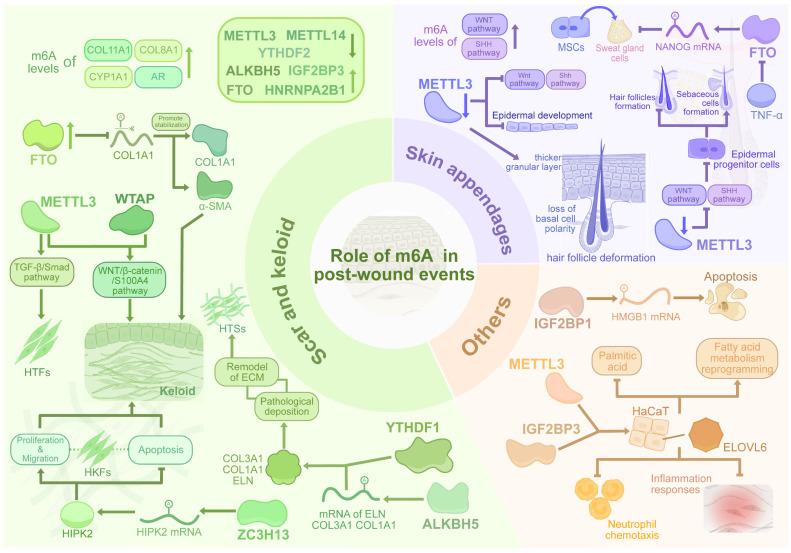
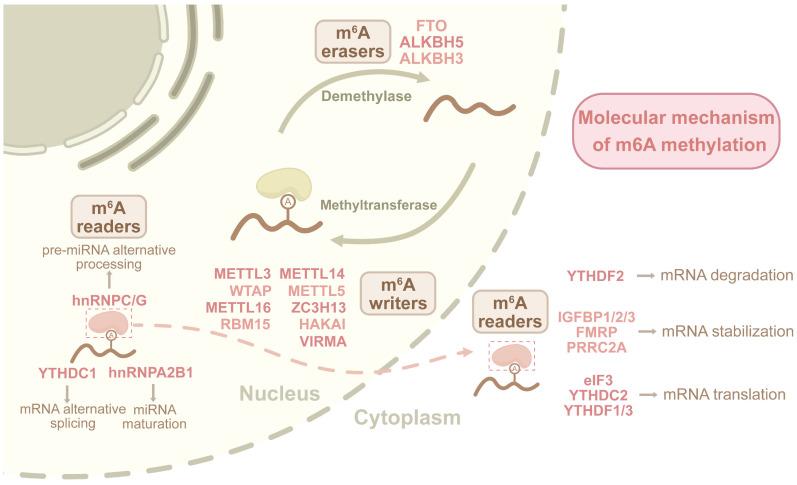
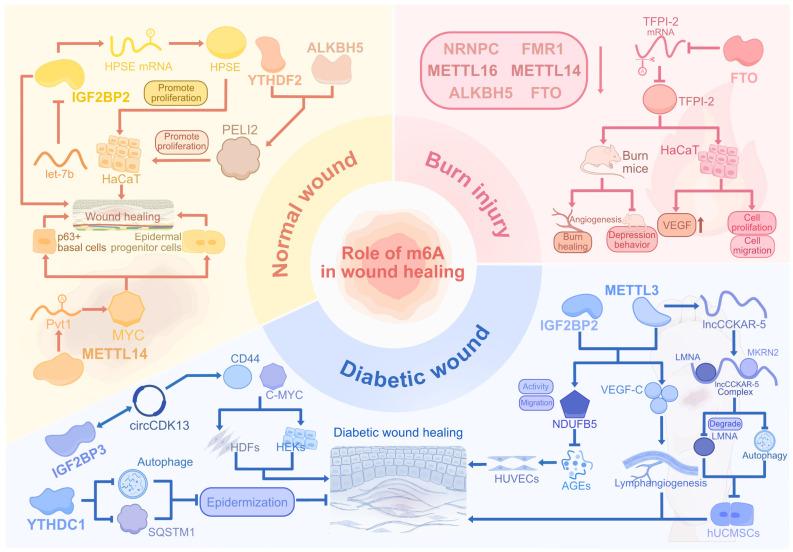
Skin, the largest human organ, demonstrates remarkable regenerative capacity through spatiotemporally coordinated healing processes. Chronic wounds, including diabetic ulcers and burn injuries pose significant clinical challenges due to persistent inflammation, impaired angiogenesis, defective appendage regeneration, and pathological scarring. Emerging evidence reveals N-methyladenosine (mA) methylation - the most prevalent RNA modification - as a critical regulator of wound healing and tissue remodeling. The mA machinery (writers, readers, erasers) dynamically controls RNA stability, translation, and splicing, thereby modulating keratinocyte migration, fibroblast activation, macrophage polarization, and stem cell differentiation. Dysregulated mA dynamics impair diabetic wound healing through oxidative stress amplification and autophagy deficiency, while disrupting critical repair pathways in burn injuries. Aberrant mA modifications exacerbate pathological scarring and dysfunctional appendage regeneration via dysregulated extracellular matrix deposition and fibroblast dysfunction. Current understanding of mA spatiotemporal regulation and clinical potential remains fragmented despite significant advances. Future investigations integrating single-cell sequencing, spatial transcriptomics, and multidisciplinary approaches are crucial to decode the multifaceted roles of mA, enabling the development of novel epitranscriptome-targeted therapies for chronic wound management and functional skin regeneration. The review systematically examines mA-mediated mechanisms in cutaneous repair and remodeling, providing strategic insights for advancing regenerative medicine.
皮肤是人体最大的器官,通过时空协调的愈合过程展现出显著的再生能力。慢性伤口,包括糖尿病溃疡和烧伤,由于持续炎症、血管生成受损、附属器再生缺陷和病理性瘢痕形成,带来了重大的临床挑战。新出现的证据表明,N-甲基腺苷(mA)甲基化——最普遍的RNA修饰——是伤口愈合和组织重塑的关键调节因子。mA机制(写入器、读取器、擦除器)动态控制RNA稳定性、翻译和剪接,从而调节角质形成细胞迁移、成纤维细胞活化、巨噬细胞极化和干细胞分化。失调的mA动态通过氧化应激放大和自噬缺陷损害糖尿病伤口愈合,同时破坏烧伤中的关键修复途径。异常的mA修饰通过细胞外基质沉积失调和成纤维细胞功能障碍加剧病理性瘢痕形成和附属器再生功能障碍。尽管取得了重大进展,但目前对mA时空调节和临床潜力的理解仍然零散。未来整合单细胞测序、空间转录组学和多学科方法的研究对于解码mA的多方面作用至关重要,从而能够开发针对慢性伤口管理和功能性皮肤再生的新型表观转录组靶向疗法。该综述系统地研究了mA介导的皮肤修复和重塑机制,为推进再生医学提供了战略见解。

 Zotero 插件