
叶黄素和玉米黄质摄入量与多层次生物衰老之间的关联。
The association between lutein and zeaxanthin intake and multi-level biological aging.
作者信息
Tao Meiyi, Zhang Lin, Jiang Caidi, Xiang Jia, Chen Shipeng, Tan Songwen, Sun Shengli
机构信息
Hunan Provincial People's Hospital (First Affiliated Hospital of Hunan Normal University), Changsha, China.
Department of Epidemiology and Preventive Medicine, The School of Public Health and Preventive Medicine, Monash University, Melbourne, VIC, Australia.
出版信息
Front Nutr. 2025 Aug 8;12:1618158. doi: 10.3389/fnut.2025.1618158. eCollection 2025.
OBJECTIVE
This study investigates the potential association between lutein and zeaxanthin (LZ) intake, particularly lutein, and biological aging. The study aims to explore how LZ intake affects the biological aging progression, particularly in organs like the liver, kidneys, and cardiovascular system, and explore the potential mechanism of lutein as the main carotenoid mediating this effect.
METHODS
We analyzed biological aging using biological age calculations based on data from the NHANES 2007-2015 database. Various adjusted models were used to assess the relationship between LZ intake and aging phenotypes. Transcriptome analysis was conducted to explore the potential mechanisms underlying the anti-aging effects of lutein.
RESULTS
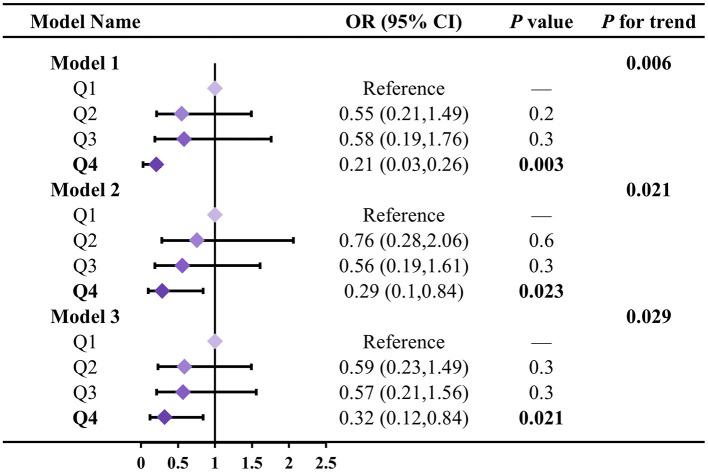
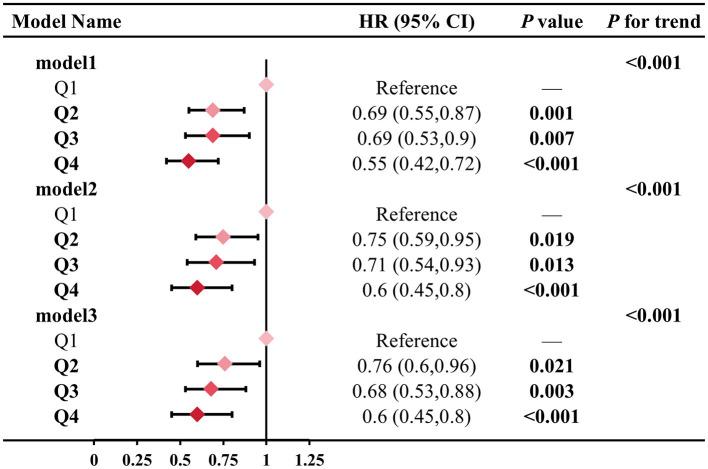
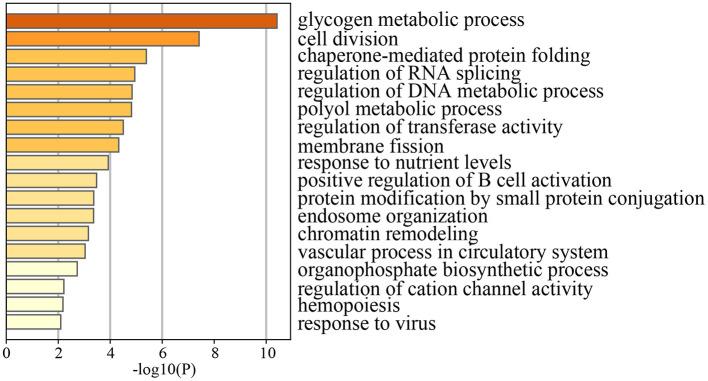
A higher intake of LZ was associated with a slower biological aging rate ( < 0.01), observed in major organs such as the liver and kidneys, as well as the cardiovascular system. LZ intake showed a significant negative correlation with biological aging acceleration ( < 0.05). Enrichment analysis suggested that lutein's anti-aging effects might be mediated through telomere regulation and modulation of aging-related metabolic pathways. Additionally, lutein intake appeared to reduce pro-inflammatory Th1 cell abundance, further suggesting a potential anti-aging effect by suppressing inflammation. Sustained lutein intake also led to a decrease in the expression of aging phenotype-related molecules. However, in the evaluation of linear relationships, excessive lutein intake beyond a certain threshold may not yield additional benefits.
CONCLUSION
Combined LZ intake is associated with attenuated multi-level biological aging [OR (95% CI): 0.93 (0.88, 0.93), = 0.016] and high LZ intake significantly reduce the risk of all-cause death ( < 0.001), with lutein driving systemic effects via telomere regulation and inflammation suppression. These findings highlight lutein's translatable potential for aging interventions and provide insights for dietary strategies in aging health management.
目的
本研究调查叶黄素和玉米黄质(LZ)摄入量,特别是叶黄素摄入量与生物衰老之间的潜在关联。该研究旨在探讨LZ摄入量如何影响生物衰老进程,尤其是在肝脏、肾脏和心血管系统等器官中,并探索叶黄素作为介导这种效应的主要类胡萝卜素的潜在机制。
方法
我们基于2007 - 2015年美国国家健康与营养检查调查(NHANES)数据库的数据,通过计算生物年龄来分析生物衰老情况。使用各种校正模型来评估LZ摄入量与衰老表型之间的关系。进行转录组分析以探索叶黄素抗衰老作用的潜在机制。
结果
较高的LZ摄入量与较慢的生物衰老速率相关(<0.01),在肝脏、肾脏以及心血管系统等主要器官中均有观察到。LZ摄入量与生物衰老加速呈显著负相关(<0.05)。富集分析表明,叶黄素的抗衰老作用可能通过端粒调节和衰老相关代谢途径的调控来介导。此外,叶黄素摄入量似乎会降低促炎性Th1细胞丰度,进一步表明其通过抑制炎症具有潜在的抗衰老作用。持续摄入叶黄素还导致衰老表型相关分子的表达下降。然而,在评估线性关系时,超过一定阈值的过量叶黄素摄入可能不会产生额外益处。
结论
联合摄入LZ与多水平生物衰老的减轻相关[比值比(95%置信区间):0.93(0.88,0.93),P = 0.016],高LZ摄入量显著降低全因死亡风险(<0.001),叶黄素通过端粒调节和炎症抑制发挥全身效应。这些发现突出了叶黄素在衰老干预方面的可转化潜力,并为衰老健康管理中的饮食策略提供了见解。



 Zotero 插件