
从梨中分离出的产棒曲霉素的OM1的比较基因组分析。
Comparative genome analysis of patulin-producing OM1 isolated from pears.
作者信息
Zhao Wencai, Hong Sung-Yong, Om Ae-Son
机构信息
Department of Food and Nutrition, Hanyang University, Seoul, Republic of South Korea.
出版信息
PeerJ. 2025 Aug 22;13:e19848. doi: 10.7717/peerj.19848. eCollection 2025.
BACKGROUND
The filamentous fungus () produces patulin as a toxic secondary metabolite (SM) on apples and pears. Little is known about the biosynthetic gene clusters (BGCs) of SMs, including patulin in .
METHODS
In this study, we sequenced the whole genome of (isolate OM1), a patulin producer isolated from pears, and analyzed the genome sequence to identify its SM BGCs and compare its patulin BGC with those in other patulin-producing strains. In addition, we investigated the genes that encode carbohydrate-active enzymes (CAZymes) in OM1, which play important roles in the degradation of plant cell walls, and analyzed the phylogenetic relationships among OM1 and other closely related species.
RESULTS
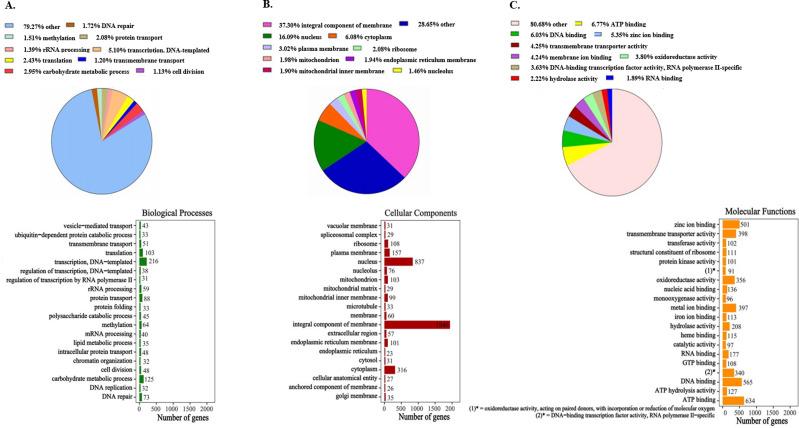
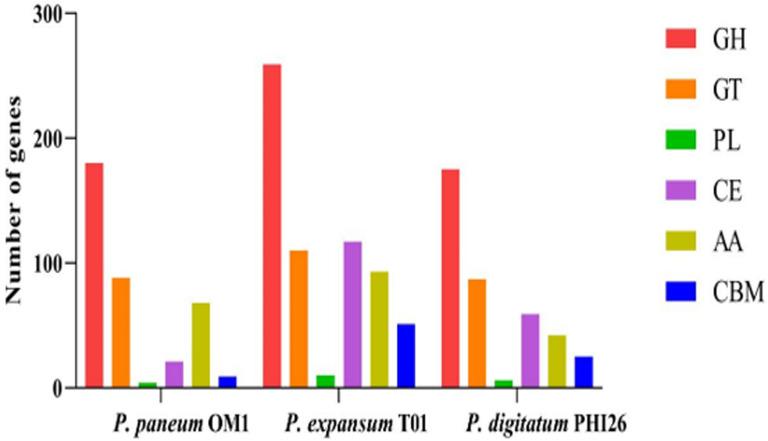
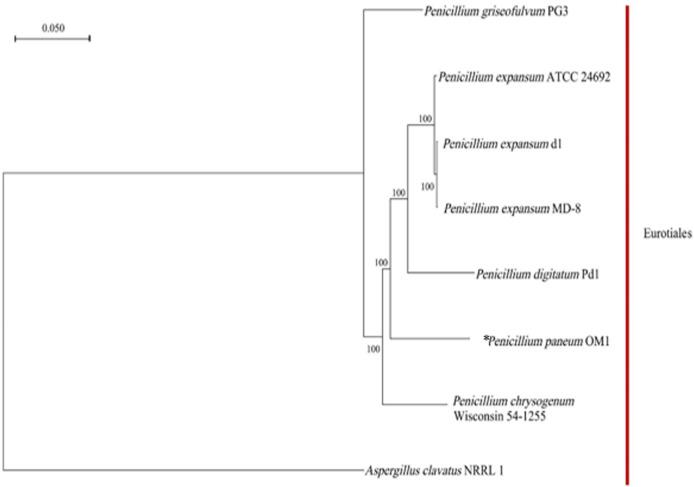
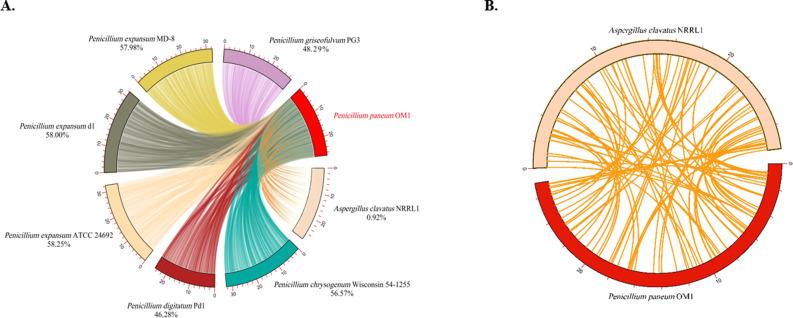
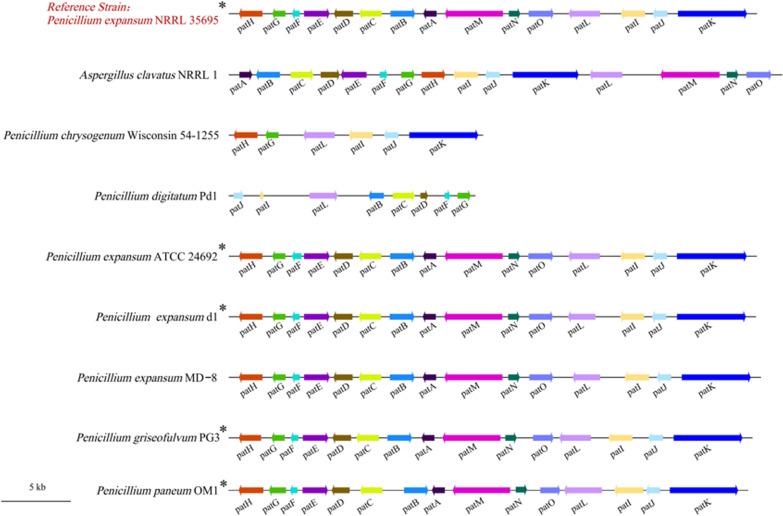
The genome of OM1 was estimated to be approximately 27.16 Mb with four chromosomes. Gene Ontology analysis using 7,098 functionally annotated proteins showed that genes involved in fungal defense mechanisms, such as SM biosynthesis, are enriched in the genome of OM1. Of the 7,098 functionally annotated proteins from the genome, we identified 370 putative CAZymes. A phylogenetic analysis revealed that OM1 has an evolutionarily close relationship with (isolate Wisconsin 54-1255, a penicillin-producing strain) and (isolate Pd1, a citrus fruit pathogen). We also identified a total of 33 SM BGCs, including a patulin BGC in OM1. Moreover, the functional conservation analyses on all 15 patulin biosynthetic genes showed that each gene in OM1 shares a high degree of sequence identity (above 73% identity) at both nucleotide and amino acid levels with the corresponding genes in four other patulin-producing strains, while it shares a relatively low degree of identity (0-93%, identity, 0 and 60% as medians for amino acid sequence identity) with those in two non-patulin producing species.
CONCLUSIONS
Our study improves understanding about BGCs of SMs, including patulin in OM1, which causes blue mold rot on pome fruits. These data could provide the genetic basis of patulin biosynthesis in OM1 to develop effective strategies for reducing patulin contamination on pome fruits.
背景
丝状真菌()在苹果和梨上产生棒曲霉素作为一种有毒的次生代谢产物(SM)。关于包括在内的棒曲霉素等次生代谢产物的生物合成基因簇(BGCs),人们了解甚少。
方法
在本研究中,我们对从梨中分离出的棒曲霉素产生菌(分离株OM1)的全基因组进行了测序,并分析了基因组序列以鉴定其次生代谢产物生物合成基因簇,并将其棒曲霉素生物合成基因簇与其他产棒曲霉素菌株的进行比较。此外,我们研究了OM1中编码碳水化合物活性酶(CAZymes)的基因,这些基因在植物细胞壁降解中起重要作用,并分析了OM1与其他密切相关的物种之间的系统发育关系。
结果
OM1的基因组估计约为27.16 Mb,有四条染色体。使用7098个功能注释蛋白进行的基因本体分析表明,参与真菌防御机制(如次生代谢产物生物合成)的基因在OM1的基因组中富集。在基因组的7098个功能注释蛋白中,我们鉴定出370个假定的碳水化合物活性酶。系统发育分析表明,OM1与(分离株Wisconsin 54 - 1255,一种产青霉素菌株)和(分离株Pd1,一种柑橘类水果病原体)在进化上关系密切。我们还总共鉴定出33个次生代谢产物生物合成基因簇,包括OM1中的一个棒曲霉素生物合成基因簇。此外,对所有15个棒曲霉素生物合成基因的功能保守性分析表明,OM1中的每个基因在核苷酸和氨基酸水平上与其他四个产棒曲霉素菌株中的相应基因具有高度的序列同一性(同一性高于73%),而与两个不产棒曲霉素的物种中的相应基因同一性相对较低(同一性为0 - 93%,氨基酸序列同一性的中位数分别为0和60%)。
结论
我们的研究增进了对包括OM1中的棒曲霉素在内的次生代谢产物生物合成基因簇的理解,OM1会导致仁果类水果发生青霉腐烂。这些数据可为OM1中棒曲霉素生物合成的遗传基础提供依据,以制定减少仁果类水果中棒曲霉素污染的有效策略。


 Zotero 插件