
对抗神经退行性变的海洋衍生策略。
Marine Derived Strategies Against Neurodegeneration.
作者信息
Toulis Vasileios, Marfany Gemma, Mirra Serena
机构信息
Departament de Genètica, Microbiologia i Estadística, Facultat de Biologia, Universitat de Barcelona, 08028 Barcelona, Spain.
Centro de Investigación en Red de Enfermedades Raras (CIBERER, ISCIII), Universitat de Barcelona, 08028 Barcelona, Spain.
出版信息
Mar Drugs. 2025 Jul 31;23(8):315. doi: 10.3390/md23080315.
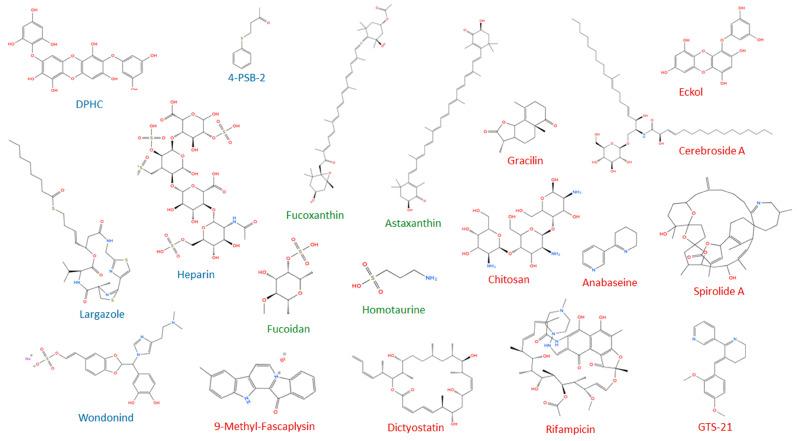
Marine ecosystems are characterized by an immense biodiversity and represent a rich source of biological compounds with promising potential for the development of novel therapeutic drugs. This review describes the most promising marine-derived neuroprotective compounds with strong potential for the treatment of neurodegenerative disorders. We focus specifically on the retina and brain-two key components of the central nervous system-as primary targets for therapeutic interventions against neurodegeneration. Alzheimer's disease and retinal degeneration diseases are used here as a representative model of neurodegenerative disorders, where complex molecular processes such as protein misfolding, oxidative stress, and neuroinflammation drive disease progression. We also examine gene therapy approaches inspired by marine biology, with particular attention to their application in retinal diseases, aimed at preserving or restoring photoreceptor function and vision.
海洋生态系统具有极其丰富的生物多样性,是生物化合物的丰富来源,具有开发新型治疗药物的巨大潜力。本综述描述了最具前景的海洋来源神经保护化合物,其具有治疗神经退行性疾病的强大潜力。我们特别关注视网膜和大脑——中枢神经系统的两个关键组成部分——作为针对神经退行性变进行治疗干预的主要靶点。阿尔茨海默病和视网膜退行性疾病在此被用作神经退行性疾病的代表性模型,其中蛋白质错误折叠、氧化应激和神经炎症等复杂分子过程驱动疾病进展。我们还研究了受海洋生物学启发的基因治疗方法,特别关注它们在视网膜疾病中的应用,旨在保护或恢复光感受器功能和视力。

 Zotero 插件