
基于磁共振成像的肝脏机器学习影像组学预测乙型肝炎病毒相关肝纤维化中的肝脏相关事件
MRI-based machine-learning radiomics of the liver to predict liver-related events in hepatitis B virus-associated fibrosis.
作者信息
Luo Yuankai, Luo Qinian, Wu Yaobo, Zhang Shaorui, Ren Huan, Wang Xiaofeng, Liu Xiujuan, Yang Qin, Xu Weiguo, Wu Qingsong, Li Yong
机构信息
Hepatobiliary and Pancreatic Tumor Diagnosis and Treatment Center, Yuebei People's Hospital, Shaoguan, China.
Zhuhai Interventional Medical Center, Zhuhai People's Hospital (Zhuhai Clinical Medical College of Jinan University), Zhuhai, China.
出版信息
Eur Radiol Exp. 2025 Aug 27;9(1):81. doi: 10.1186/s41747-025-00602-0.
BACKGROUND
The onset of liver-related events (LREs) in fibrosis indicates a poor prognosis and worsens patients' quality of life, making the prediction and early detection of LREs crucial. The aim of this study was to develop a radiomics model using liver magnetic resonance imaging (MRI) to predict LRE risk in patients undergoing antiviral treatment for chronic fibrosis caused by hepatitis B virus (HBV).
METHODS
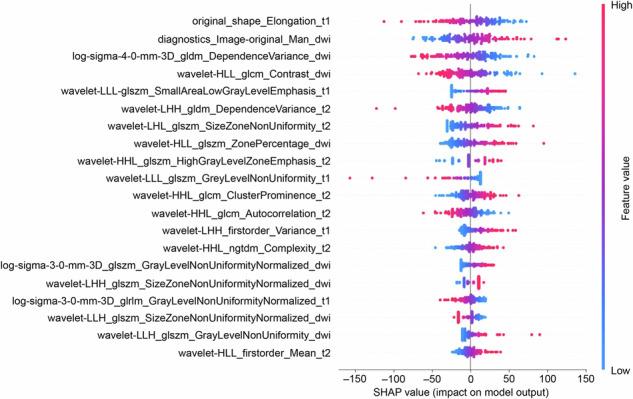
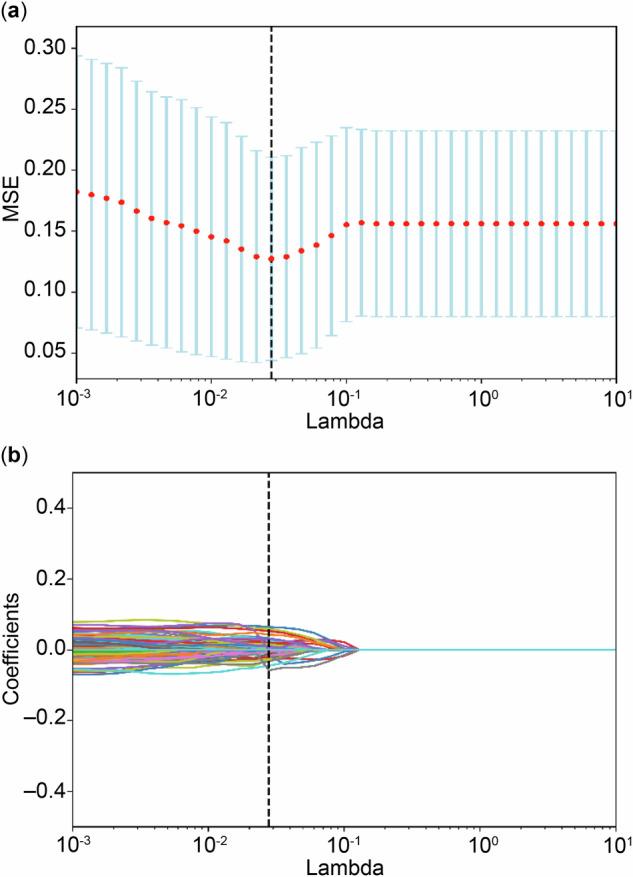
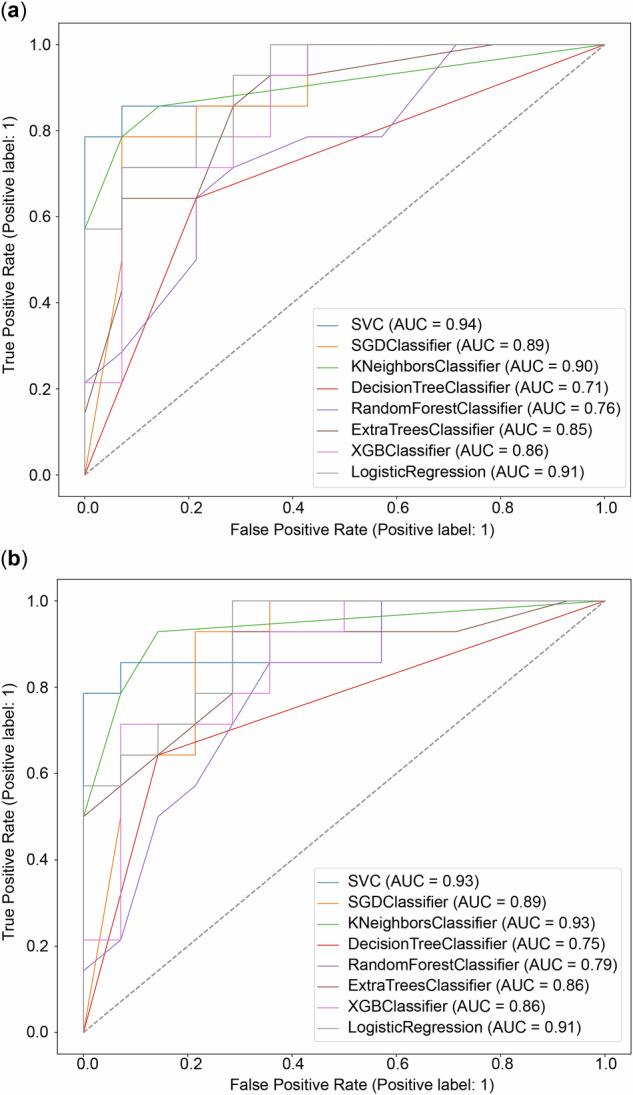
Patients with HBV-associated liver fibrosis and liver stiffness measurements ≥ 10 kPa were included. Feature selection and dimensionality reduction techniques identified discriminative features from three MRI sequences. Radiomics models were built using eight machine learning techniques and evaluated for performance. Shapley additive explanation and permutation importance techniques were applied to interpret the model output.
RESULTS
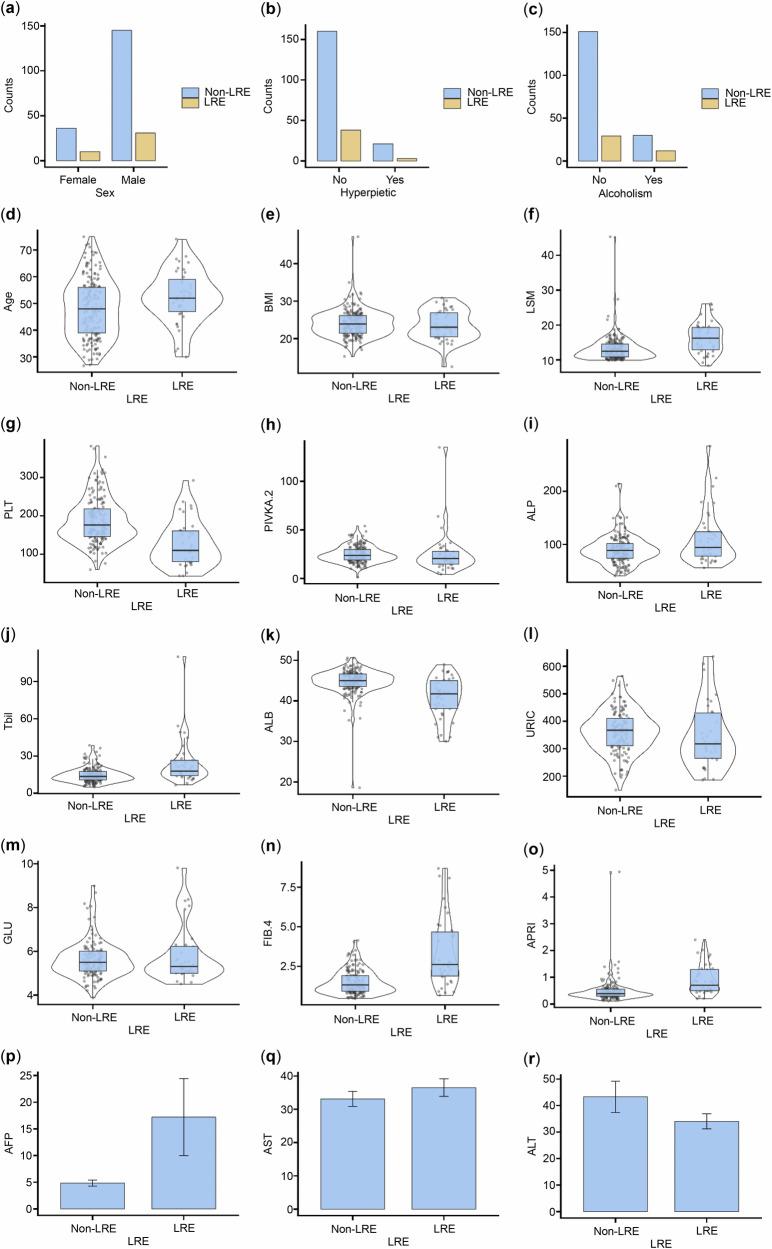
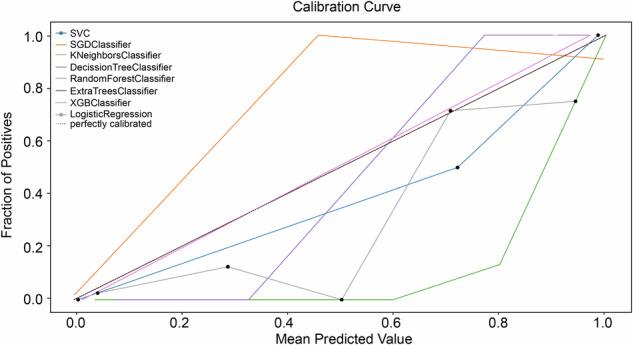
A total of 222 patients aged 49 ± 10 years (mean ± standard deviation), 175 males, were evaluated, with 41 experiencing LREs. The radiomics model, incorporating 58 selected features, outperformed traditional clinical tools in prediction accuracy. Developed using a support vector machine classifier, the model achieved optimal areas under the receiver operating characteristic curves of 0.94 and 0.93 in the training and test sets, respectively, demonstrating good calibration.
CONCLUSION
Machine learning techniques effectively predicted LREs in patients with fibrosis and HBV, offering comparable accuracy across algorithms and supporting personalized care decisions for HBV-related liver disease.
RELEVANCE STATEMENT
Radiomics models based on liver multisequence MRI can improve risk prediction and management of patients with HBV-associated chronic fibrosis. In addition, it offers valuable prognostic insights and aids in making informed clinical decisions.
KEY POINTS
Liver-related events (LREs) are associated with poor prognosis in chronic fibrosis. Radiomics models could predict LREs in patients with hepatitis B-associated chronic fibrosis. Radiomics contributes to personalized care choices for patients with hepatitis B-associated fibrosis.
背景
纤维化过程中肝脏相关事件(LREs)的发生预示着预后不良,并会降低患者的生活质量,因此对LREs进行预测和早期检测至关重要。本研究的目的是利用肝脏磁共振成像(MRI)开发一种放射组学模型,以预测接受抗乙肝病毒(HBV)治疗的慢性纤维化患者发生LREs的风险。
方法
纳入HBV相关肝纤维化且肝脏硬度测量值≥10kPa的患者。通过特征选择和降维技术从三个MRI序列中识别出具有鉴别性的特征。使用八种机器学习技术构建放射组学模型,并对其性能进行评估。应用Shapley加性解释和排列重要性技术来解释模型输出。
结果
共评估了222例年龄为49±10岁(均值±标准差)的患者,其中男性175例,41例发生了LREs。包含58个选定特征的放射组学模型在预测准确性方面优于传统临床工具。该模型使用支持向量机分类器开发,在训练集和测试集的受试者操作特征曲线下面积分别为0.94和0.93,显示出良好的校准效果。
结论
机器学习技术有效地预测了纤维化和HBV患者的LREs,不同算法的预测准确性相当,为HBV相关肝病的个性化治疗决策提供了支持。
相关性声明
基于肝脏多序列MRI的放射组学模型可改善HBV相关慢性纤维化患者的风险预测和管理。此外,它还提供了有价值的预后见解,并有助于做出明智的临床决策。
关键点
肝脏相关事件(LREs)与慢性纤维化的不良预后相关。放射组学模型可预测乙肝相关慢性纤维化患者的LREs。放射组学有助于乙肝相关纤维化患者的个性化治疗选择。

 Zotero 插件