
洞穴来源的C1生物活性代谢产物的优化与表征
Optimization and Characterization of Bioactive Metabolites from Cave-Derived C1.
作者信息
Rafiq Muhammad, Bugti Umaira, Hayat Muhammad, Sajjad Wasim, Sani Imran Ali, Ahmed Nazeer, Hassan Noor, Wang Yanyan, Kang Yingqian
机构信息
Guizhou Key Laboratory of Microbiome and Infectious Disease Prevention and Control, Key Laboratory of Environmental Pollution Monitoring and Disease Control, Ministry of Education of Guizhou, School of basic Medical Sciences, Joint Laboratory of Shanghai Dongli One Health Research Institute Co., Ltd., Guizhou Medical University One Health Research Institute, Gui'an 561113, China.
Department of Microbiology, Faculty of Life Sciences and Informatics, Balochistan University of IT, Engineering and Management Sciences, Quetta 87300, Pakistan.
出版信息
Biomolecules. 2025 Jul 24;15(8):1071. doi: 10.3390/biom15081071.
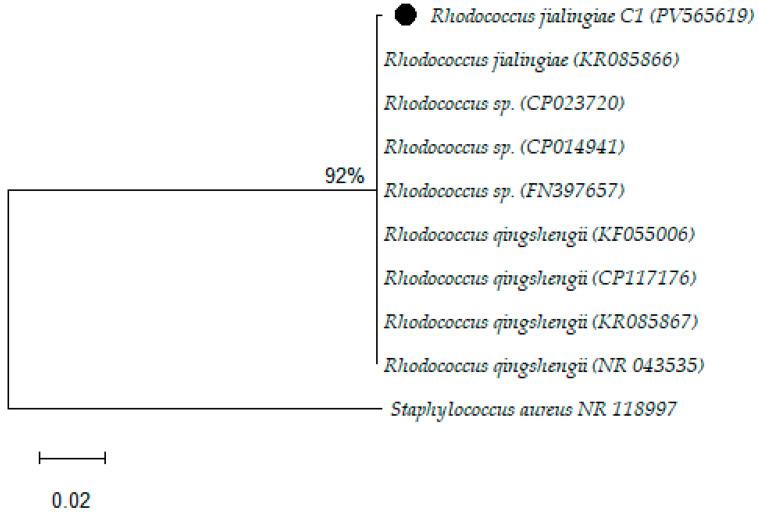
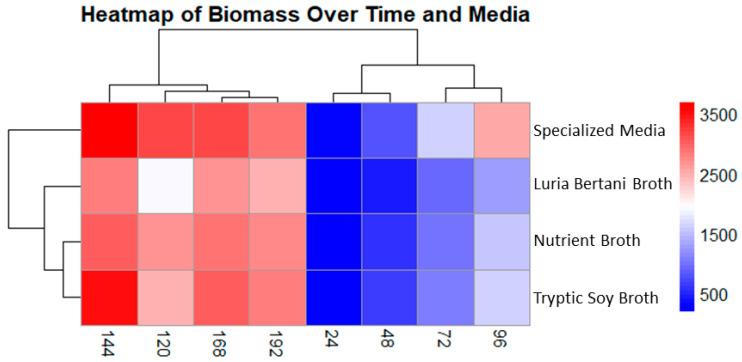
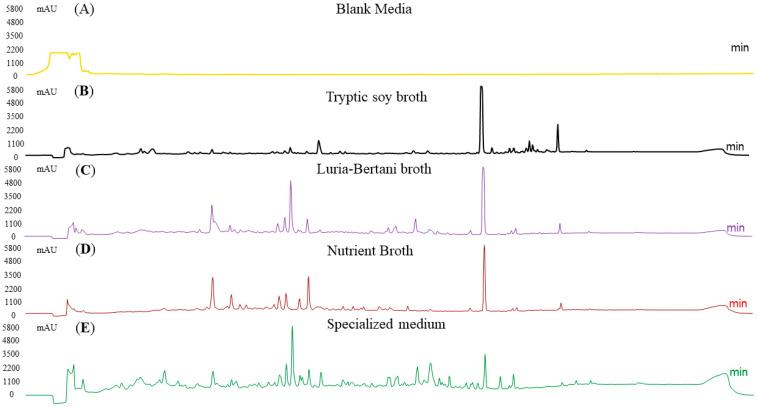
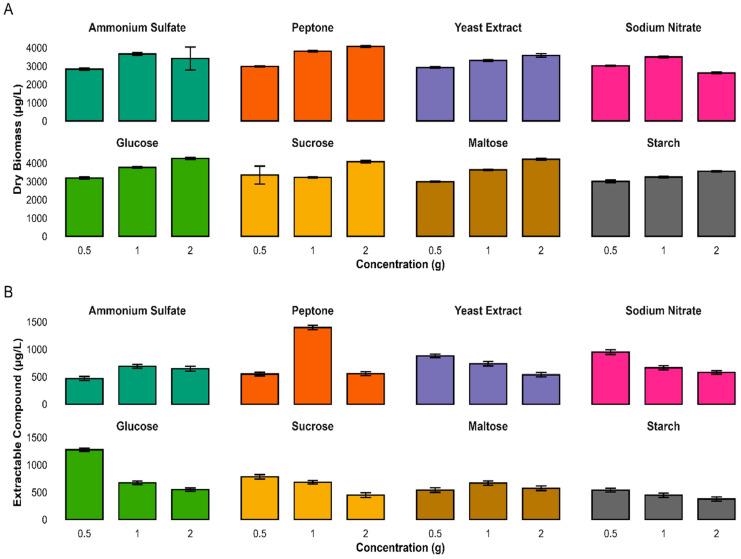
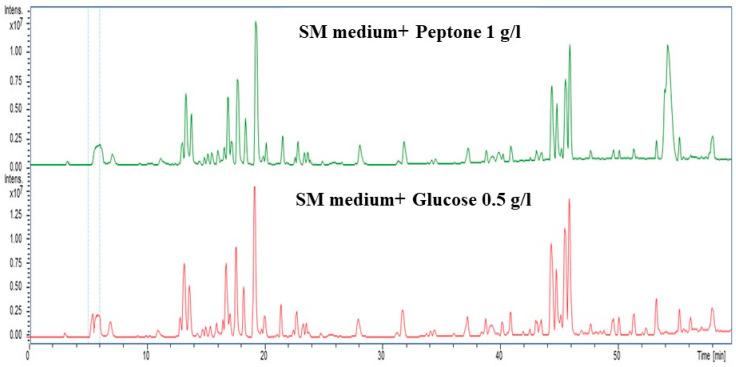
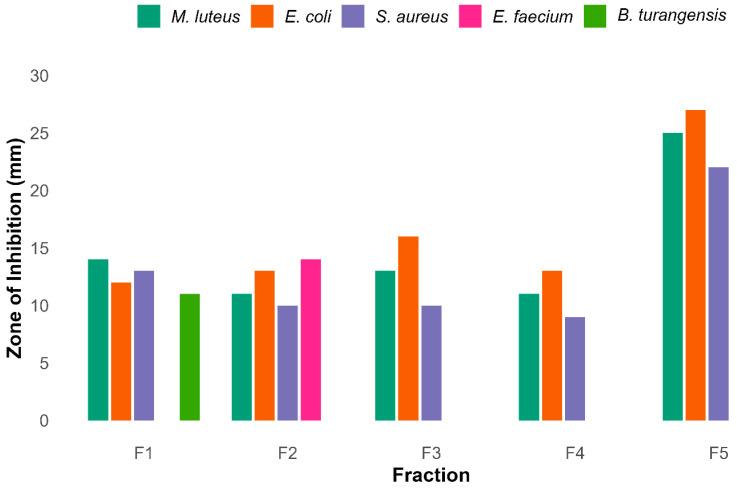
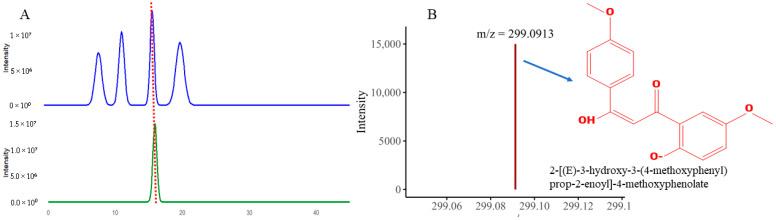
Extremophilic microorganisms offer an untapped potential for producing unique bioactive metabolites with therapeutic applications. In the current study, bacterial isolates were obtained from samples collected from Chamalang cave located in Kohlu District, Balochistan, Pakistan. The cave-derived isolate C1 () exhibits prominent antibacterial activity against multidrug-resistant pathogens (MDR), including , , and . It also demonstrates substantial antioxidant activity, with 71% and 58.39% DPPH radical scavenging. Optimization of physicochemical conditions, such as media, pH, temperature, and nitrogen and carbon sources and concentrations substantially enhanced both biomass and metabolite yields. Optimal conditions comprise specialized media, a pH of 7, a temperature of 30 °C, peptone (1.0 g/L) as the nitrogen source, and glucose (0.5 g/L) as the carbon source. HPLC and QTOF-MS analyses uncovered numerous metabolites, including a phenolic compound, 2-[(E)-3-hydroxy-3-(4-methoxyphenyl) prop-2-enoyl]-4-methoxyphenolate, Streptolactam C, Puromycin, and a putative aromatic polyketide highlighting the C1 isolate chemical. Remarkably, one compound (CHN) demonstrated a special molecular profile, signifying structural novelty and warranting further characterization by techniques such as H and C NMR. These findings highlight the biotechnological capacity of the C1 isolate as a source of novel antimicrobials and antioxidants, linking environmental adaptation to metabolic potential and supporting natural product discovery pipelines against antibiotic resistance.
极端微生物在生产具有治疗应用的独特生物活性代谢产物方面具有未被开发的潜力。在本研究中,从巴基斯坦俾路支省科卢区查马朗洞穴采集的样本中获得了细菌分离株。洞穴衍生的分离株C1()对多种耐药病原体(MDR)表现出显著的抗菌活性,包括、和。它还表现出显著的抗氧化活性,DPPH自由基清除率分别为71%和58.39%。对理化条件进行优化,如培养基、pH值、温度以及氮源和碳源及其浓度,可大幅提高生物量和代谢产物产量。最佳条件包括专用培养基、pH值为7、温度为30℃、蛋白胨(1.0 g/L)作为氮源以及葡萄糖(0.5 g/L)作为碳源。HPLC和QTOF-MS分析发现了多种代谢产物,包括一种酚类化合物2-[(E)-3-羟基-3-(4-甲氧基苯基)丙-2-烯酰基]-4-甲氧基苯酚盐、链霉内酯C、嘌呤霉素以及一种推定的芳香族聚酮化合物,突出了C1分离株的化学成分。值得注意的是,一种化合物(CHN)表现出特殊的分子特征,表明其结构新颖,需要通过H和C NMR等技术进行进一步表征。这些发现突出了C1分离株作为新型抗菌剂和抗氧化剂来源的生物技术能力,将环境适应性与代谢潜力联系起来,并支持针对抗生素耐药性的天然产物发现流程。






 Zotero 插件