
绿茶中多酚 -60 口服给药对 N-甲基-N-亚硝基脲诱导的大鼠乳腺肿瘤模型的化学预防作用有限。
Limited Chemopreventive Effects of Oral Administration of Polyphenol-60 from Green Tea in the MNU-Induced Rat Mammary Tumor Model.
作者信息
Gal Adrian Florin, Rugină Dumitrița, Dumitraș Daria Antonia, Tabaran Alexandru-Flaviu, Matei-Lațiu Maria-Cătălina, Andrei Sanda Maria
机构信息
Faculty of Veterinary Medicine, University of Agricultural Sciences and Veterinary Medicine Cluj-Napoca, 3-5 Mănăștur Street, 400372 Cluj-Napoca, Romania.
出版信息
Antioxidants (Basel). 2025 Aug 18;14(8):1009. doi: 10.3390/antiox14081009.
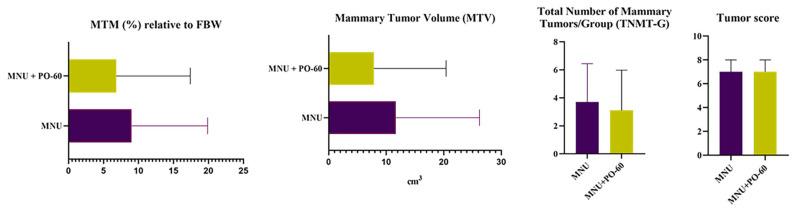
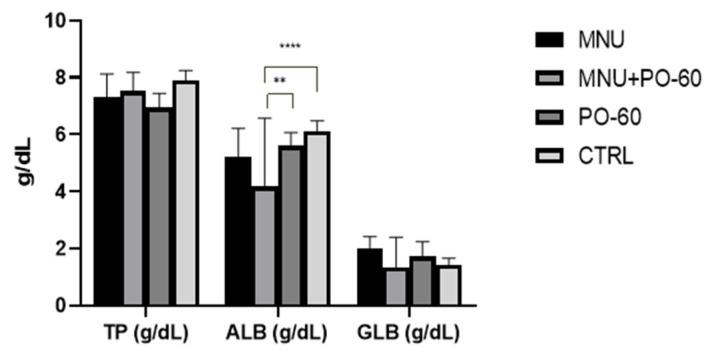
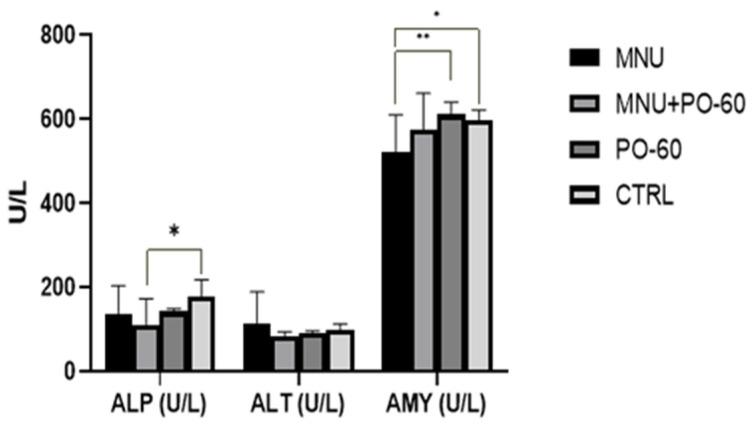
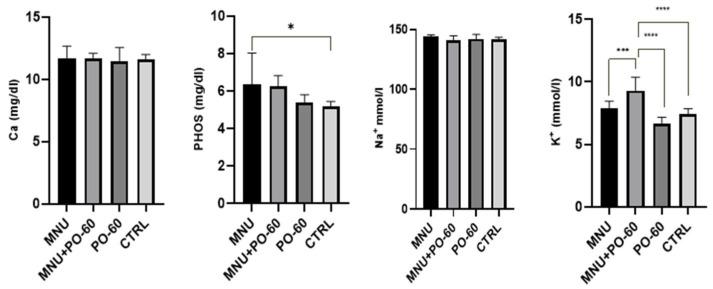
Breast cancer remains one of the most prevalent and lethal malignancies in women and female dogs. Nature offers a plethora of nontoxic medicinal compounds that could be an excellent source of antineoplastic molecules for breast cancer prevention. Due to the closeness of human and rat mammary tumors, one of the best models to study breast cancer is in rats. Accordingly, this study investigated the chemoprophylactic potential of polyphenol-60 (PO-60) from green tea on the mammary tumorigenesis model using female Sprague-Dawley rats. Forty 30-day-old female rats were randomly assigned to four groups (n = 10/group): Group 1 received N-methyl-N-nitrosourea (MNU) intraperitoneally (i.p.), Group 2 received MNU i.p. and 0.5% PO-60 in drinking water, Group 3 received saline i.p. and PO-60, and Group 4 received saline i.p. only. Eventually, rats were subjected to necropsy, histopathology, blood biochemical analysis, and assessment of antioxidative status in liver and mammary tissues. The chronic daily ingestion for 298 days of PO-60 in the MNU-induced mammary tumorigenesis model did not interfere with mammary tumor occurrence and evolution. Still, a decline in GPx and SOD levels in the MNU-inoculated animals (G1/G2 vs. G4) was observed. Catalase activity increased in all groups, except for liver from the individuals inoculated with MNU (G1).
乳腺癌仍然是女性和雌性犬类中最常见且致命的恶性肿瘤之一。自然界提供了大量无毒的药用化合物,它们可能是预防乳腺癌的抗肿瘤分子的极佳来源。由于人类和大鼠乳腺肿瘤的相似性,研究乳腺癌的最佳模型之一是大鼠。因此,本研究使用雌性斯普拉格-道利大鼠,研究了绿茶中的多酚-60(PO-60)对乳腺肿瘤发生模型的化学预防潜力。将40只30日龄雌性大鼠随机分为四组(每组n = 10):第1组腹腔注射N-甲基-N-亚硝基脲(MNU),第2组腹腔注射MNU并饮用含0.5% PO-60的水,第3组腹腔注射生理盐水并给予PO-60,第4组仅腹腔注射生理盐水。最终,对大鼠进行尸检、组织病理学检查、血液生化分析以及肝脏和乳腺组织抗氧化状态评估。在MNU诱导的乳腺肿瘤发生模型中,连续298天每日摄入PO-60并未干扰乳腺肿瘤的发生和发展。然而,观察到接种MNU的动物(G1/G2与G4相比)体内谷胱甘肽过氧化物酶(GPx)和超氧化物歧化酶(SOD)水平下降。除接种MNU的个体(G1)的肝脏外,所有组的过氧化氢酶活性均增加。




 Zotero 插件