
双酚S(BPS)对滋养层细胞和石川细胞系的有害影响:细胞毒性作用和分子相互作用的体外模型
The Detrimental Impact of Bisphenol S (BPS) on Trophoblastic Cells and the Ishikawa Cell Lines: An In Vitro Model of Cytotoxic Effect and Molecular Interactions.
作者信息
Drakaki Eirini, Mavrogianni Despoina, Potiris Anastasios, Xydi-Chrysafi Stavroula, Kotrotsos Panagiotis, Thomakos Nikolaos, Rodolakis Alexandros, Daskalakis Georgios, Domali Ekaterini
机构信息
First Department of Obstetrics and Gynecology, Alexandra Hospital, Medical School, National and Kapodistrian University of Athens, 115 28 Athens, Greece.
Third Department of Obstetrics and Gynecology, University General Hospital "ATTIKON", Medical School, National and Kapodistrian University of Athens, 124 62 Athens, Greece.
出版信息
Biomedicines. 2025 Aug 8;13(8):1938. doi: 10.3390/biomedicines13081938.
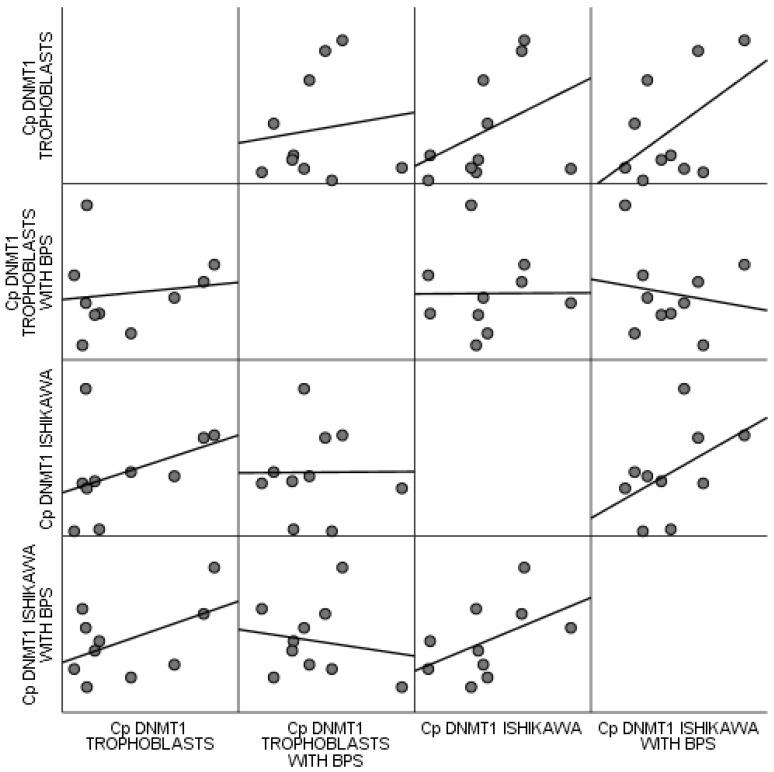
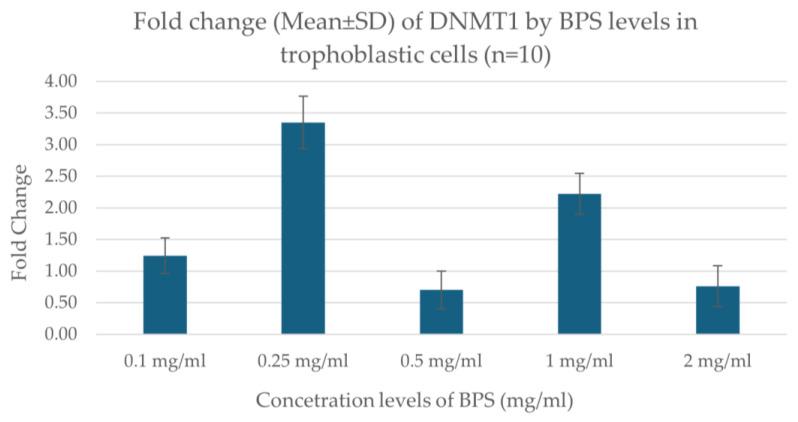
: Bisphenols (BPs) and especially bisphenol S (BPS), an analog of bisphenol A (BPA), are widely used and induce oxidative stress, resulting in the inhibition of cell proliferation and induction of apoptosis which all are crucial for reproduction, the progression of pregnancy, and fertility. The present study integrates trophoblastic cells as an in vitro model to provide evidence and investigate the molecular interactions regarding placenta-related pregnancy complications after cytotoxic exposure to BPS. : Human endometrial epithelial adenocarcinoma Ishikawa cell lines and trophoblastic cells were cultured. Cells obtained from the cultures were divided into plates and incubated for 24 h with different concentrations of bisphenol S (BPS). Cell viability was measured using the Countess Automated Cell Counter and the viability of Ishikawa cells was assessed after 48 h and for trophoblasts after 24 h. The effect of siRNA on expression was evaluated using qRT-PCR. Quantification of DNMT and NANOG was performed by qPCR and the G6PD gene was used as an internal control. : Real-time PCR results showed that the expression of the gene varies depending on the concentration of BPS in trophoblastic cells. In Ishikawa cell lines, real-time PCR results showed that gene expression was higher due to cell increase, but the measured fold change did not differ significantly. Data analysis indicated a statistically significant difference between CpDNMT1 in trophoblasts with and without BPS, where higher values were observed in the case of BPS presence ( = 0.019). The largest difference was observed between CpDNMT1 trophoblasts without BPS and CpDNMT1 Ishikawa with BPS ( < 0.001). Silencing the gene resulted in a reduced expression of , while the gene was still detected. : The results of this study highlight the cytotoxic effects of BPS and consequently its effect on trophoblast viability. The results of NANOG-DNMT1 gene expression related to BPS exposure reinforces our understanding of EDC-induced placental dysfunction.
双酚类物质(BPs),尤其是双酚A(BPA)的类似物双酚S(BPS),被广泛使用并会引发氧化应激,导致细胞增殖受到抑制以及细胞凋亡,而这些对于生殖、妊娠进展和生育能力而言都至关重要。本研究将滋养层细胞作为体外模型,以提供证据并探究细胞毒性暴露于BPS后与胎盘相关妊娠并发症有关的分子相互作用。:培养人子宫内膜上皮腺癌细胞系 Ishikawa 细胞系和滋养层细胞。从培养物中获取的细胞被分到培养板中,并用不同浓度的双酚S(BPS)孵育24小时。使用Countess自动细胞计数器测量细胞活力,并在48小时后评估Ishikawa细胞的活力,在24小时后评估滋养层细胞的活力。使用qRT-PCR评估siRNA对表达的影响。通过qPCR对DNMT和NANOG进行定量,并将G6PD基因用作内对照。:实时PCR结果表明,滋养层细胞中该基因的表达随BPS浓度的变化而变化。在Ishikawa细胞系中,实时PCR结果表明,由于细胞增多,该基因表达较高,但测得的倍数变化没有显著差异。数据分析表明,有BPS和无BPS的滋养层细胞中CpDNMT1之间存在统计学上的显著差异,在有BPS的情况下观察到更高的值(P = 0.019)。在无BPS的滋养层细胞的CpDNMT1和有BPS的Ishikawa细胞的CpDNMT1之间观察到最大差异(P < 0.001)。沉默该基因导致表达降低,而该基因仍可检测到。:本研究结果突出了BPS的细胞毒性作用及其对滋养层细胞活力的影响。与BPS暴露相关的NANOG-DNMT1基因表达结果加强了我们对环境内分泌干扰物诱导的胎盘功能障碍的理解。




 Zotero 插件