
单萜类植物化学物质的计算分析:对药物化学和药物设计策略的见解
Computational Profiling of Monoterpenoid Phytochemicals: Insights for Medicinal Chemistry and Drug Design Strategies.
作者信息
Cardeal Dos Santos André Nogueira, Oliveira Paulo Elesson Guimarães de, da Cruz Freire José Ednésio, Araújo Dos Santos Sara, Júnior José Eduardo Ribeiro Honório, Andrade Claudia Roberta de, Sousa Bruno Lopes de, Silva Wildson Max Barbosa da, de Oliveira Ariclécio Cunha, Ceccatto Vânia Marilande, Leal Cardoso José Henrique, Aquino Adélia Justina Aguiar, Coelho de Sousa Andrelina Noronha
机构信息
Experimental Physiology Laboratory, Superior Institute of Biomedical Sciences, State University of Ceará, Fortaleza 60714-903, CE, Brazil.
Biochemistry and Gene Expression Laboratory, Superior Institute of Biomedical Sciences, State University of Ceará, Fortaleza 60714-903, CE, Brazil.
出版信息
Int J Mol Sci. 2025 Aug 8;26(16):7671. doi: 10.3390/ijms26167671.
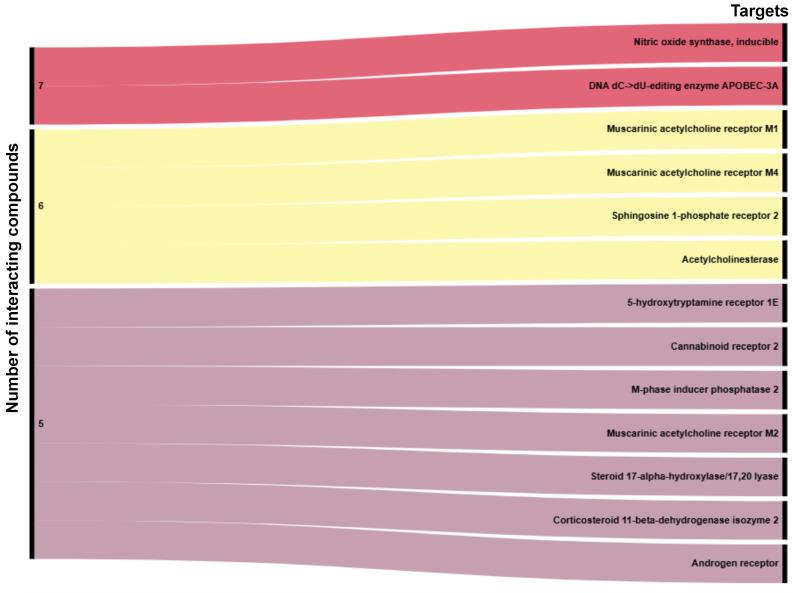
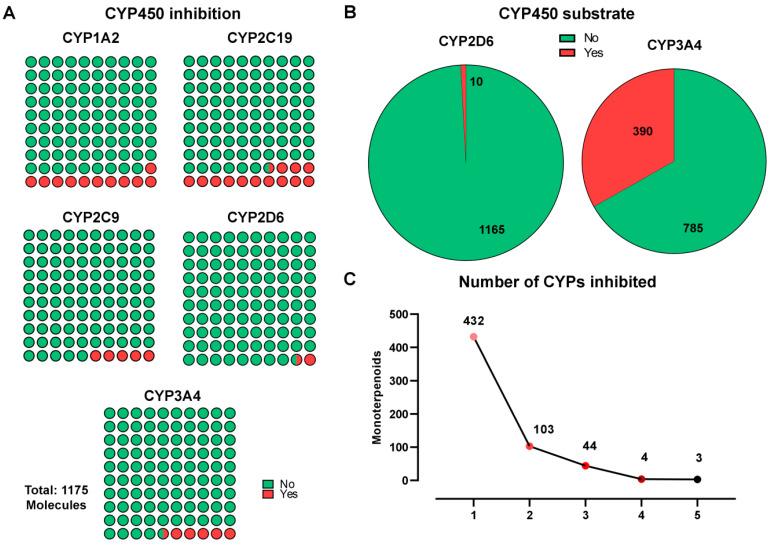
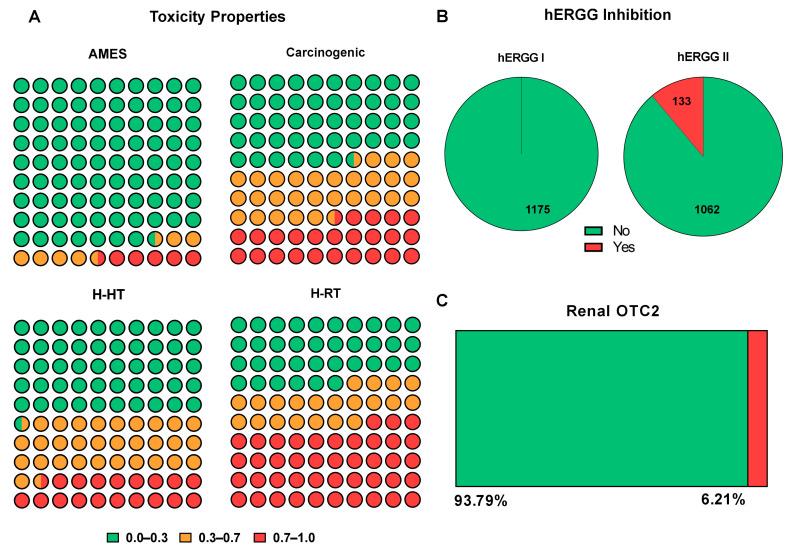
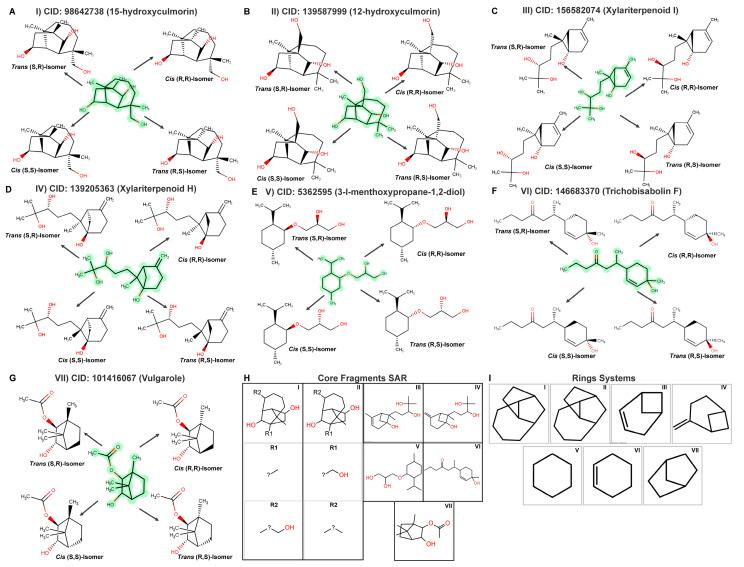
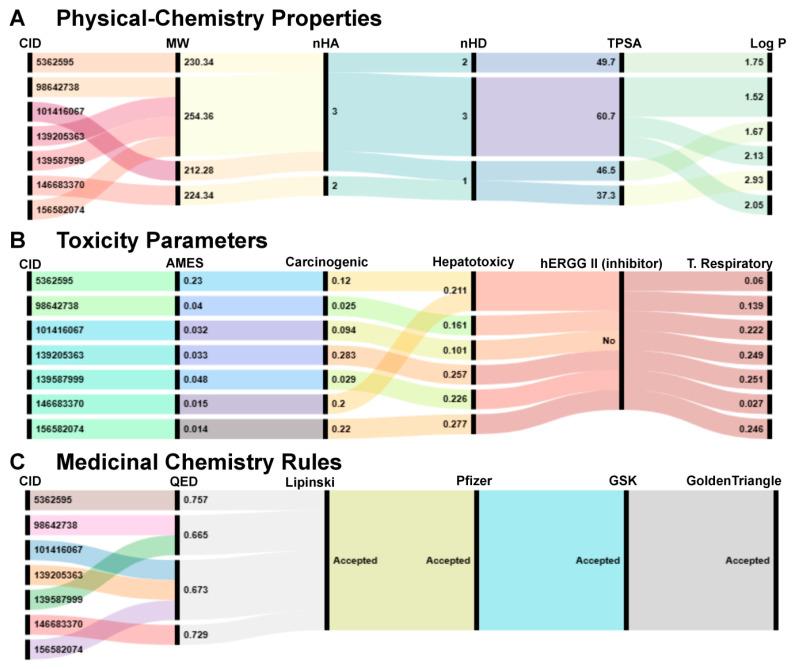
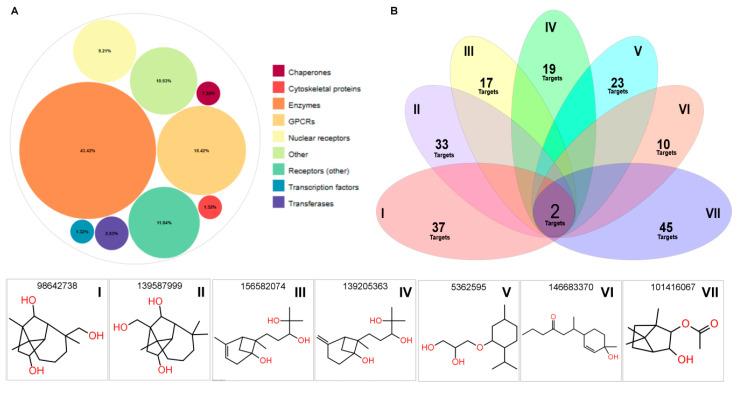
Monoterpenoids are a structurally diverse class of natural products with a long-standing history of therapeutic use. Despite their promising bioactivities, their clinical development has been limited by dose-dependent toxicities, poor pharmacokinetics, and suboptimal drug-like properties. In this work, a comprehensive in silico pipeline was employed to evaluate 1175 monoterpenoid compounds retrieved from ChEBI, aiming to identify structurally diverse candidates that possess favorable drug-like characteristics. A total of 54 molecular parameters were calculated using thirteen computational tools, covering physicochemical parameters, ADMET profiles, and toxicological risk assessments. Stepwise filtering was employed to retain only compounds meeting stringent thresholds across multiple domains, followed by chemoinformatic analysis. Structure-activity relationship mapping and target prediction were subsequently conducted to explore mechanistic plausibility. This workflow led to the identification of seven top-performing monoterpenoids that exhibited ideal physicochemical profiles, high gastrointestinal absorption, low predicted toxicity, and full compliance with medicinal chemistry rules. Notably, target prediction revealed a convergence on GPCRs, enzymatic and nuclear receptors, highlighting potential anti-inflammatory and neuromodulatory effects. The identification of conserved pharmacophores across selected scaffolds further reinforces their translational potential. Our results highlight the value of multi-parameter computational triage in natural product drug discovery and reveal a subset of overlooked monoterpenoids with promising preclinical applications.
单萜类化合物是一类结构多样的天然产物,具有悠久的治疗应用历史。尽管它们具有良好的生物活性,但其临床开发受到剂量依赖性毒性、不良药代动力学和欠佳的类药物性质的限制。在这项工作中,采用了一个全面的计算机模拟流程来评估从ChEBI检索到的1175种单萜类化合物,旨在识别具有良好类药物特征的结构多样的候选物。使用13种计算工具计算了总共54个分子参数,涵盖物理化学参数、ADMET概况和毒理学风险评估。采用逐步筛选仅保留在多个领域符合严格阈值的化合物,随后进行化学信息学分析。随后进行构效关系映射和靶点预测以探索其机制合理性。该工作流程导致鉴定出7种表现最佳的单萜类化合物,它们具有理想的物理化学特征、高胃肠道吸收、低预测毒性且完全符合药物化学规则。值得注意的是,靶点预测显示它们集中于GPCR、酶和核受体,突出了潜在的抗炎和神经调节作用。在选定支架上鉴定出保守的药效团进一步增强了它们的转化潜力。我们的结果突出了多参数计算筛选在天然产物药物发现中的价值,并揭示了一组具有潜在临床前应用前景但被忽视的单萜类化合物。

 Zotero 插件