
靶向乳腺癌中的电压门控钾通道:对4-氨基吡啶诱导细胞死亡的机制性见解
Targeting Voltage-Gated Potassium Channels in Breast Cancer: Mechanistic Insights into 4-Aminopyridine-Induced Cell Death.
作者信息
Cüce-Aydoğmuş Esra Münire, İyiol Pınar, İnhan-Garip Günseli Ayşe
机构信息
Biophysics Department, School of Medicine, T.C. Maltepe University, Istanbul 34857, Turkey.
Biophysics Department, School of Medicine, T.C. Marmara University, Istanbul 34854, Turkey.
出版信息
Int J Mol Sci. 2025 Aug 12;26(16):7768. doi: 10.3390/ijms26167768.
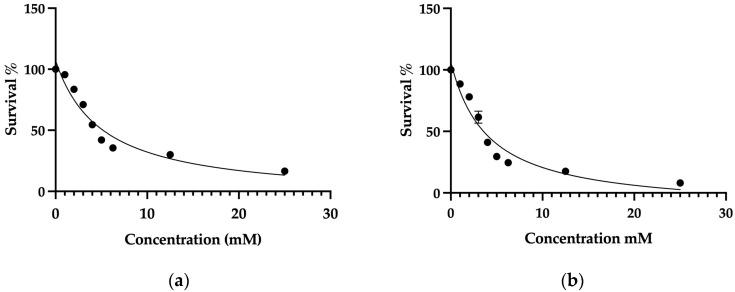
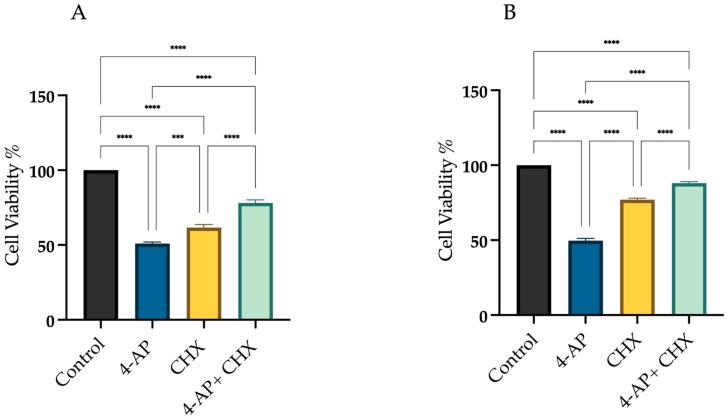
Cancer has recently been proposed as a type of channelopathy due to the aberrant expression of various ion channels. Voltage-gated potassium (K) channels (VGKCs) are notably upregulated during tumor proliferation, while voltage-gated sodium (Na) channels are predominantly associated with the invasive stage of cancer progression. Among these, the Kv10.1 channel has been found to be overexpressed in breast cancer, making it a promising therapeutic target. 4-Aminopyridine (4-AP), a non-selective voltage-gated potassium channel blocker, has emerged as a potential novel agent for breast cancer treatment. In this study, we aimed to elucidate the mechanism of action of 4-aminopyridine in breast cancer cells. To investigate the involvement of various cell death pathways, cycloheximide (CHX) (a paraptosis inhibitor), Z-VAD-FMK (a pan-caspase inhibitor), and 2-Aminoethoxydiphenyl borate (2-APB) (a phosphoinositide 3-kinase [PI3K] inhibitor) were employed. Experiments were conducted using the MCF-7 human breast cancer cell line and the L929 mouse fibroblast cell line as a healthy control. Assessments included cell viability assays, intracellular calcium (Ca) and K concentration measurements, and plasma membrane potential analysis. Our findings aim to contribute to the understanding of the therapeutic potential and cellular effects of VGKC blockers, particularly 4-aminopyridine, in breast cancer treatment strategies.
由于各种离子通道的异常表达,癌症最近被认为是一种通道病。电压门控钾(K)通道(VGKCs)在肿瘤增殖过程中显著上调,而电压门控钠(Na)通道主要与癌症进展的侵袭阶段相关。其中,Kv10.1通道已被发现在乳腺癌中过度表达,使其成为一个有前景的治疗靶点。4-氨基吡啶(4-AP),一种非选择性电压门控钾通道阻滞剂,已成为乳腺癌治疗的一种潜在新型药物。在本研究中,我们旨在阐明4-氨基吡啶在乳腺癌细胞中的作用机制。为了研究各种细胞死亡途径的参与情况,使用了环己酰亚胺(CHX)(一种副凋亡抑制剂)、Z-VAD-FMK(一种泛半胱天冬酶抑制剂)和2-氨基乙氧基二苯硼酸(2-APB)(一种磷酸肌醇3-激酶[PI3K]抑制剂)。实验使用MCF-7人乳腺癌细胞系和L929小鼠成纤维细胞系作为健康对照进行。评估包括细胞活力测定、细胞内钙(Ca)和钾浓度测量以及质膜电位分析。我们的研究结果旨在有助于理解VGKC阻滞剂,特别是4-氨基吡啶,在乳腺癌治疗策略中的治疗潜力和细胞效应。



 Zotero 插件