
心脏病理生理学与治疗学发展中的翻译控制:当信使核糖核酸与心脏相遇时。
Translational Control in Cardiac Pathophysiology and Therapeutic Development: When mRNA Meets the Heart.
作者信息
Baliga Uday K, Yang Liuqing, Ivanov Aleksandr, Schwartz Jack L, Jiang Feng, Khor Eng-Soon, Das Debojyoti, Wainwright Lindsey, Yao Peng
机构信息
Aab Cardiovascular Research Institute, Department of Medicine, University of Rochester School of Medicine & Dentistry, Rochester, NY 14586, USA.
Department of Biochemistry & Biophysics, University of Rochester School of Medicine & Dentistry, Rochester, NY 14586, USA.
出版信息
Int J Mol Sci. 2025 Aug 14;26(16):7863. doi: 10.3390/ijms26167863.
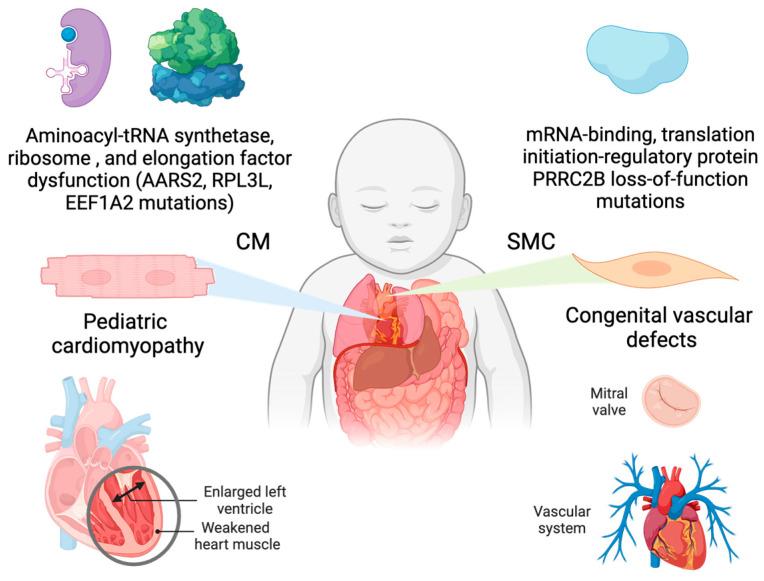
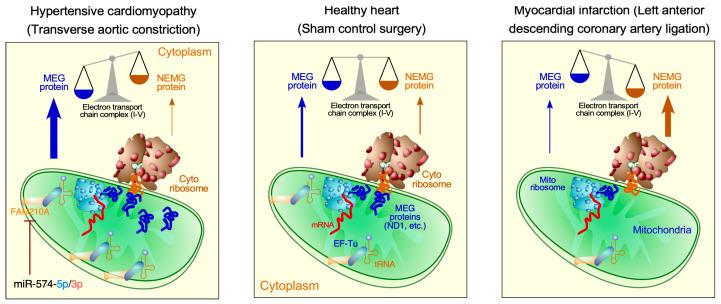
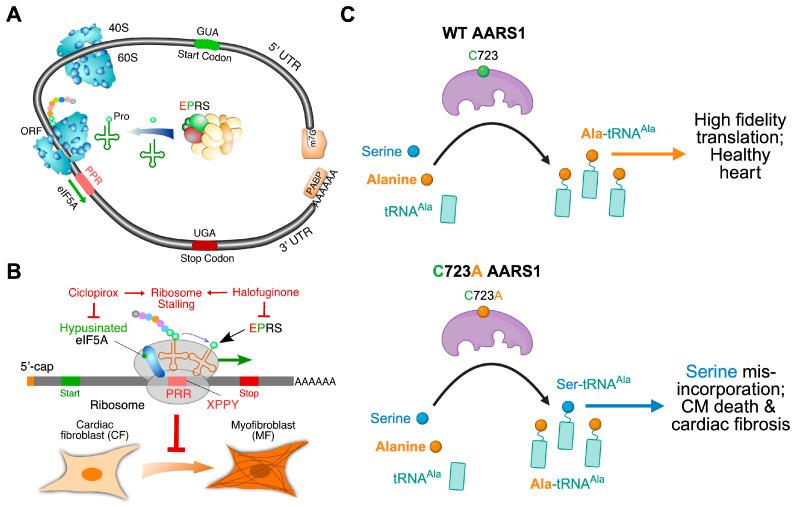
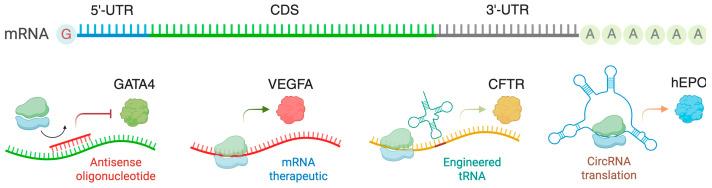
Cardiac physiology and pathology have been extensively explored at the transcriptional level. Still, they are less understood at the translational level, including three major knowledge gaps: pathophysiological impact, molecular mechanisms, and therapeutic implications of translational control in cardiac biology and heart disease. This review aims to provide a summary of the most recent key findings in this emerging field of translational control in heart health and disease, covering the physiological functions, disease pathogenesis, biochemical mechanisms, and development of potential RNA-based, translation-manipulating drugs. Translation of mRNA to protein is the final step in the central dogma for protein synthesis. Translation machinery includes a family of essential "housekeeping" factors and enzymes required for mRNA translation. These translation factors ensure the accurate processing of mRNA to protein according to the genetic code and maintain the optimal quality and quantity of cellular proteins for normal cardiac function. Translation factors also regulate the efficiency, speed, and fidelity of protein production and play a role in cardiac pathological remodeling under stress conditions. This review first introduces the techniques and methods used to study the translational regulation of gene expression in the cardiac system. We then summarize discoveries of a variety of pathophysiological functions and molecular mechanisms of translational control in cardiac health and disease, focusing on two primary symptoms, cardiac hypertrophy and fibrosis. In these sessions, we discuss the translational regulation directed by specific regulatory factors in cardiac physiology and how their genetic mutations, expression dysregulation, or functional alterations contribute to the etiology of heart disease. Notably, translational control exhibits extensive crosstalk with other processes, including transcriptional regulation, mitochondrial metabolism, and sarcomere homeostasis. Furthermore, recent findings have revealed the role of translational regulation in cardiomyocyte proliferation and heart regeneration, providing new approaches for creating regenerative medicine. Because transcript-specific translational regulation of both pathological and protective proteins occurs in heart disease, target-selective translation inhibitors and enhancers can be developed. These inhibitors and enhancers offer valuable insights into novel therapeutic targets and the development of RNA-based drugs for heart disease treatment.
心脏生理学和病理学在转录水平上已得到广泛研究。然而,在转化水平上对它们的了解较少,包括三个主要的知识空白:翻译控制在心脏生物学和心脏病中的病理生理影响、分子机制以及治疗意义。本综述旨在总结心脏健康与疾病中这一新兴的翻译控制领域的最新关键发现,涵盖生理功能、疾病发病机制、生化机制以及潜在的基于RNA的翻译调控药物的开发。信使核糖核酸(mRNA)翻译成蛋白质是蛋白质合成中心法则的最后一步。翻译机制包括mRNA翻译所需的一系列必需的“管家”因子和酶。这些翻译因子确保根据遗传密码将mRNA准确加工成蛋白质,并维持细胞蛋白质的最佳质量和数量以实现正常心脏功能。翻译因子还调节蛋白质产生的效率、速度和保真度,并在应激条件下的心脏病理重塑中发挥作用。本综述首先介绍用于研究心脏系统中基因表达翻译调控的技术和方法。然后,我们总结了心脏健康与疾病中翻译控制的各种病理生理功能和分子机制的发现,重点关注两个主要症状,即心脏肥大和纤维化。在这些部分中,我们讨论了心脏生理学中特定调节因子指导的翻译调控,以及它们的基因突变、表达失调或功能改变如何导致心脏病的病因。值得注意的是,翻译控制与其他过程表现出广泛的相互作用,包括转录调控、线粒体代谢和肌节稳态。此外,最近的发现揭示了翻译调控在心肌细胞增殖和心脏再生中的作用,为创建再生医学提供了新方法。由于在心脏病中病理蛋白和保护性蛋白都存在转录本特异性的翻译调控,因此可以开发靶向选择性翻译抑制剂和增强剂。这些抑制剂和增强剂为心脏病治疗的新治疗靶点和基于RNA的药物开发提供了有价值的见解。






 Zotero 插件