
舒张性心脏病的新型药物靶点
Novel Drug Targets in Diastolic Heart Disease.
作者信息
Er Teagan Seng-Mei, Martinac Boris, Hool Livia C
机构信息
School of Human Sciences, The University of Western Australia, Crawley, WA 6009, Australia.
Victor Chang Cardiac Research Institute, Darlinghurst, NSW 2010, Australia.
出版信息
Int J Mol Sci. 2025 Aug 20;26(16):8055. doi: 10.3390/ijms26168055.
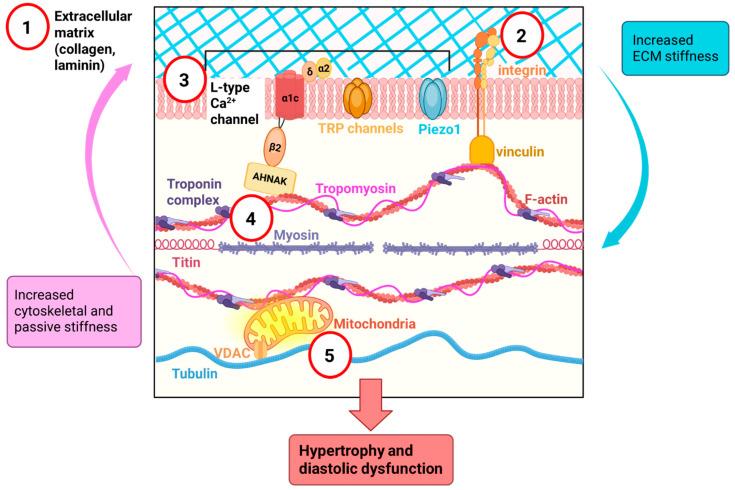
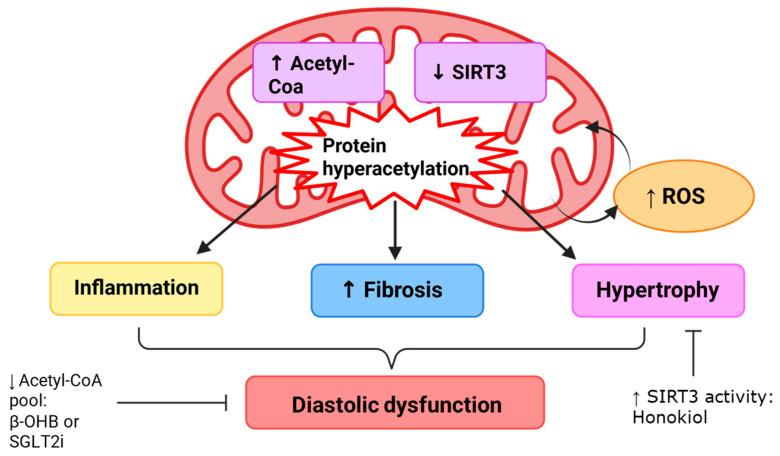
Diastolic heart failure, also referred to as heart failure with preserved ejection fraction (HFpEF), is a complex cardiovascular clinical syndrome that is a growing health burden worldwide. Patients present with high abnormal left ventricular filling pressures but normal ejection fraction that can progress to diastolic heart failure and death. The causes of diastolic dysfunction are varied, and pharmacotherapies are limited to managing the symptoms of the disease. At the level of the myocyte, cytoskeletal disarray and mitochondrial dysfunction are common features associated with diastolic disease. Understanding the mechanisms of abnormal diastolic filling pressures is necessary to identify novel treatments, which remains an area of significant unmet need. In this article, we discuss the mechanisms of maladaptive feedback contributing to increased extracellular stiffness, cytoskeletal disarray, and mitochondrial dysfunction in diastolic heart failure. Since the mechanisms are complex, understanding the contributing factors provides opportunities for the development of novel drug targets. These will be discussed and examined in the context of current therapy.
舒张性心力衰竭,也称为射血分数保留的心力衰竭(HFpEF),是一种复杂的心血管临床综合征,在全球范围内对健康的负担日益加重。患者表现为左心室充盈压高度异常但射血分数正常,可进展为舒张性心力衰竭和死亡。舒张功能障碍的原因多种多样,药物治疗仅限于控制疾病症状。在心肌细胞水平,细胞骨架紊乱和线粒体功能障碍是与舒张性疾病相关的常见特征。了解舒张期充盈压异常的机制对于确定新的治疗方法至关重要,而这仍然是一个存在重大未满足需求的领域。在本文中,我们讨论了导致舒张性心力衰竭时细胞外硬度增加、细胞骨架紊乱和线粒体功能障碍的适应性不良反馈机制。由于这些机制很复杂,了解其促成因素为开发新的药物靶点提供了机会。这些将在当前治疗的背景下进行讨论和研究。



 Zotero 插件