
慢性疼痛调节脊髓损伤患者的共情反应。
Chronic Pain Modulates Empathic Responses in People with Spinal Cord Injury.
作者信息
Galli Giulia, Sebastianelli Luca, De Santis Giorgia, Scivoletto Giorgio, Mascanzoni Marta, Pazzaglia Mariella
机构信息
Body and Action Lab and Spinal Center and Spinal Rehabilitation Laboratory, IRCCS Fondazione Santa Lucia, 00179 Rome, Italy.
Department of Psychology, Sapienza University of Rome, 00185 Rome, Italy.
出版信息
J Clin Med. 2025 Aug 20;14(16):5878. doi: 10.3390/jcm14165878.
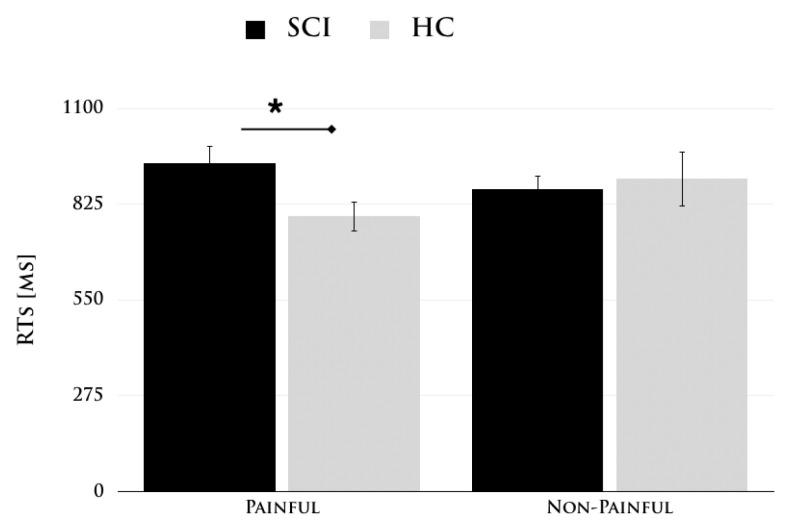
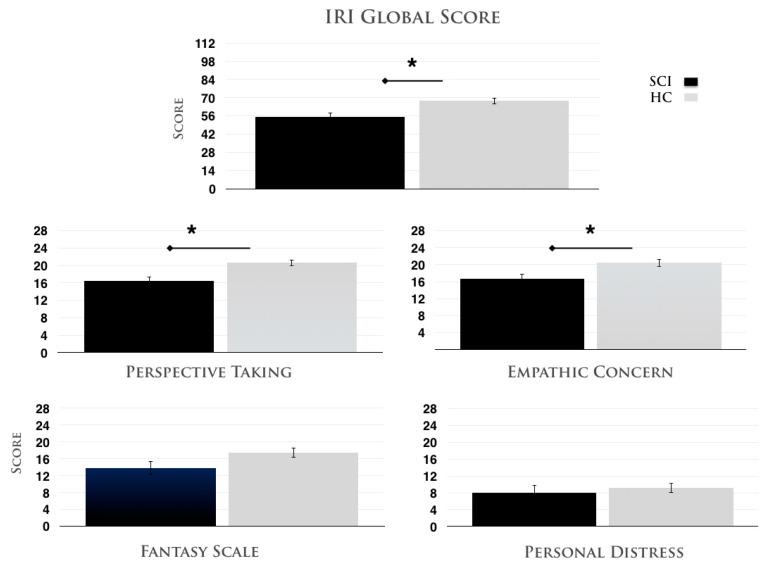
While the correlation between bodily states and cognitive processing has been extensively investigated concerning pain elaboration, little is known about how chronic, subjectively experienced pain (self-pain) following traumatic spinal cord injury (SCI) affects embodied cognition, such as empathy for pain. This study aimed to determine whether individuals with SCI differ from healthy controls in these cognitive responses, and if such differences can be quantified through varying reaction times to pain-related and non-pain-related stimuli involving others. We assessed reactions to others' pain through behavioral responses in a classification task involving 15 participants with SCI (13 men; age range 19-56 years) and 15 healthy controls (11 men; age range 25-48 years). Additionally, we measured general empathic dispositions using the Interpersonal Reactivity Index (IRI) and subjective pain intensity using a numeric rating scale following standard guidelines for neuropathic pain assessment. The findings revealed that participants with SCI exhibited lower empathy levels (IRI: mean SCI = 55.06 ± 3.64) than healthy controls (IRI: mean HC = 67.6 ± 2.46), as measured through both cognitive and affective components. We found that higher chronic pain unpleasantness was associated with lower empathic dispositions (r = -0.63; = 0.01) in participants with SCI. Compared to healthy controls, individuals with SCI exhibited a reduced empathic response when observing others in pain from a third-person perspective. These findings reveal an association between chronic pain following SCI and diminished empathic processing, offering new insights into the mechanisms underlying interpersonal reactivity after SCI.
虽然身体状态与认知加工之间的相关性在疼痛细化方面已得到广泛研究,但对于创伤性脊髓损伤(SCI)后慢性的、主观体验到的疼痛(自身疼痛)如何影响具身认知,如对疼痛的共情,却知之甚少。本研究旨在确定脊髓损伤个体在这些认知反应上是否与健康对照组存在差异,以及这种差异是否可以通过对涉及他人的疼痛相关和非疼痛相关刺激的不同反应时间来量化。我们通过一项分类任务中的行为反应评估了对他人疼痛的反应,该任务涉及15名脊髓损伤参与者(13名男性;年龄范围19 - 56岁)和15名健康对照组(11名男性;年龄范围25 - 48岁)。此外,我们使用人际反应指数(IRI)测量了一般共情倾向,并按照神经性疼痛评估的标准指南,使用数字评分量表测量了主观疼痛强度。研究结果显示,通过认知和情感成分测量,脊髓损伤参与者的共情水平(IRI:脊髓损伤组平均 = 55.06 ± 3.64)低于健康对照组(IRI:健康对照组平均 = 67.6 ± 2.46)。我们发现,脊髓损伤参与者中更高的慢性疼痛不适感与更低的共情倾向相关(r = -0.63;P = 0.01)。与健康对照组相比,脊髓损伤个体从第三人称视角观察他人疼痛时表现出共情反应降低。这些发现揭示了脊髓损伤后的慢性疼痛与共情加工减弱之间的关联,为脊髓损伤后人际反应的潜在机制提供了新的见解。


 Zotero 插件