
弥合疫苗可及性与公平性差距:中东视角
Bridging Gaps in Vaccine Access and Equity: A Middle Eastern Perspective.
作者信息
Al-Eitan Laith N, Almahdawi Diana L, Abu Khiarah Rabi A, Alghamdi Mansour A
机构信息
Department of Biotechnology and Genetic Engineering, Jordan University of Science and Technology, Irbid 22110, Jordan.
Department of Anatomy, College of Medicine, King Khalid University, Abha 61421, Saudi Arabia.
出版信息
Vaccines (Basel). 2025 Jul 29;13(8):806. doi: 10.3390/vaccines13080806.
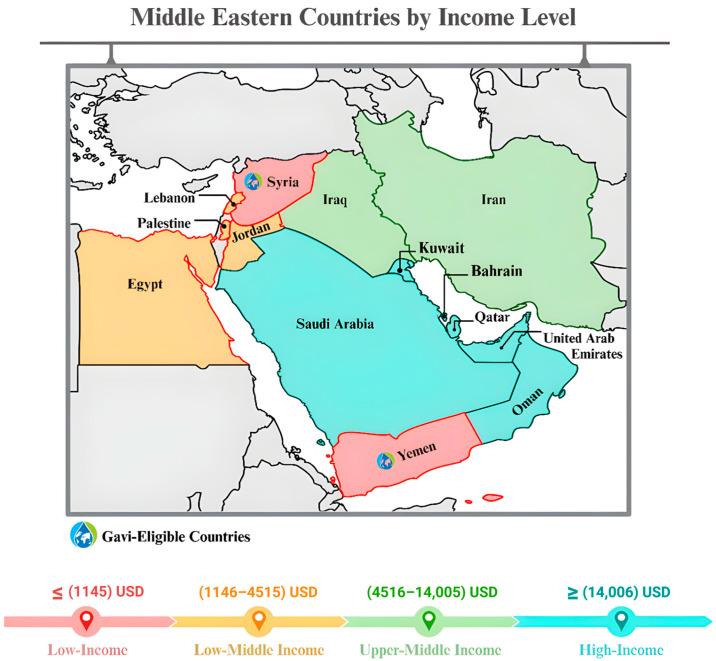
Vaccine equity and access remain critical challenges in global health, particularly in regions with complex socio-political landscapes, like the Middle East. This review examines disparities in vaccine distribution within the Middle Eastern context, analyzing the unique challenges and opportunities across the region. It provides an overview of the area's diverse finances and its impact on healthcare accessibility. We examine vaccination rates and identify critical barriers to vaccination, which may be particular issues in developing countries, such as vaccine thermostability, logistical hurdles, financial constraints, and socio-cultural factors, or broader problems, like political instability, economic limitations, and deficiencies in healthcare infrastructure. However, we also highlight successful efforts at the regional and national levels to improve vaccine equity, along with their outcomes and impacts. Ultimately, by drawing on the experiences of previous programs and initiatives, we propose strategies to bridge the gaps in vaccine access through sustainable financing, local manufacturing, and the strengthening of health systems. This approach emphasizes the importance of regional collaboration and long-term self-sufficiency in enhancing global health security and achieving more equitable outcomes in the Middle East.
疫苗公平性和可及性仍然是全球卫生领域的关键挑战,尤其是在中东等社会政治格局复杂的地区。本综述考察了中东地区疫苗分配的差异,分析了该地区独特的挑战和机遇。它概述了该地区多样的财政状况及其对医疗可及性的影响。我们研究了疫苗接种率,并确定了疫苗接种的关键障碍,这些障碍在发展中国家可能是诸如疫苗热稳定性、后勤障碍、财政限制和社会文化因素等具体问题,或者是诸如政治不稳定、经济局限和医疗基础设施不足等更广泛的问题。然而,我们也强调了区域和国家层面为改善疫苗公平性所做的成功努力及其成果和影响。最终,通过借鉴以往项目和倡议的经验,我们提出通过可持续融资、本地生产和加强卫生系统来弥合疫苗可及性差距的策略。这种方法强调了区域合作和长期自给自足在加强全球卫生安全以及在中东实现更公平成果方面的重要性。



 Zotero 插件