
与新生儿外周单核细胞功能特化相关的关键基因。
Key Genes Associated With Functional Specialization of Neonatal Peripheral Monocytes.
作者信息
Xie Tingyan, Huang Zicheng, Chen Xian, Jin Zhenchao, Yang Bing, Tang Quan
机构信息
Research Laboratory, Shenzhen Baoan Women's and Children's Hospital, Shenzhen, Guangdong, China.
Department of Laboratory Medicine, Shenzhen Baoan Women's and Children's Hospital, Shenzhen, Guangdong, China.
出版信息
Hum Mutat. 2025 Aug 19;2025:3009253. doi: 10.1155/humu/3009253. eCollection 2025.
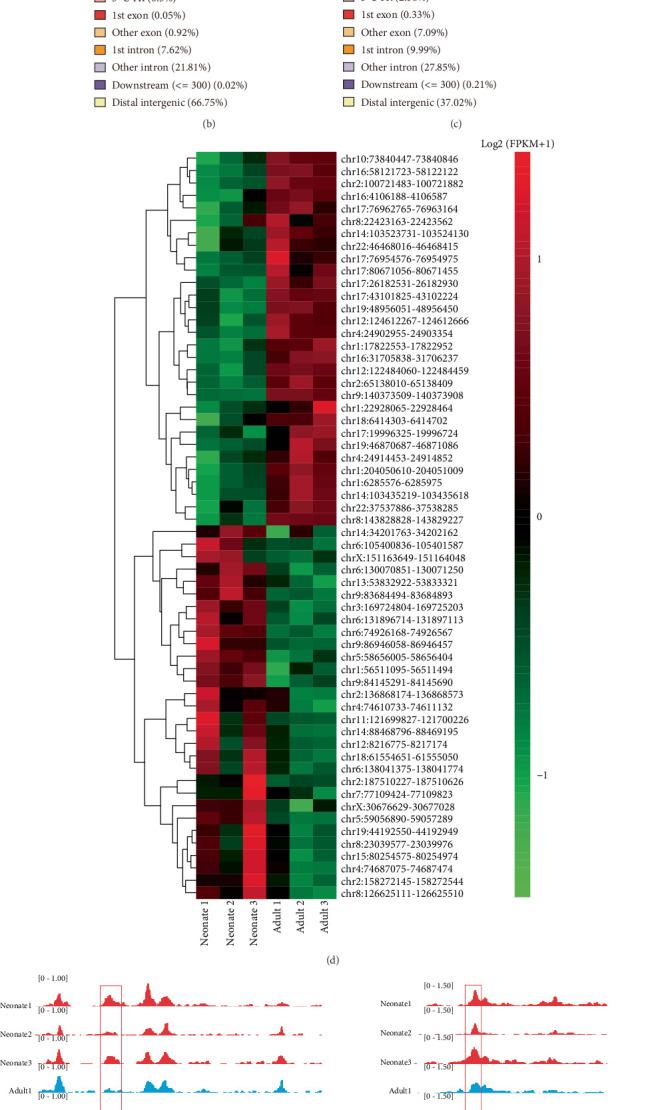
The purpose of this study is to identify genes and transcription factors underlying functional differences in neonatal versus adult peripheral blood monocytes, elucidating mechanisms of severe Group B streptococcus (GBS) infection in neonates. Differentially expressed genes (DEGs) in neonatal and adult peripheral blood monocytes were detected via RNA sequencing (RNA-seq), followed by assay for transposase-accessible chromatin sequencing (ATAC-seq) to characterize differentially accessible region (DAR)-associated genes. Integrated analyses of RNA-seq and ATAC-seq pinpointed candidate genes and transcription factors. Quantitative reverse transcription polymerase chain reaction (qRT-PCR) validated the mRNA expression of common genes and transcription factors. RNA-seq profiling of neonatal and adult peripheral monocytes identified 669 overexpressed and 440 underexpressed genes in neonates, with overexpressed genes enriched in bacterial response pathways and underexpressed genes in cytokine production and cell killing pathways. Chromatin accessibility analysis revealed 36,782 differential peaks (21,192 gained, 15,590 lost) in neonatal peripheral monocytes. Integrated RNA-seq and ATAC-seq analysis pinpointed 30 overlapping genes among DEGs, DAR-associated genes, and immunologically relevant genes (IRGs). qRT-PCR validated higher expression of , , , , and and lower and expression in neonatal peripheral monocytes compared to that in adults. The study revealed distinct differences in the transcriptome and chromatin accessibility between neonatal and adult peripheral monocytes, identifying potential genes linked to GBS infection vulnerability of neonates. These findings advance our understanding of neonatal immune dysfunction in severe GBS disease, informing future therapeutic targets.
本研究的目的是确定新生儿与成人外周血单核细胞功能差异背后的基因和转录因子,阐明新生儿B族链球菌(GBS)严重感染的机制。通过RNA测序(RNA-seq)检测新生儿和成人外周血单核细胞中的差异表达基因(DEG),随后进行转座酶可及染色质测序(ATAC-seq)分析,以表征差异可及区域(DAR)相关基因。RNA-seq和ATAC-seq的综合分析确定了候选基因和转录因子。定量逆转录聚合酶链反应(qRT-PCR)验证了常见基因和转录因子的mRNA表达。新生儿和成人外周单核细胞的RNA-seq分析确定了新生儿中669个过表达基因和440个低表达基因,过表达基因富集于细菌反应途径,低表达基因富集于细胞因子产生和细胞杀伤途径。染色质可及性分析显示新生儿外周单核细胞中有36,782个差异峰(增加21,192个,减少15,590个)。RNA-seq和ATAC-seq的综合分析确定了DEG、DAR相关基因和免疫相关基因(IRG)中的30个重叠基因。qRT-PCR验证了与成人相比,新生儿外周单核细胞中 、 、 、 和 的表达较高,而 和 的表达较低。该研究揭示了新生儿和成人外周单核细胞在转录组和染色质可及性方面的明显差异,确定了与新生儿GBS感染易感性相关的潜在基因。这些发现推进了我们对严重GBS疾病中新生儿免疫功能障碍的理解,为未来的治疗靶点提供了信息。




 Zotero 插件