
树突棘退化与雄性小鼠与年龄相关的认知和空间记忆衰退有关。
Dendritic spine degeneration is associated with age-related decline in recognition and spatial memory in male mice.
作者信息
Monroy Elibeth, Aguilar-Hernandez Leonardo, de la Cruz-López Fidel, Flores Gonzalo, Morales-Medina Julio César
机构信息
Lab. Neuropsiquiatría, Instituto de Fisiología, Benemérita Universidad Autónoma de Puebla, Puebla, 72570, México.
Escuela Nacional de Ciencias Biológicas, Instituto Politécnico Nacional, Mexico city, Mexico.
出版信息
Brain Struct Funct. 2025 Aug 28;230(7):142. doi: 10.1007/s00429-025-03002-7.
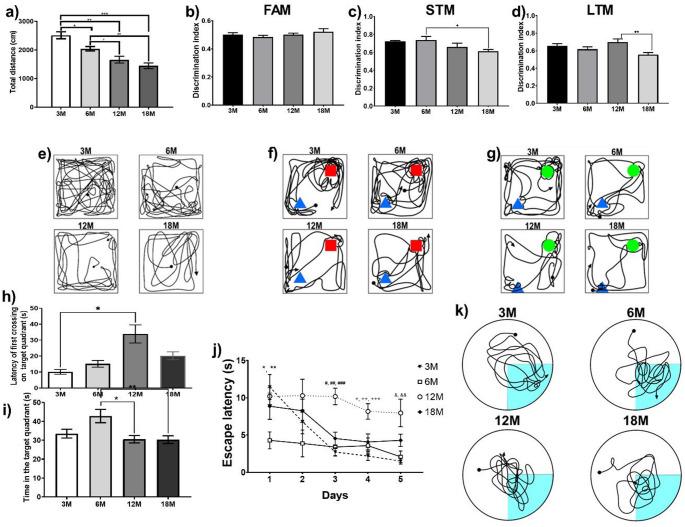
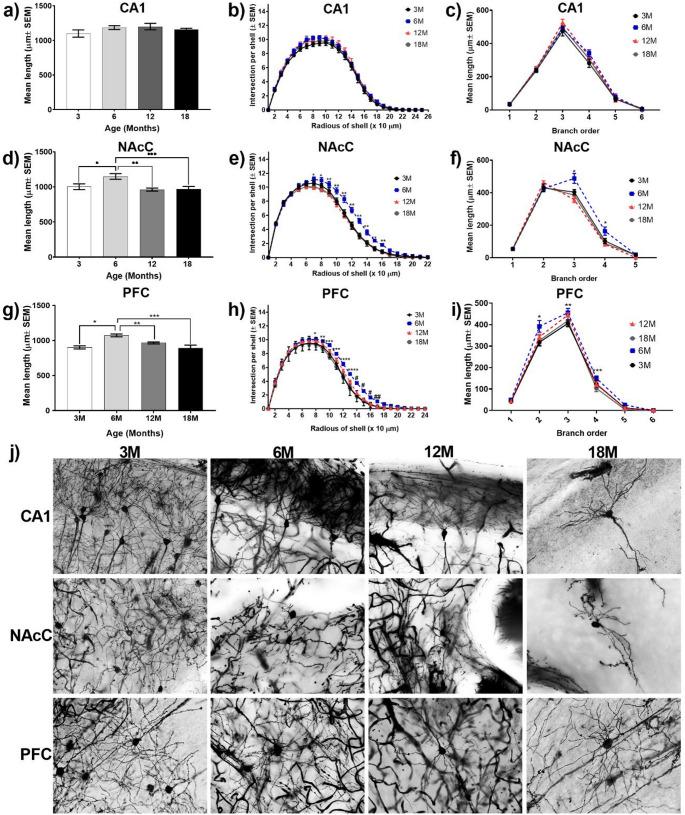
Human populations are experiencing an increase in aging, which is associated with cognitive deficits. Animal models of aging have shown that these behavioral impairments are associated with neuroarchitecture modifications in the prefrontal cortex (PFC) and hippocampus; however, most studies have focused on rats or lack multiple key ages. In this study, we evaluated spatial and recognition memory in male mice at critical ages [3 months (M), 6, 12 and 18] using the Morris water maze (MWM) and novel object recognition test (NORT), respectively. Moreover, we quantified dendritic arborization, spine density and the type of spines in the PFC, CA1 hippocampus and nucleus Accumbens Core (NAcC). Locomotion, assessed in the first phase of NORT, revealed age-dependent reductions. Notably, the 18 M group revealed significant recognition memory deficits. Spatial memory impairments were especially evident at the 12 M group in the MWM. Spine density was increased at 6 M in the NAcC, whereas a reduction was noted at 12 M and 18 M in the PFC. Morphological assessment of spines indicated age-dependent changes, including a notable increase in the proportion of thin spines in the CA1 and PFC regions. However, dendritic arborization remained largely unchanged across the examined brain regions and age groups. Overall, our findings observed age-dependent alterations in memory and morphological alterations in spines in mice, emerging as possible contributors to cognitive decline. These results highlight the potential for anti-aging interventions targeting synaptic structures to enhance cognitive health and extend the healthspan of aging individuals.
人类人口老龄化正在加剧,这与认知缺陷有关。衰老的动物模型表明,这些行为障碍与前额叶皮质(PFC)和海马体的神经结构改变有关;然而,大多数研究集中在大鼠身上或缺乏多个关键年龄阶段的研究。在本研究中,我们分别使用莫里斯水迷宫(MWM)和新物体识别测试(NORT)评估了雄性小鼠在关键年龄[3个月(M)、6、12和18个月]的空间记忆和识别记忆。此外,我们量化了PFC、海马体CA1区和伏隔核核心(NAcC)的树突分支、棘密度和棘的类型。在NORT第一阶段评估的运动能力显示出年龄依赖性下降。值得注意的是,18月龄组显示出明显的识别记忆缺陷。在MWM中,12月龄组的空间记忆障碍尤为明显。NAcC中6月龄时棘密度增加,而PFC中12月龄和18月龄时棘密度降低。棘的形态学评估表明存在年龄依赖性变化,包括CA1区和PFC区细棘比例显著增加。然而,在所检查的脑区和年龄组中,树突分支在很大程度上保持不变。总体而言,我们的研究结果观察到小鼠记忆的年龄依赖性变化和棘的形态学变化,这些变化可能是认知衰退的原因。这些结果突出了针对突触结构的抗衰老干预措施在增强认知健康和延长老年人健康寿命方面的潜力。


 Zotero 插件