
组织工程气管的评估策略:从表征到评估
Evaluation Strategies for Tissue-engineered Tracheas: From Characterization to Assessment.
作者信息
Lee Ok Joo, Lee Hyun-Joo, Lee Ji Seung, Oh Moon Sik, Jung Harry, Kim Hyeonsun, Park Chan Hum, Lee Ilhwan, Yang Jinseo, Lee Jae Jun, Park Hae Sang
机构信息
Nano-Bio Regenerative Medical Institute, School of Medicine, Hallym University, Chuncheon, Republic of Korea.
Institute of New Frontier Research Team, Hallym University, Hallym Clinical and Translation Science Institute, Chuncheon, Republic of Korea.
出版信息
In Vivo. 2025 Sep-Oct;39(5):2490-2504. doi: 10.21873/invivo.14052.
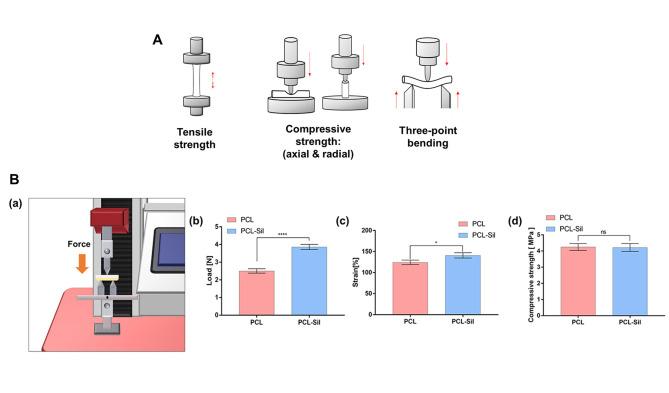
The trachea plays a critical role in maintaining airway patency, ventilation, and mucociliary clearance, supported by its unique anatomical and structural features. Tracheal defects resulting from congenital anomalies, malignancies, trauma, or prolonged intubation present significant clinical challenges. Traditional reconstruction methods, such as end-to-end anastomosis and patch grafts, are often limited by technical feasibility and suboptimal outcomes. Recently, tissue-engineered tracheal scaffolds (TETs), particularly those fabricated using 3D bioprinting technologies, have emerged as promising alternatives due to their ability to mimic natural structures and integrate functional components. However, despite technological progress, no long-term successful clinical applications have been established to date, highlighting the need for robust and standardized preclinical evaluation frameworks. This review systematically analyzes current and methodologies used to assess the safety, biocompatibility, mechanical integrity, and functional performance of 3D printing-based TETs. By introducing a variety of analysis methods to evaluate the mechanical, physicochemical, and biocompatibility properties of TETs, this study aims to propose essential components for the evaluation of 3D-printed TETs.
气管凭借其独特的解剖和结构特征,在维持气道通畅、通气以及黏液纤毛清除方面发挥着关键作用。由先天性异常、恶性肿瘤、创伤或长期插管导致的气管缺损带来了重大的临床挑战。传统的重建方法,如端端吻合术和补片移植,往往受到技术可行性和不理想结果的限制。近来,组织工程气管支架(TETs),尤其是那些使用3D生物打印技术制造的支架,因其能够模拟天然结构并整合功能组件而成为有前景的替代方案。然而,尽管技术取得了进步,但迄今为止尚未建立长期成功的临床应用,这凸显了建立强大且标准化的临床前评估框架的必要性。本综述系统地分析了用于评估基于3D打印的TETs的安全性、生物相容性、机械完整性和功能性能的当前方法和技术。通过引入多种分析方法来评估TETs的机械、物理化学和生物相容性特性,本研究旨在提出评估3D打印TETs的基本要素。

 Zotero 插件