
为期三周的环境富集可增强幼年雌性C57BL/6小鼠的肝脏-肌肉氧化平衡并降低白细胞介素-6水平。
Three weeks of environmental enrichment enhance hepatic-muscular oxidative balance and decrease interleukin-6 levels in juvenile female C57BL/6 mice.
作者信息
Eduarda da Silva Fidélis Débora, Santos de Sousa Fernandes Matheus, Ramos Tiago Lacerda, Gonçalves Silva Clarice Beatriz, Perreira Allifer Rosendo, Giselle de Olivera Nóbrega Cássia, Oliveira de Souza Valdênia Maria, Yagin Fatma Hilal, Aygun Yalin, Lagranha Claudia Jacques, Fernandes Mariana Pinheiro, Alwhaibi Reem M, Souto Fabrício Oliveira
机构信息
Keizo Asami Institute, Federal University of Pernambuco, Recife, Pernambuco, Brazil.
Postgraduate Program in Biology Applied to Health, Federal University of Pernambuco, Recife, Pernambuco, Brazil.
出版信息
Front Physiol. 2025 Aug 14;16:1626477. doi: 10.3389/fphys.2025.1626477. eCollection 2025.
INTRODUCTION
The Environmental Enrichment (EE) promotes systemic responses through social, cognitive, sensory, and physical stimuli. However, its effects on hepatic and muscle oxidative balance, as well as on serum inflammation markers, remain unclear. Therefore, this study aimed to evaluate whether three weeks of EE could modulate hepatic and muscular oxidative balance and the inflammatory response in female C57BL/6 mice.
METHODS
The animals were divided into two groups: EE ( = 13) and Standard Environmental (SE, = 11) from postnatal day 35 to 60. The EE setting included inanimate objects such as tunnels, ladders, and toys made of both wood and plastic. After three weeks, the mice were euthanized for the withdrawal of the liver, extensor digitorum longus (EDL), soleus, and blood samples.
RESULTS AND DISCUSSION
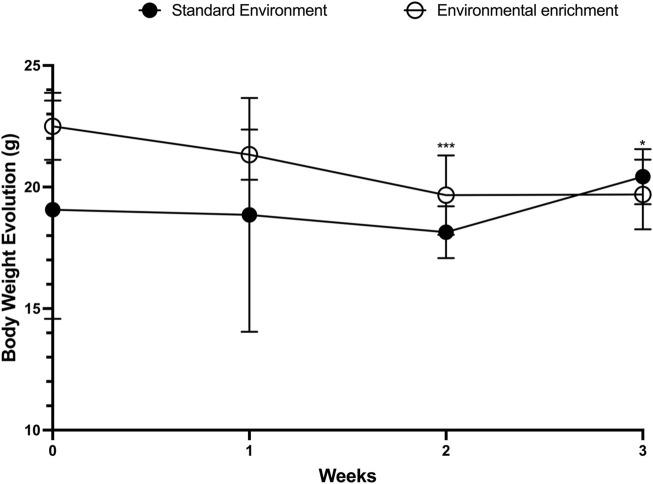
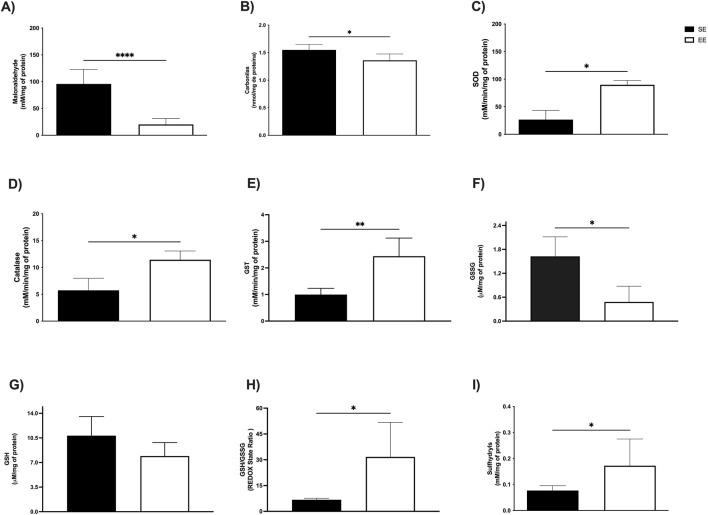
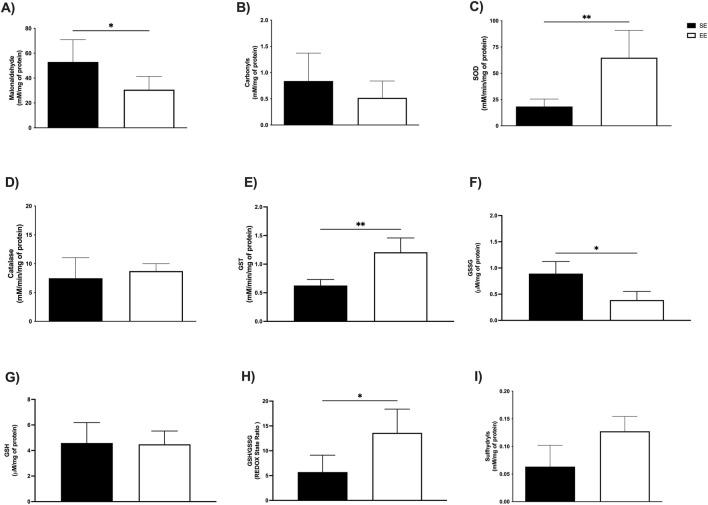
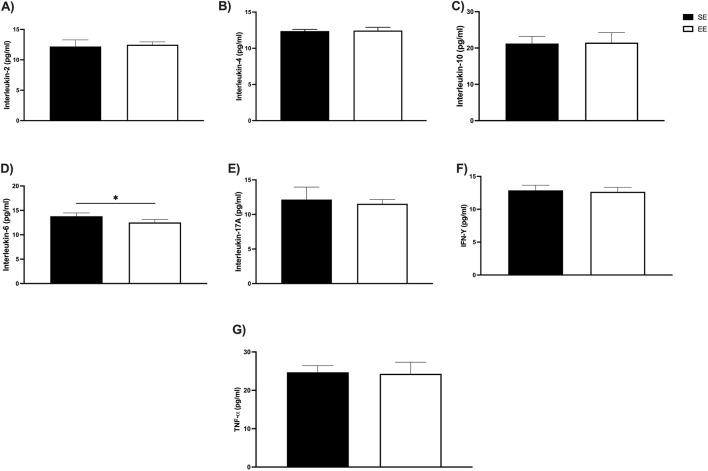
EE significantly reduced body weight and malondialdehyde levels in the liver, soleus, and EDL muscles. Additionally, carbonyl levels decreased in the liver and soleus. Acute EE exposure enhanced enzymatic antioxidant activity (SOD, CAT, and GST) across all tissues, except for catalase activity in the EDL, which showed no significant difference between groups. Non-enzymatic defenses were improved, with reduced oxidized glutathione (GSSG) levels in the liver and soleus. Furthermore, EE increased the REDOX status in the liver and EDL. Sulfhydryl levels increased only in the liver. Finally, serum cytokine analysis revealed a significant reduction only in IL-6 levels. These findings suggest that three weeks of EE can modulate hepatic and muscular oxidative balance, as well as serum IL-6 levels, in juvenile female mice.
引言
环境富集(EE)通过社交、认知、感官和身体刺激促进全身反应。然而,其对肝脏和肌肉氧化平衡以及血清炎症标志物的影响仍不清楚。因此,本研究旨在评估为期三周的EE是否能调节雌性C57BL/6小鼠的肝脏和肌肉氧化平衡以及炎症反应。
方法
从出生后第35天到60天,将动物分为两组:EE组(n = 13)和标准环境(SE,n = 11)组。EE环境包括无生命物体,如隧道、梯子以及木制和塑料制玩具。三周后,对小鼠实施安乐死以取出肝脏、趾长伸肌(EDL)、比目鱼肌和血样。
结果与讨论
EE显著降低了肝脏、比目鱼肌和EDL肌肉中的体重和丙二醛水平。此外,肝脏和比目鱼肌中的羰基水平降低。急性EE暴露增强了所有组织中的酶促抗氧化活性(超氧化物歧化酶、过氧化氢酶和谷胱甘肽S-转移酶),但EDL中的过氧化氢酶活性除外,两组之间无显著差异。非酶防御得到改善,肝脏和比目鱼肌中的氧化型谷胱甘肽(GSSG)水平降低。此外,EE提高了肝脏和EDL中的氧化还原状态。巯基水平仅在肝脏中升高。最后,血清细胞因子分析显示仅白细胞介素-6水平显著降低。这些发现表明,为期三周的EE可调节幼年雌性小鼠的肝脏和肌肉氧化平衡以及血清白细胞介素-6水平。



 Zotero 插件