
癌症诱导的神经生理功能障碍机制与治疗策略。
Mechanisms of cancer-induced neurophysiological dysfunction and therapeutic strategies.
作者信息
Mujinya Regan, Owembabazi Elna, Usman Ibe Michael, Archibong Victor Bassey, Aja Patrick Maduabuchi, Mwandah Daniel Chans, Terkimbi Swase Dominic
机构信息
Department of Physiology, Equator University of Science and Technology, Masaka, Uganda.
Department of Physiology, Kampala International University, Ishaka, Uganda.
出版信息
Discov Oncol. 2025 Sep 3;16(1):1678. doi: 10.1007/s12672-025-03520-0.
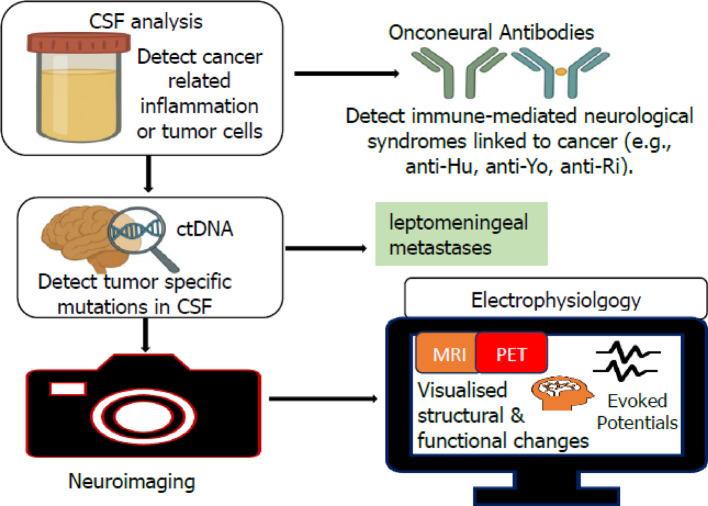
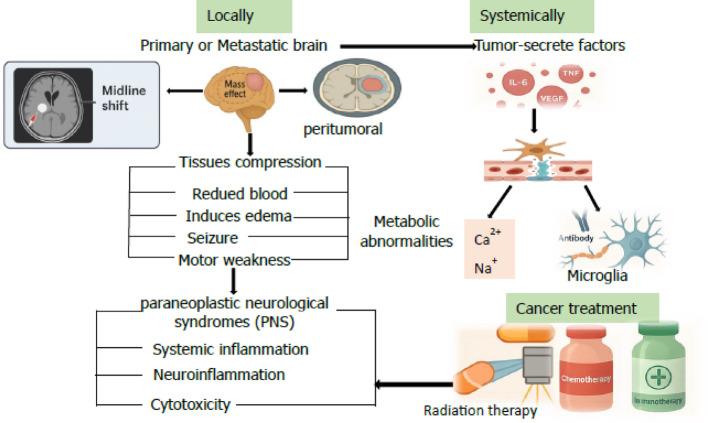
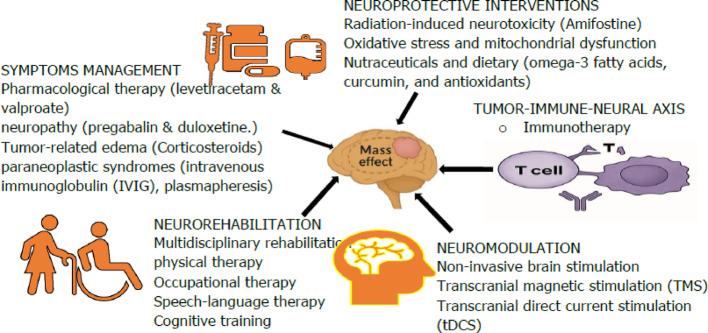
Neurophysiological alterations represent a growing concern in oncology, affecting both the central and peripheral nervous systems through diverse mechanisms. These include direct tumor infiltration, paraneoplastic immune responses, systemic inflammation, metabolic dysregulation, and treatment-induced neurotoxicity. Neurological complications range from cognitive impairment and peripheral neuropathy to motor deficits and autonomic dysfunction. Paraneoplastic syndromes mediated by immune cross-reactivity and inflammatory cytokines such as IL-6 and TNF-α contribute to neural disruption. Cancer therapies, particularly chemotherapy, radiotherapy, and immunotherapy, increase these alterations, resulting in persistent or progressive neurological deficits. Diagnostic tools such as functional MRI, electroencephalography (EEG), cerebrospinal fluid biomarkers, and circulating tumor DNA (ctDNA) are used for earlier detection and reduced stratification risk. Management strategies incorporate neuroprotective agents (e.g., amifostine), cognitive rehabilitation, and non-invasive neuromodulation techniques. These techniques include transcranial magnetic stimulation (TMS) and transcranial direct current stimulation (tDCS). Personalized neuro-oncological care is guided by biomarker-driven profiling and digital health monitoring. Pediatric patients and long-term survivors require special attention due to vulnerability to neurodevelopmental disruption. A multidisciplinary and anticipatory approach is essential for preserving neurological function and enhancing quality of life across the cancer continuum. Advances in diagnostics and therapeutics are reshaping the integration of neurophysiology within comprehensive cancer care.
神经生理改变在肿瘤学领域日益受到关注,它通过多种机制影响中枢和外周神经系统。这些机制包括肿瘤直接浸润、副肿瘤性免疫反应、全身炎症、代谢失调以及治疗引起的神经毒性。神经并发症范围从认知障碍和周围神经病变到运动功能缺损和自主神经功能障碍。由免疫交叉反应和炎性细胞因子如白细胞介素 -6 和肿瘤坏死因子 -α 介导的副肿瘤综合征会导致神经破坏。癌症治疗,尤其是化疗、放疗和免疫疗法,会加剧这些改变,导致持续性或进行性神经功能缺损。诸如功能磁共振成像、脑电图(EEG)、脑脊液生物标志物和循环肿瘤 DNA(ctDNA)等诊断工具被用于早期检测并降低分层风险。管理策略包括使用神经保护剂(如氨磷汀)、认知康复和非侵入性神经调节技术。这些技术包括经颅磁刺激(TMS)和经颅直流电刺激(tDCS)。个性化神经肿瘤护理以生物标志物驱动的分析和数字健康监测为指导。由于小儿患者和长期幸存者易受神经发育破坏的影响,因此需要特别关注。多学科和前瞻性方法对于在癌症全程中保留神经功能和提高生活质量至关重要。诊断和治疗方面的进展正在重塑神经生理学在综合癌症护理中的整合。
 Zotero 插件