
2-脱氧-D-葡萄糖和ES-936使癌细胞而非正常细胞对低线性能量传递和高线性能量传递辐射均敏感。
2-Deoxy-D-Glucose and ES-936 sensitize cancer- but not normal cells to both low- and high LET irradiation.
作者信息
Kratz Katja, Förster Henrieke, Vogel Kira, Durante Marco, Jakob Burkhard
机构信息
Department of Biophysics, GSI Helmholtzzentrum für Schwerionenforschung, Darmstadt, Germany.
Department of Biology, Technical University of Darmstadt, Darmstadt, Germany.
出版信息
Front Oncol. 2025 Aug 18;15:1633299. doi: 10.3389/fonc.2025.1633299. eCollection 2025.
INTRODUCTION
Metabolic differences of normal- and cancer cells represent an important target for the development of novel cancer treatment strategies. Given that radiotherapy constitutes one of the primary treatment modalities for solid cancers, the targeting of cancer cell metabolism to enhance their sensitivity to irradiation emerges as a promising approach. The utilization of glycolysis even under aerobic conditions in cancer cells presents a unique target to deprive cancer cells of energy and metabolites required not only for their rapid cell growth but also for the repair of irradiation induced DNA damage. Furthermore, cancer cells have been observed to exhibit elevated levels of reactive oxygen species and potentially react more sensitively to an induced disturbance of the redox balance, especially after irradiation mediated oxidative stress. Overall, interference with aerobic glycolysis and the oxidative stress response could potentiate the anti-proliferative and cytotoxic effects of cancer cell irradiation, while sparing normal cells.
METHODS
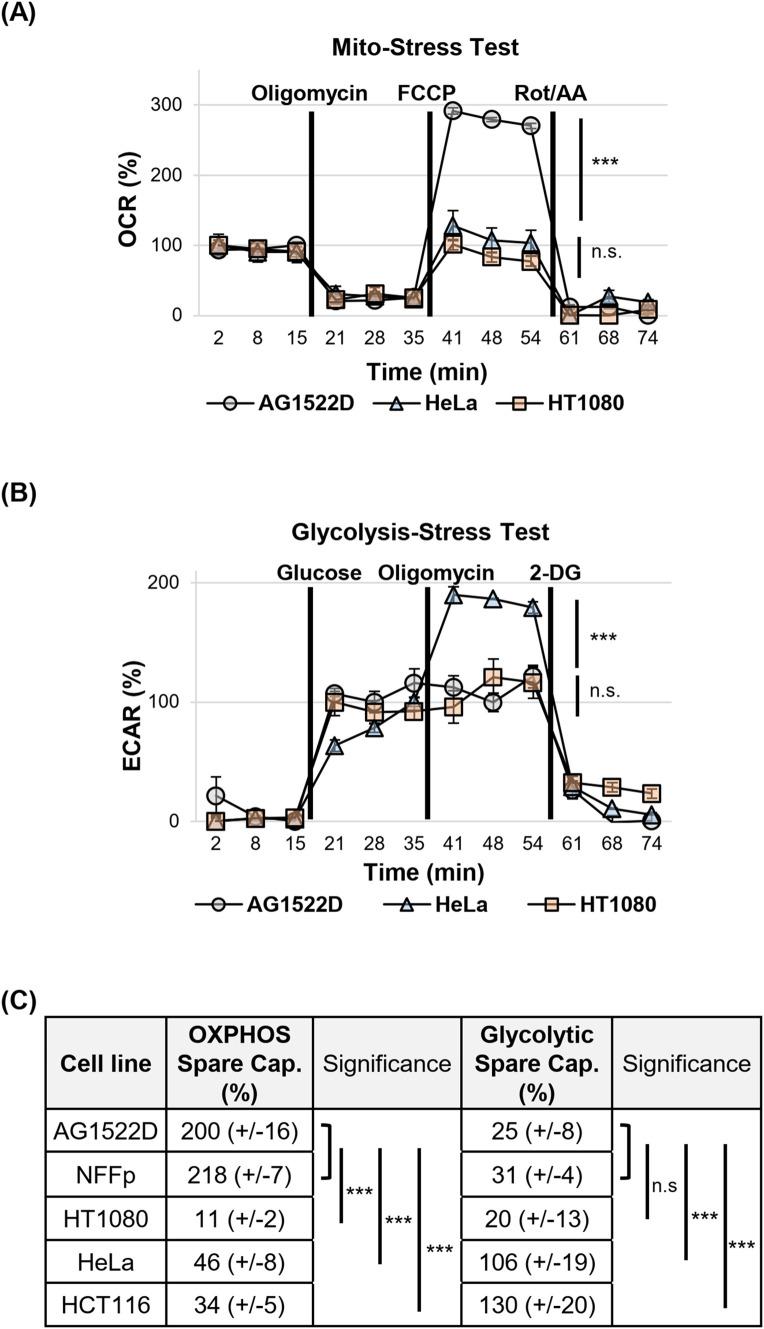
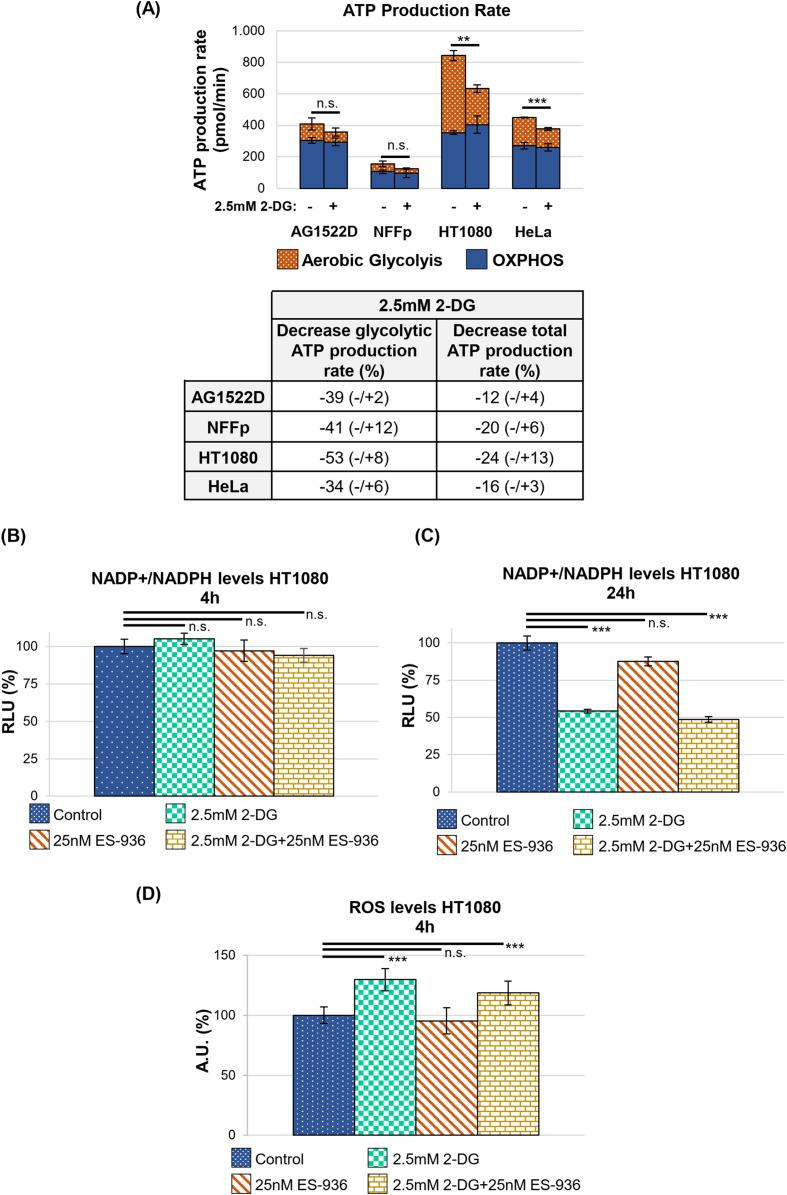
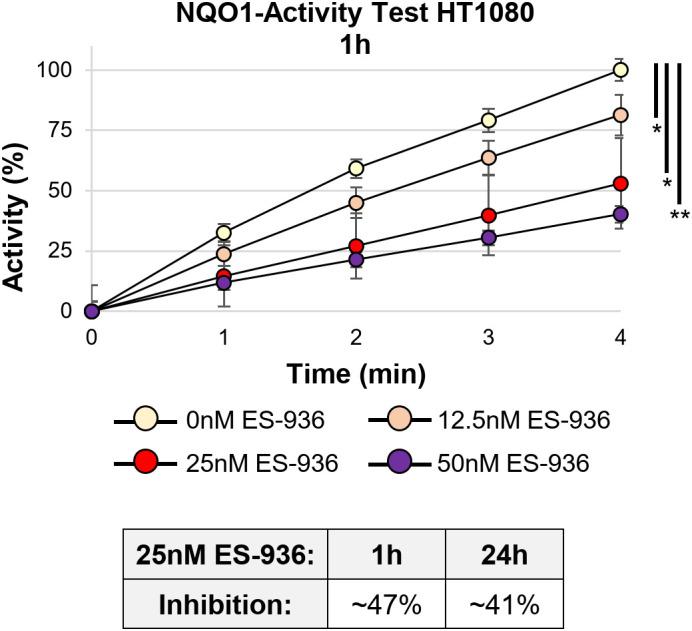
To analyze the effect of inhibitors targeting the cellular metabolism and redox balance, normal fibroblast- and cancer cell lines were characterized using a Seahorse XFp metabolic analyzer, followed by Sulforhodamin B proliferation assays and flow cytometry based cell cycle analysis. Furthermore, NADP+/NADPH-, NAD(P)H- and ROS levels were determined using bioluminescent assays, Fluorescence Lifetime Imaging Microscopy (FLIM) and fluorescent microscopy. Radiosensitization of cell lines was assessed through clonogenic survival assays and analyses of DNA-repair efficiency via fluorescence microscopy.
RESULTS
The present study demonstrates that the glycolytic inhibitor 2-deoxy-D-glucose and the NAD(P)H:quinone oxidoreductase inhibitor ES-936 can render cancer cells more sensitive to X-rays and densely ionizing radiation (high-linear energy transfer (LET) irradiation) like alpha-particles or heavy ions but do not affect normal fibroblasts. While inhibitor-treated and low-LET (X-ray) irradiated cancer cells exhibited a decreased clonal survival, an additional DNA repair defect was observed after high-LET irradiation.
DISCUSSION
Our results imply that distinct mechanisms influence the clonal survival and DNA repair of irradiated, inhibitor-treated cancer cells in dependence of the LET. The findings of this study suggest that the combination of inhibitors targeting glycolysis and the redox balance may represent a promising strategy to enhance the sensitivity of cancer cells to both photon- and charged particle therapy.
引言
正常细胞与癌细胞的代谢差异是开发新型癌症治疗策略的重要靶点。鉴于放射治疗是实体癌的主要治疗方式之一,通过靶向癌细胞代谢来提高其对辐射的敏感性成为一种有前景的方法。癌细胞即使在有氧条件下也利用糖酵解,这提供了一个独特的靶点,可剥夺癌细胞快速生长以及修复辐射诱导的DNA损伤所需的能量和代谢物。此外,已观察到癌细胞中活性氧水平升高,并且可能对氧化还原平衡的诱导性干扰反应更敏感,尤其是在辐射介导的氧化应激之后。总体而言,干扰有氧糖酵解和氧化应激反应可增强癌细胞辐射的抗增殖和细胞毒性作用,同时保护正常细胞。
方法
为了分析靶向细胞代谢和氧化还原平衡的抑制剂的作用,使用海马XFp代谢分析仪对正常成纤维细胞系和癌细胞系进行表征,随后进行磺酰罗丹明B增殖测定和基于流式细胞术的细胞周期分析。此外,使用生物发光测定、荧光寿命成像显微镜(FLIM)和荧光显微镜测定NADP+/NADPH-、NAD(P)H-和ROS水平。通过克隆存活测定和荧光显微镜分析DNA修复效率来评估细胞系的放射增敏作用。
结果
本研究表明,糖酵解抑制剂2-脱氧-D-葡萄糖和NAD(P)H:醌氧化还原酶抑制剂ES-936可使癌细胞对X射线和密集电离辐射(高传能线密度(LET)辐射)如α粒子或重离子更敏感,但不影响正常成纤维细胞。虽然抑制剂处理和低LET(X射线)照射的癌细胞克隆存活率降低,但在高LET照射后观察到额外的DNA修复缺陷。
讨论
我们的结果表明,不同的机制根据LET影响经抑制剂处理的受照射癌细胞的克隆存活和DNA修复。本研究结果表明,靶向糖酵解和氧化还原平衡的抑制剂联合使用可能是提高癌细胞对光子和带电粒子治疗敏感性的一种有前景的策略。




 Zotero 插件