
NLRP3炎性小体在电针缓解炎性疼痛中的镇痛作用:一项动物研究的系统评价和荟萃分析
The Analgesic Effect of NLRP3 Inflammasome in the Relief of Inflammatory Pain by Electroacupuncture: A Systematic Review and Meta-Analysis of Animal Studies.
作者信息
Su Ruisi, Wang Zhefeng, Zhang Guodong, Tao Yinghui, Zhu Haonan, Chen Haibo, Li Jiaying, Sun Zhichao
机构信息
The First Clinical Medical College of Zhejiang Chinese Medical University, Hangzhou, 310053, People's Republic of China.
Department of Radiology, The First Affiliated Hospital of Zhejiang Chinese Medical University (Zhejiang Provincial Hospital of Chinese Medicine), Hangzhou, 310006, People's Republic of China.
出版信息
J Pain Res. 2025 Aug 27;18:4413-4430. doi: 10.2147/JPR.S534757. eCollection 2025.
INTRODUCTION
Inflammatory pain originates from the inflammatory response triggered by tissue injury, accompanied by the release of pro-inflammatory mediators. NLRP3 inflammasome, as a key innate immune receptor, plays a central role in inflammatory pain. Electroacupuncture (EA) is a commonly used analgesic method in clinical practice. Its anti-inflammatory mechanism involves regulating neural-immune interaction, regulating the balance of pro-inflammatory/anti-inflammatory cytokines, and inhibiting the NF-κB pathway. However, whether EA can alleviate inflammatory pain by specifically inhibiting NLRP3 inflammasome activation and its downstream signaling pathways is still unclear.
PURPOSE
This study aims to evaluate the analgesic effects of electroacupuncture on inflammatory pain, focusing on inflammatory cytokines and NLRP3-related signaling pathways to elucidate the underlying mechanisms.
METHODS
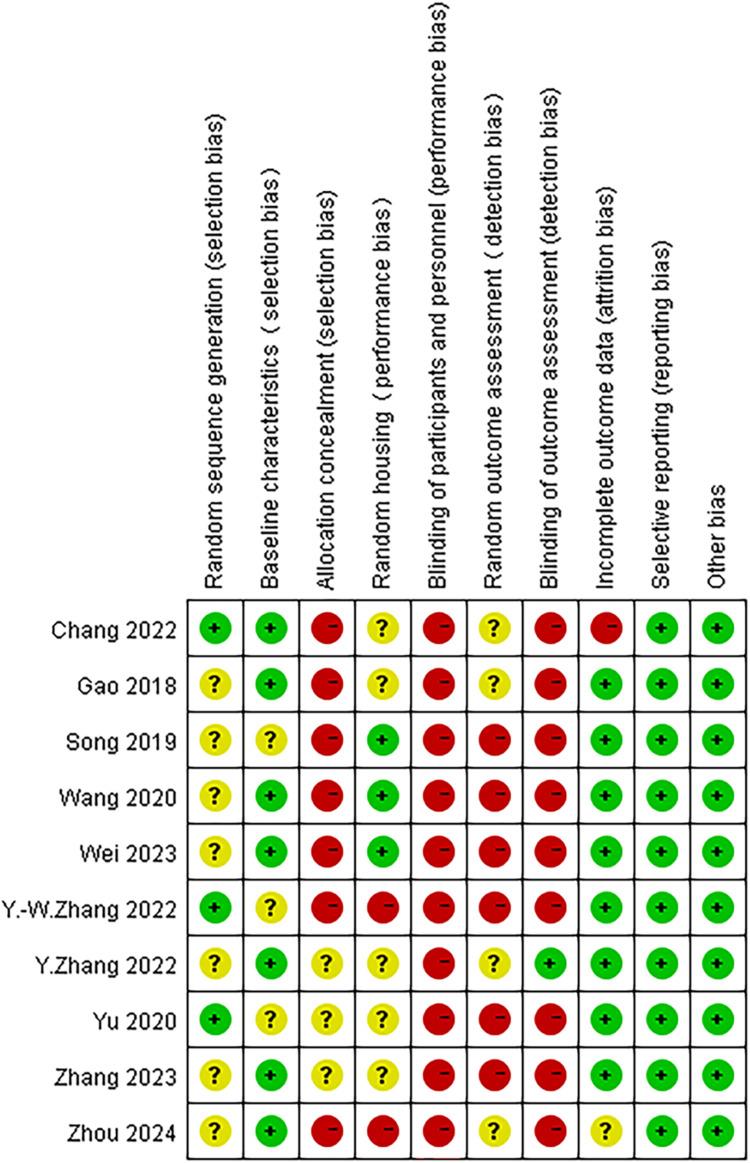
Studies that meet the inclusion and exclusion criteria were selected by searching PubMed, EMBASE, Cochrane, and Web of Science databases. To evaluate the quality of each included study using the modified 10-item checklist from the Collaboration for the Advancement of Meta-analysis in Animal Research. After extracting the relevant data, perform a meta-analysis using RevMan software.
RESULTS
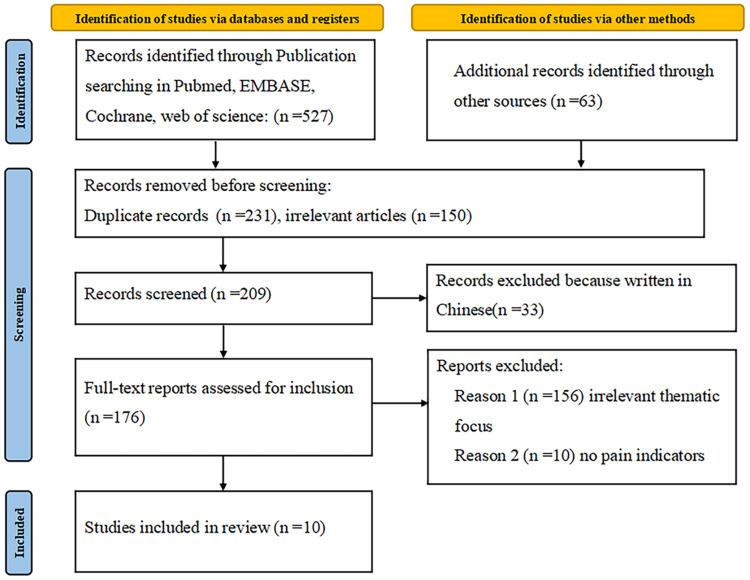
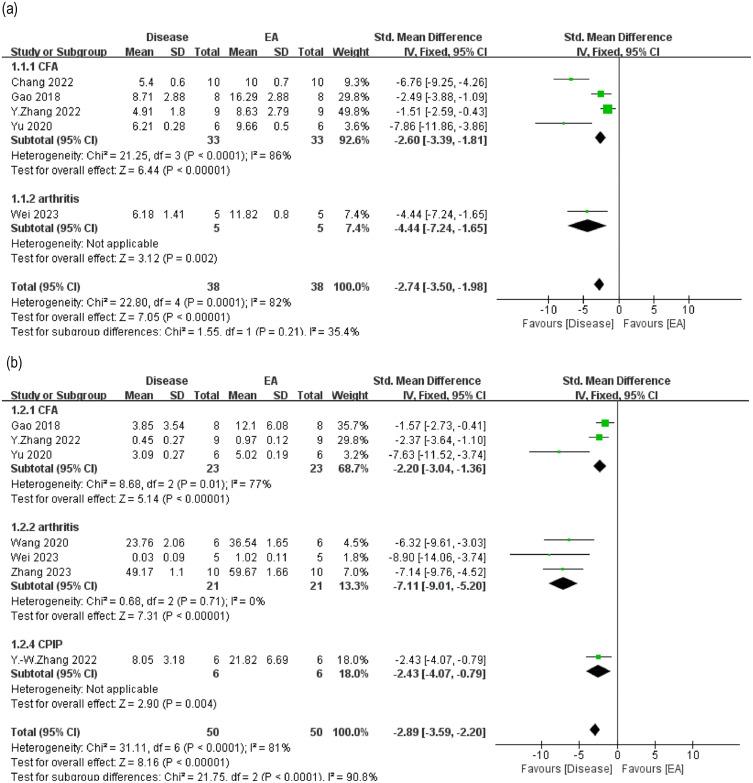
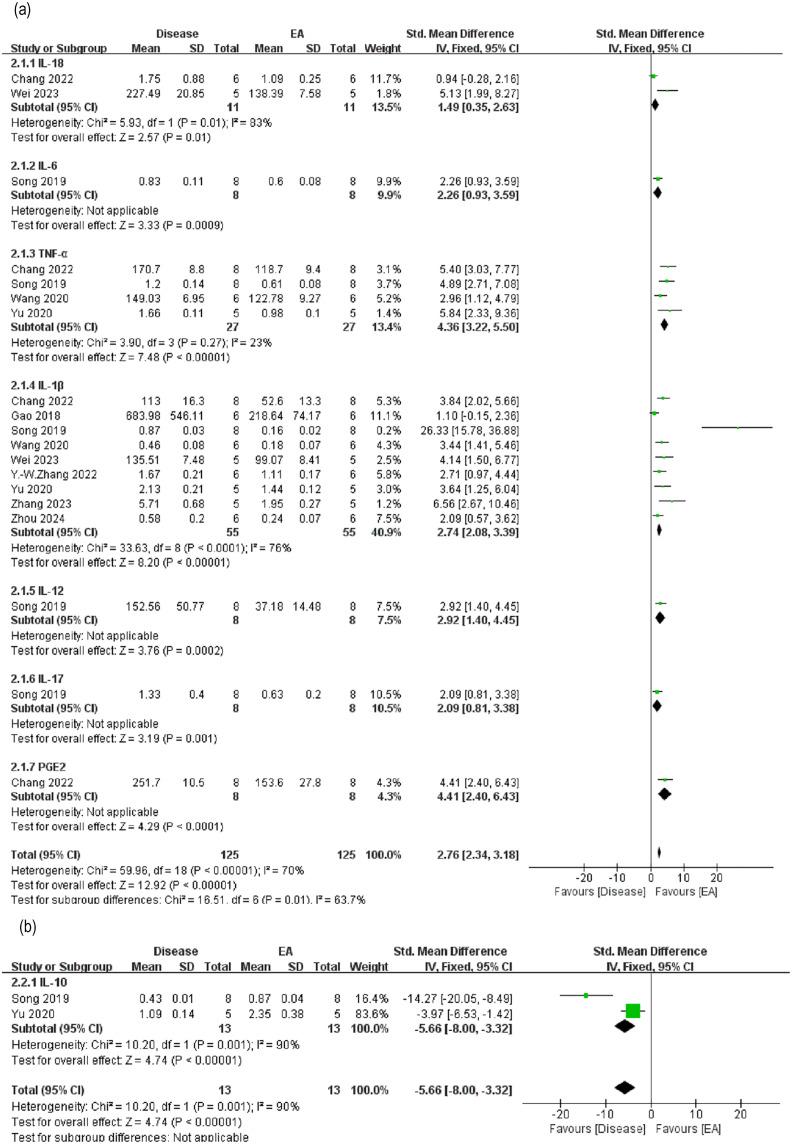
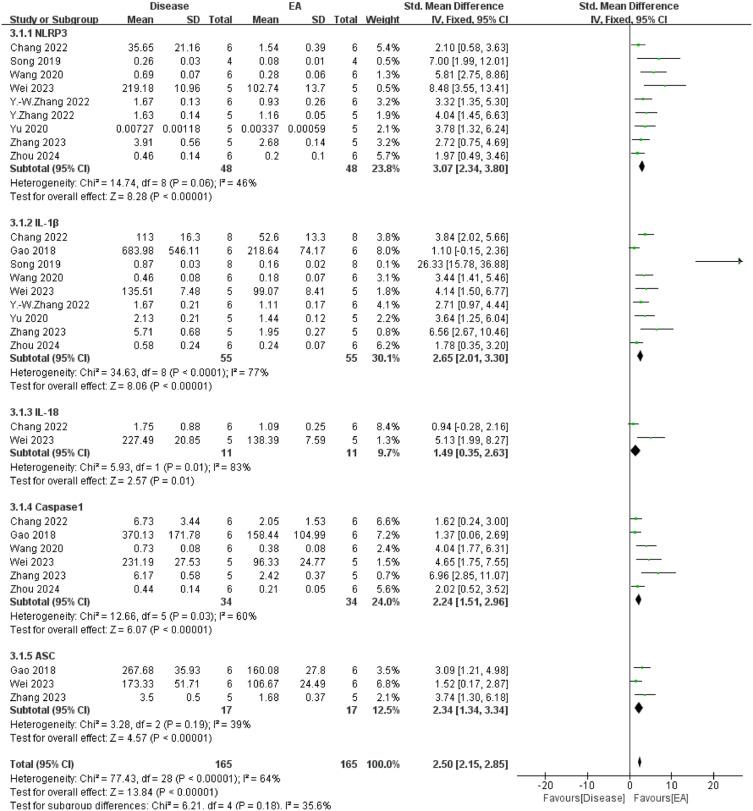
A total of 10 studies were included. The results of the meta-analysis indicated that electroacupuncture treatment increased the heat pain threshold [-2.74 (95% CI -3.50 ~ -1.98)] and mechanical pain threshold [-2.89 (95% CI -3.59 ~ -2.20)]. Electroacupuncture reduced the levels of pro-inflammatory cytokines IL-1β, IL-18, IL-6, IL-12, IL-17, TNF-α, and PGE2, and increased the levels of anti-inflammatory cytokines IL-10. This study found that EA mainly regulated NLRP3 related signaling pathway through ROS, P2X7R and other pathways, thereby reducing the expression of NLRP3 inflammasome. Subgroup analysis of CFA-induced inflammatory pain showed that EA reduced inflammatory pain by regulating NLRP3 inflammasome.
CONCLUSION
Electroacupuncture may alleviate inflammatory pain by modulating inflammatory cytokines and regulating the NLRP3 signaling pathway, which could help reduce the use of analgesic medications.
引言
炎性疼痛源于组织损伤引发的炎症反应,并伴有促炎介质的释放。NLRP3炎性小体作为关键的天然免疫受体,在炎性疼痛中起核心作用。电针是临床常用的镇痛方法。其抗炎机制包括调节神经-免疫相互作用、调节促炎/抗炎细胞因子平衡以及抑制NF-κB通路。然而,电针是否能通过特异性抑制NLRP3炎性小体激活及其下游信号通路来减轻炎性疼痛仍不清楚。
目的
本研究旨在评估电针对炎性疼痛的镇痛效果,重点关注炎性细胞因子和NLRP3相关信号通路,以阐明其潜在机制。
方法
通过检索PubMed、EMBASE、Cochrane和Web of Science数据库,筛选出符合纳入和排除标准的研究。使用动物研究元分析促进协作组织修改后的10项清单评估每项纳入研究的质量。提取相关数据后,使用RevMan软件进行元分析。
结果
共纳入10项研究。元分析结果表明,电针治疗提高了热痛阈值[-2.74(95%可信区间-3.50-1.98)]和机械痛阈值[-2.89(95%可信区间-3.59-2.20)]。电针降低了促炎细胞因子IL-1β、IL-18、IL-6、IL-12、IL-17、TNF-α和PGE2的水平,并提高了抗炎细胞因子IL-10的水平。本研究发现,电针主要通过ROS、P2X7R等途径调节NLRP3相关信号通路,从而降低NLRP3炎性小体的表达。对CFA诱导的炎性疼痛进行亚组分析表明,电针通过调节NLRP3炎性小体减轻炎性疼痛。
结论
电针可能通过调节炎性细胞因子和调节NLRP3信号通路来减轻炎性疼痛,这有助于减少镇痛药的使用。

 Zotero 插件