
骨膜蛋白与肿瘤微环境之间的关联:一种对抗肿瘤进展和化疗耐药性的有前景的癌症预后生物标志物及治疗靶点。
The association between periostin and tumor microenvironment: a promising cancer prognostic biomarker and therapeutic target to combat tumor progression and chemoresistance.
作者信息
Nabi-Afjadi Mohsen, Farzam Farnoosh, Soltani Sina, Golestani Nafiseh, Asl Shiva Sarani, Aziziyan Fatemeh, Zalpoor Hamidreza, Ghasemi Fatemeh, Dabirmanesh Bahareh, Khajeh Khosro
机构信息
Department of Biochemistry, Faculty of Biological Sciences, Tarbiat Modares University, Tehran, Iran.
Shiraz Neuroscience Research Center, Shiraz University of Medical Sciences, Shiraz, Iran.
出版信息
Cancer Cell Int. 2025 Sep 3;25(1):320. doi: 10.1186/s12935-025-03959-9.
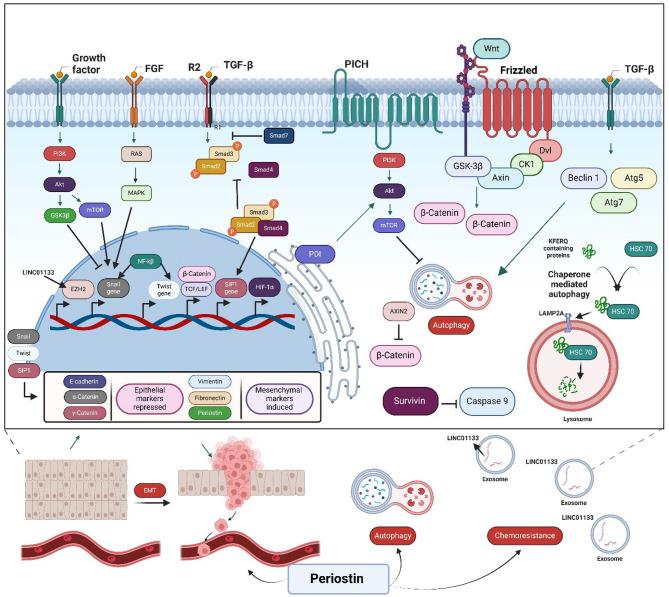
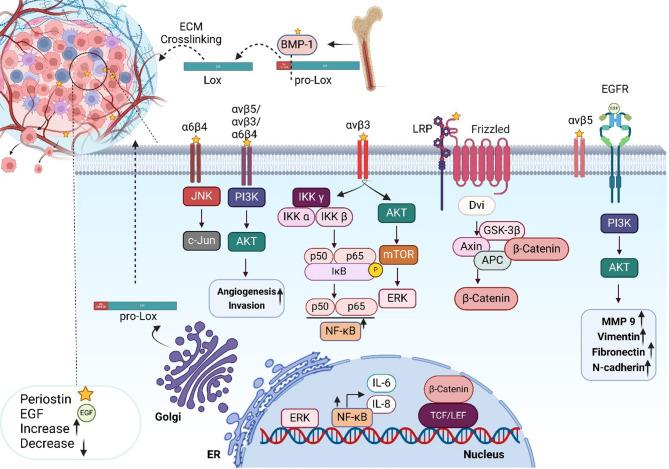
Over the past few decades, cancer research has increasingly focused on tumor microenvironment (TME). The TME contains diverse cellular components and secreted factors, including leukocytes, endothelial cells, cancer-associated fibroblasts, and other non-cancerous cells and extracellular matrix proteins. The interactions between tumor cells and microenvironment elements are complex and unpredictable. Nonetheless, these relationships govern and control several cancer traits, including immune response, metastasis, differentiation status, cell proliferation, and resistance to cell death. In this line, Matricellular proteins, including periostin (POSTN), are increasingly recognized for their regulatory roles in the TME and cancer progression. Periostin is involved in tumor biology through matrix remodeling, invasion, and proliferation. In this review, we focused on the role of periostin as a biomarker for cancer growth and treatment resistance and a potential prognostic and therapeutic factor in cancer patients. In addition, we will discuss the periostin's dual role as both a promoter and inhibitor of tumor growth, depending on its concentration and cellular context. Key findings indicate that low periostin levels may suppress cancer progression by preventing epithelial-to-mesenchymal transition (EMT). In contrast, high levels can enhance migration and metastasis through the activation of integrin signaling pathways. Furthermore, we will discuss the implications of targeting periostin in therapeutic strategies, particularly in light of its complex functions within the TME.
在过去几十年中,癌症研究越来越关注肿瘤微环境(TME)。肿瘤微环境包含多种细胞成分和分泌因子,包括白细胞、内皮细胞、癌症相关成纤维细胞以及其他非癌细胞和细胞外基质蛋白。肿瘤细胞与微环境成分之间的相互作用复杂且难以预测。尽管如此,这些关系支配和控制着多种癌症特征,包括免疫反应、转移、分化状态、细胞增殖以及对细胞死亡的抗性。在这方面,包括骨膜蛋白(POSTN)在内的基质细胞蛋白因其在肿瘤微环境和癌症进展中的调节作用而越来越受到认可。骨膜蛋白通过基质重塑、侵袭和增殖参与肿瘤生物学过程。在本综述中,我们重点关注骨膜蛋白作为癌症生长和治疗抗性的生物标志物以及癌症患者潜在的预后和治疗因子的作用。此外,我们将讨论骨膜蛋白根据其浓度和细胞环境在肿瘤生长中作为促进剂和抑制剂的双重作用。主要研究结果表明,低水平的骨膜蛋白可能通过阻止上皮-间质转化(EMT)来抑制癌症进展。相反,高水平的骨膜蛋白可通过激活整合素信号通路增强迁移和转移。此外,我们将讨论在治疗策略中靶向骨膜蛋白的意义,特别是鉴于其在肿瘤微环境中的复杂功能。

 Zotero 插件