
BioVizSeq:一个用于可视化生物序列上元件的R包。
BioVizSeq: an R package for visualization the element on bio-sequences.
作者信息
Zhao Shiqi, Zhang Runqi, He Maoqiu, Shui Bonian, Zhang Yu
机构信息
School of Fishery, Zhejiang Ocean University, Zhoushan, China.
出版信息
Front Plant Sci. 2025 Aug 19;16:1645004. doi: 10.3389/fpls.2025.1645004. eCollection 2025.
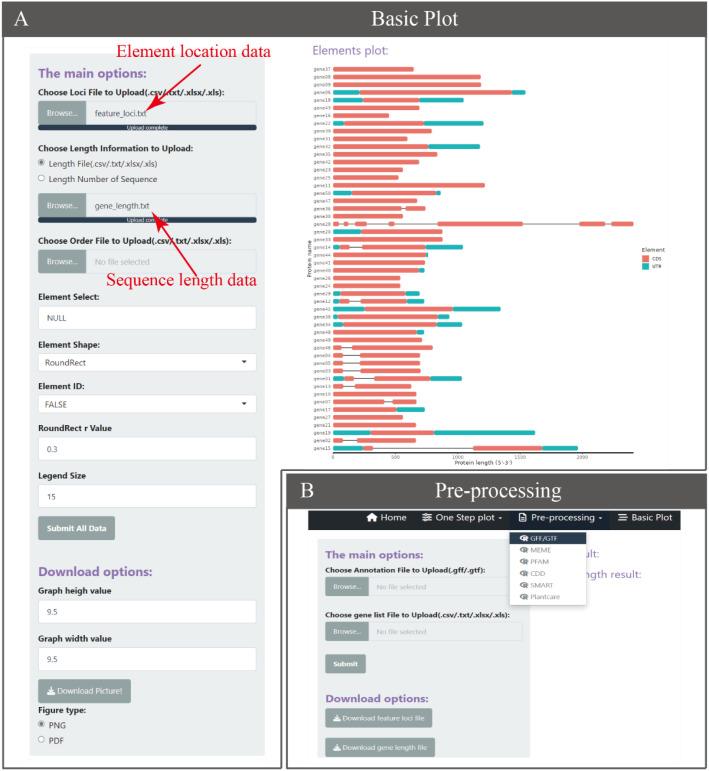
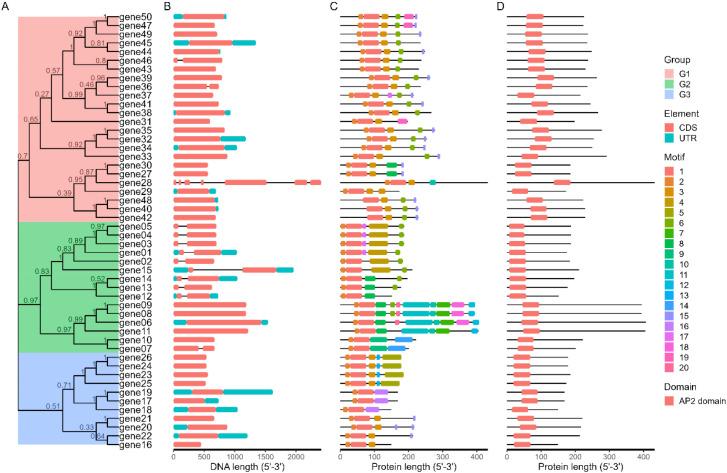
The identification and visualization of functional elements within biological sequences offers visual presentation for biologists to integrate annotation, and also helps them to produce high-quality figures for publication. Although there are now some standalone tools that can perform this function, these tools generally lack flexibility and cannot meet personalized needs. Based on the advantages of R language in graphic display, we have developed an R package: BioVizSeq (CRAN: https://cran.r-project.org/package=BioVizSeq. Github: https://github.com/zhaosq2022/BioVizSeq). It is designed for visualizing the types and distribution of elements within bio-sequences. These data could come from users or analysis programs, such as, GFF/GTF, MEME, SMART, Plantcare, PFAM, CDD and etc. BioVizSeq can be conducted locally or online, providing great convenience for researchers without coding training. Its user-friendly visualization function can simultaneously meet users' general needs and personalized exploration.
生物序列中功能元件的识别与可视化可为生物学家整合注释提供可视化展示,还能帮助他们制作高质量的发表用图表。尽管现在有一些独立工具可以执行此功能,但这些工具通常缺乏灵活性,无法满足个性化需求。基于R语言在图形显示方面的优势,我们开发了一个R包:BioVizSeq(CRAN:https://cran.r-project.org/package=BioVizSeq。Github:https://github.com/zhaosq2022/BioVizSeq)。它旨在可视化生物序列中元件的类型和分布。这些数据可以来自用户或分析程序,例如GFF/GTF、MEME、SMART、Plantcare、PFAM、CDD等。BioVizSeq可以在本地或在线进行,为没有编码训练的研究人员提供了极大的便利。其用户友好的可视化功能可以同时满足用户的一般需求和个性化探索。



 Zotero 插件