
区分黑色素瘤并预测免疫检查点阻断反应的适应性个体化基因对特征
Adaptive individualized gene pair signatures distinguishing melanoma and predicting response to immune checkpoint blockade.
作者信息
Du Zhihua, Chen Qiyi, Huang Weiliang, Zhou Yijun, Wen Huaijin, Wang Di, Chen Yinghua, Cheng Lixin, Zheng Xubin
机构信息
College of Computer Science and Software Engineering, ShenZhen University, Shenzhen, China.
Guangdong Provincial Key Laboratory of Mathematical and Neural Dynamical Systems, School of Computing and Information Technology, Great Bay University, Dongguan, China.
出版信息
iScience. 2025 Aug 8;28(9):113329. doi: 10.1016/j.isci.2025.113329. eCollection 2025 Sep 19.
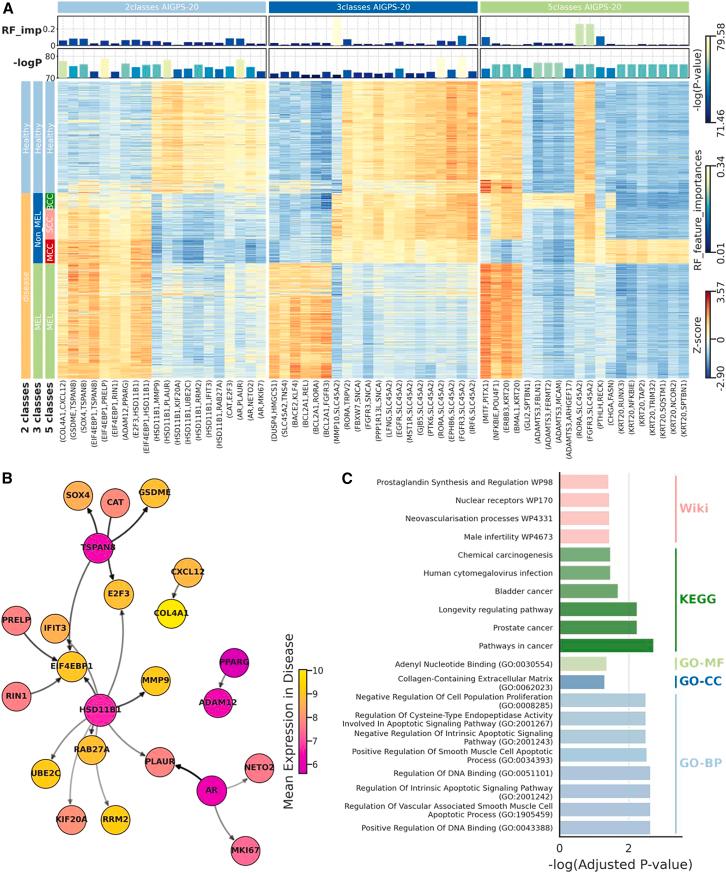
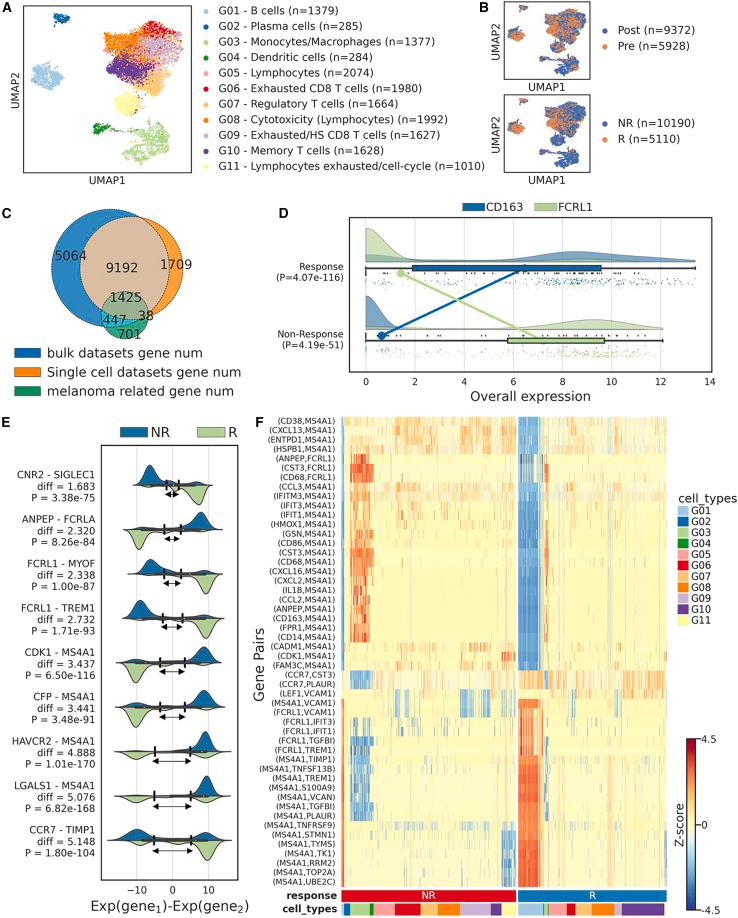
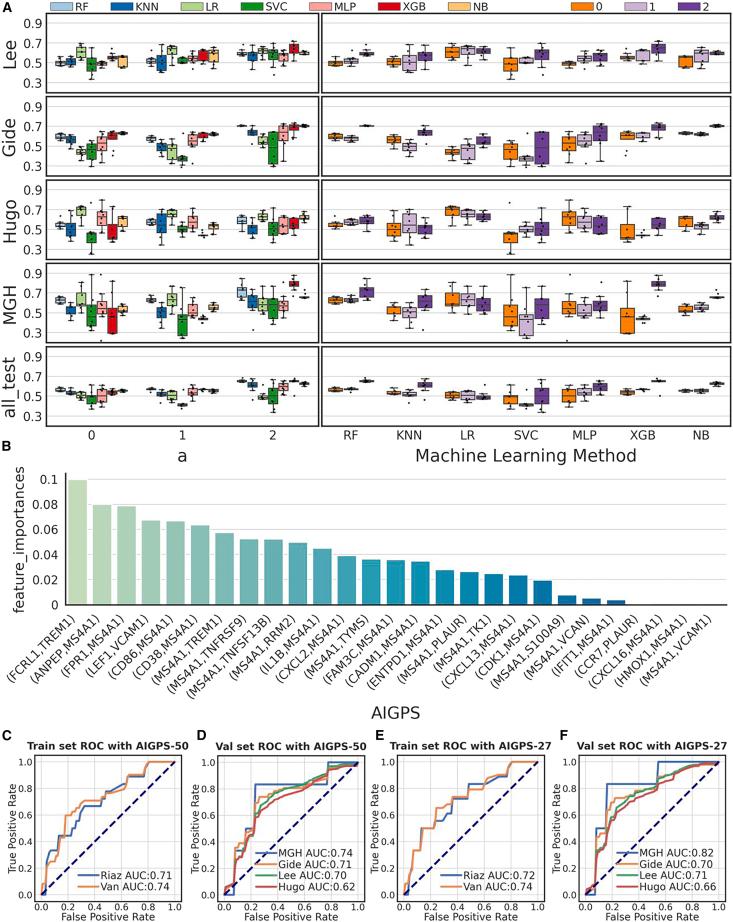
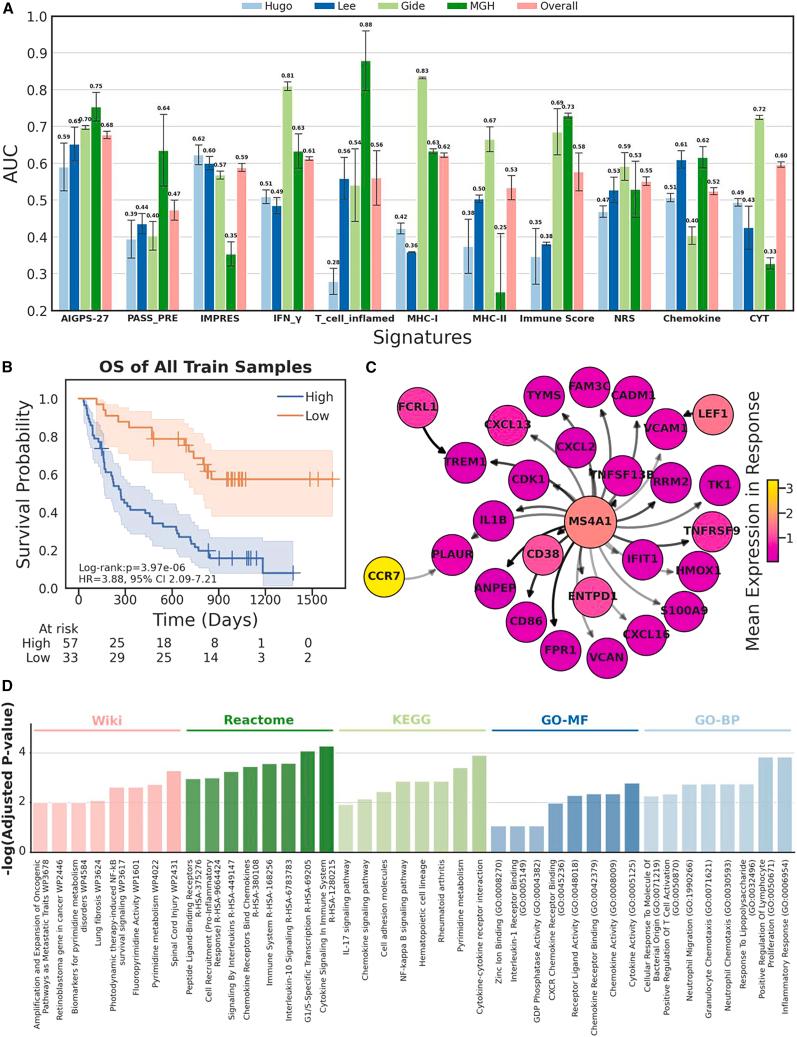
Distinguishing similar cancer subtypes and predicting responses to immune checkpoint blockade (ICB) are critical for improving clinical outcomes. However, existing gene expression signatures often suffer from batch effects and poor generalizability across cohorts. To address these limitations, we propose adaptive individualized gene pair signatures (AIGPS), a robust method that adaptively quantifies gene pair reversals and selects informative features using machine learning. AIGPS was validated on 850 samples from 24 cohorts for multiclass skin cancer classification and on 252 samples from 7 cohorts including both bulk and single-cell RNA sequencing (RNA-seq) data for ICB response prediction in melanoma. Compared to existing approaches, AIGPS improves classification accuracy by over 5% and enhances response prediction performance by 6%. By relying on relative rather than absolute expression levels, AIGPS demonstrates robustness to technical variability and enhanced transferability across datasets. This adaptive framework offers a flexible strategy for biomarker discovery and has broad potential in precision oncology.
区分相似的癌症亚型并预测对免疫检查点阻断(ICB)的反应对于改善临床结果至关重要。然而,现有的基因表达特征往往受到批次效应的影响,并且在不同队列之间的通用性较差。为了解决这些局限性,我们提出了适应性个体化基因对特征(AIGPS),这是一种稳健的方法,它可以自适应地量化基因对的反转,并使用机器学习选择信息性特征。AIGPS在来自24个队列的850个样本上进行了多类皮肤癌分类验证,并在来自7个队列的252个样本上进行了验证,这些样本包括批量和单细胞RNA测序(RNA-seq)数据,用于预测黑色素瘤中的ICB反应。与现有方法相比,AIGPS将分类准确率提高了5%以上,并将反应预测性能提高了6%。通过依赖相对而非绝对表达水平,AIGPS对技术变异性表现出稳健性,并增强了跨数据集的可转移性。这种自适应框架为生物标志物发现提供了一种灵活的策略,在精准肿瘤学中具有广泛的潜力。



 Zotero 插件